
The science of makeovers begins with a simple question. Why does a new haircut, an intentional outfit or a slow evening routine change how you feel? The answer is more interesting than vanity. Research on ritual, clothing, sleep and self-image points to a real link between outer change and inner state. At the same time, the evidence has limits, and those limits matter just as much. This article walks through what the studies actually show, one at a time, with each source named and linked. For the practical steps themselves, our complete makeover guide sets out ten of them in order. Here, instead, we look at why those steps can feel so good.
The science of makeovers draws on several fields rather than one. Studies suggest that beauty rituals can ease anxiety, that a regular makeup routine may lift self-image, and that clothes can shape how you feel. New starts, such as a birthday, also tend to spark fresh goals. Yet most studies are small, some failed to replicate, and none shows that a makeover can treat low mood or deeper distress.
The science of makeovers: what researchers actually study
There is no single field called makeover science. Instead, the evidence arrives from several directions at once. Psychologists study how rituals affect stress and attention. Dermatology researchers test how makeup changes self-image and mood. Social psychologists, meanwhile, study what clothes do to the person wearing them. Sleep scientists ask how rest shows on the face, and media researchers ask what filtered images do to the mind. Each field offers a single piece of the picture. So the science of makeovers is really a mosaic, assembled from many careful studies. Taken together, these pieces suggest one clear pattern. A makeover tends to work best as a habit of care, rather than as a single dramatic reveal.

It also helps to know how strong each piece of evidence is. A large, randomized trial carries more weight than a brand survey. Likewise, a finding that other teams have repeated is sturdier than one striking result. For that reason, this article names the design of each study as it goes. You will see small trials, lab experiments, reviews and commissioned surveys, and each one is labeled plainly. Some findings are encouraging, while others are still debated. A few have even failed when other scientists tried them again. That honesty matters, because beauty is a field full of bold claims. Above all, you deserve to know which ideas rest on firm ground and which rest on hope.
Ritual: why a routine with a beginning and an end feels soothing
Think about the last time you finished an evening skincare routine. First you cleanse, then you treat, and finally you moisturize. The sequence is short, predictable and complete. For many women, that structure is part of the pleasure. Lee Pycroft, a makeup artist turned trained psychotherapist, put it well in a 2021 Glamour interview: “A makeup ritual can be great because it’s got a beginning, a middle and an end, it reacquaints your mind with finishing tasks.” In other words, a beauty ritual offers a small, finished task. On a busy day, that sense of completion can feel rare and steadying.
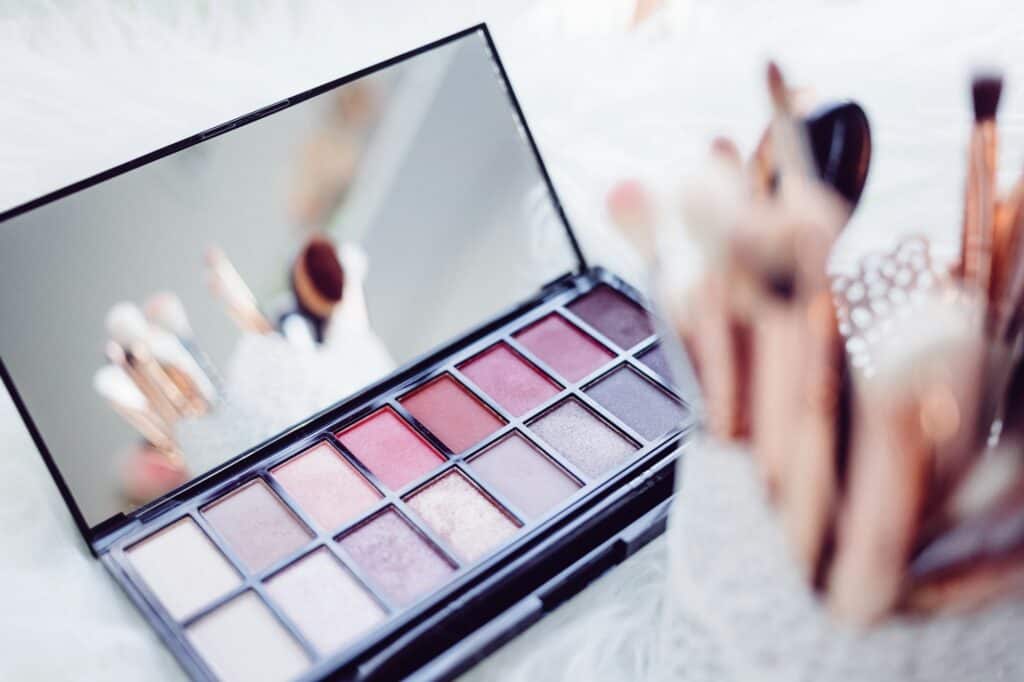
What the ritual experiments found
Researchers have tested rituals more formally, too. In 2016, Alison Wood Brooks and six colleagues published a set of experiments in Organizational Behavior and Human Decision Processes. They defined a ritual as a fixed sequence of symbolic actions, repeated with some formality. Across their studies, people who performed a short ritual before a stressful task felt less anxious. They also performed better, on both physical and self-reported measures of anxiety. Interestingly, the label mattered. When the same actions were called a ritual, they helped more than when they were called random behaviors. So the meaning you give a routine may count as much as the steps themselves. Your evening routine, named and kept, may carry that same soothing weight.
The lesson for your own routine is gentle. A ritual does not need to be long or costly to help. Instead, it needs a clear start, a few deliberate steps and a definite finish. For example, you might warm a cleansing balm between your palms, press it in slowly, then rinse. Next comes one serum and one cream, applied in the same order each night. Finally, close the ritual with a small signal, such as dimming the lamp. The right tools deepen the pleasure, because texture and weight make each step feel intentional. So the pieces below are chosen for touch and longevity. None of them is essential, yet each one turns a routine into something you look forward to.
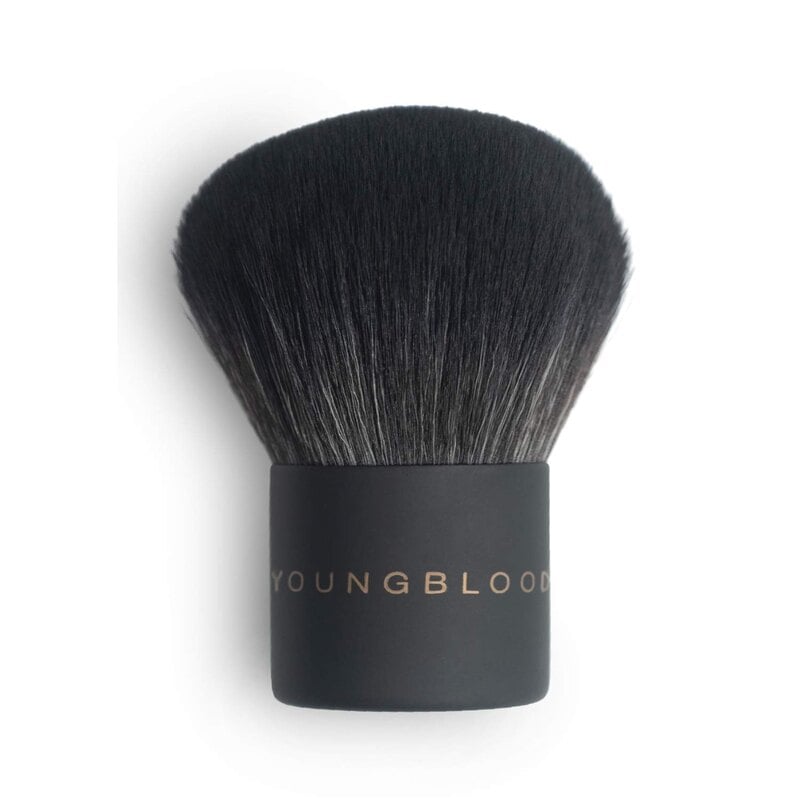
A dense, soft kabuki that slows the first step of the ritual.
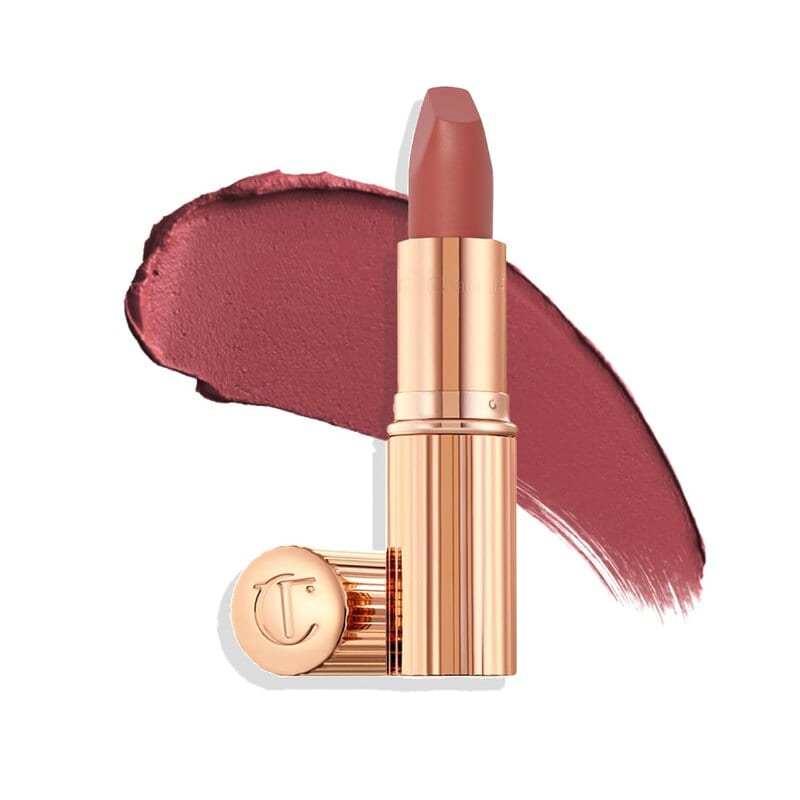
A weighted gold case and a long-wearing finish to close the ritual.
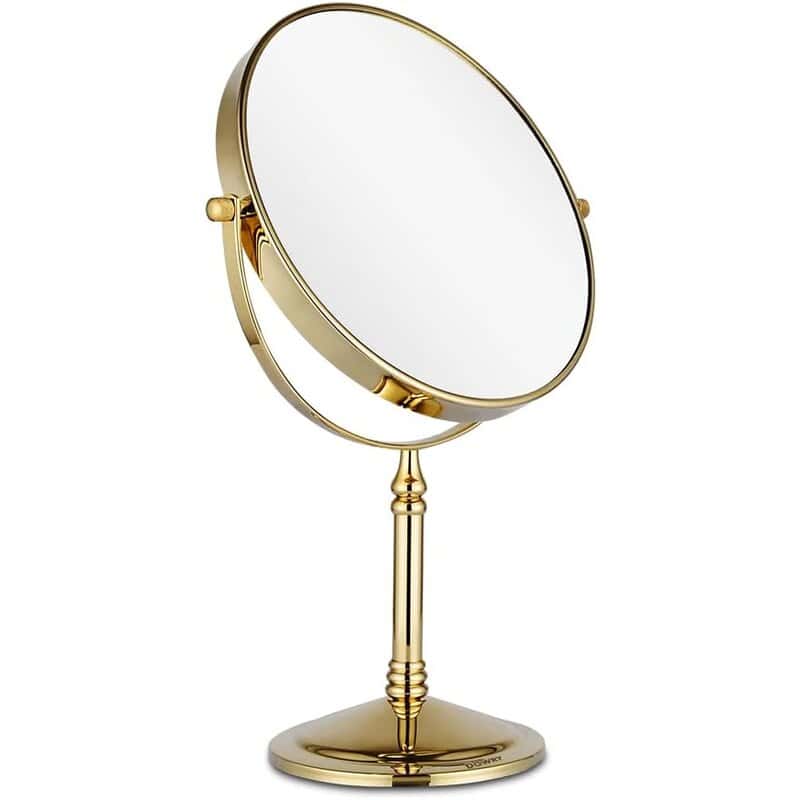
A gold-finish tabletop mirror that marks where the ritual begins.
When rituals help most
Rituals tend to help most when stress is high. A gentle Sunday morning may not change much, whereas a tense evening before a big day might. That makes a beauty ritual less of a luxury and more of a practical tool. Even so, the research has limits worth stating. Most of these studies took place in labs, with volunteers, over short periods. They tell us how people feel just before a task, rather than over months. Still, the finding fits what many women already sense at the mirror. The routine itself, done with attention, can settle the mind. Therefore, treat your routine as something you do for yourself, never as a chore to rush through.
You may also like


The science behind makeup and mood: what one clinical trial found
A 2024 trial in Dermatology and Therapy tested this idea directly. Maria Cecília Veçoso and colleagues recruited 240 Brazilian women who did not usually wear makeup. Half were randomly assigned to a makeup workshop, a product kit and regular encouragement. The other half received only the study questionnaires. Over 60 days, the researchers tracked depressive symptoms with a standard self-rating scale. In the abstract, they report an average drop of 8.3 percentage points on that scale. Importantly, the clearest gains appeared among women whose makeup use actually increased. Women who did not change their habits showed little change. So the routine itself, rather than simply owning the products, seemed to matter most.
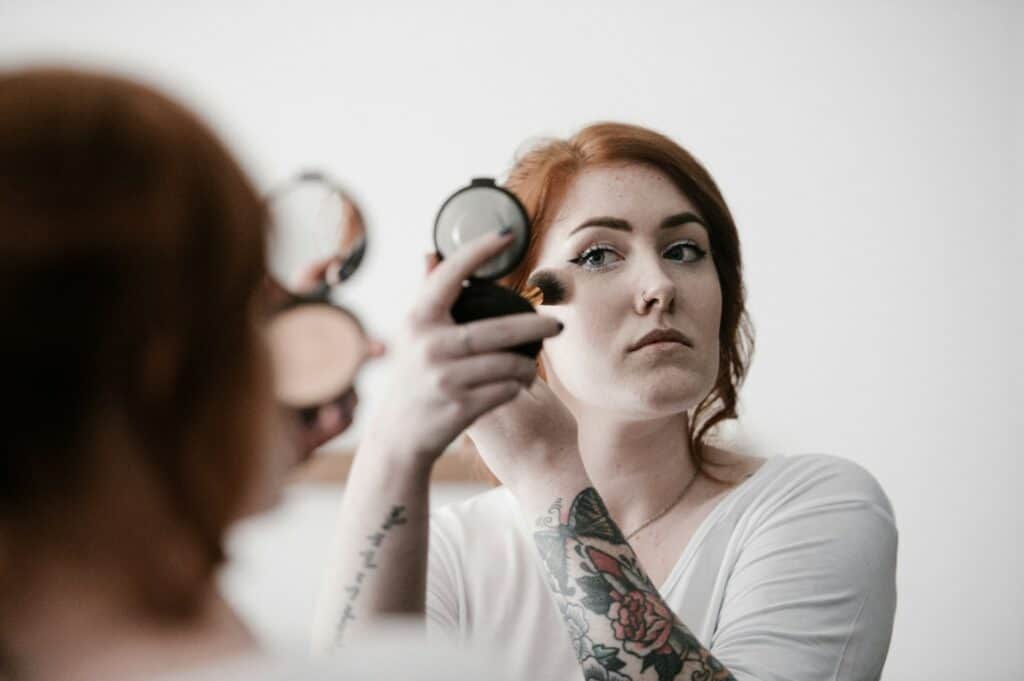
The trial measured two other things as well. In a smaller in-person group, self-image scores on a mirror test rose after the first workshop. In addition, salivary cortisol, a common stress marker, fell after that first application. However, the cortisol change did not last to the later checks. The authors also note clear limits. The trial was open, so everyone knew which group they were in. Its mirror test had not been validated for this use, and many participants left before the end. Above all, it measured symptoms rather than diagnosed depression. Makeup is therefore not a treatment. This is general information, not medical advice, so speak with a doctor if low mood lingers for weeks.
How others see a made-up face
Makeup also changes how other people read a face, at least in the lab. In a 2011 PLoS ONE study, Nancy Etcoff and colleagues photographed 25 women in four ways. Each woman appeared bare-faced, then in natural, professional and glamorous makeup looks. Next, 149 adults judged the faces after a glimpse of a quarter of a second. Later, another 119 adults judged them with unlimited time to look. In both groups, makeup raised ratings of attractiveness and competence. At a glance, every look also raised likability and trustworthiness. With longer viewing, though, the picture changed in a telling way. The glamorous look no longer raised likability, and it actually lowered trust.
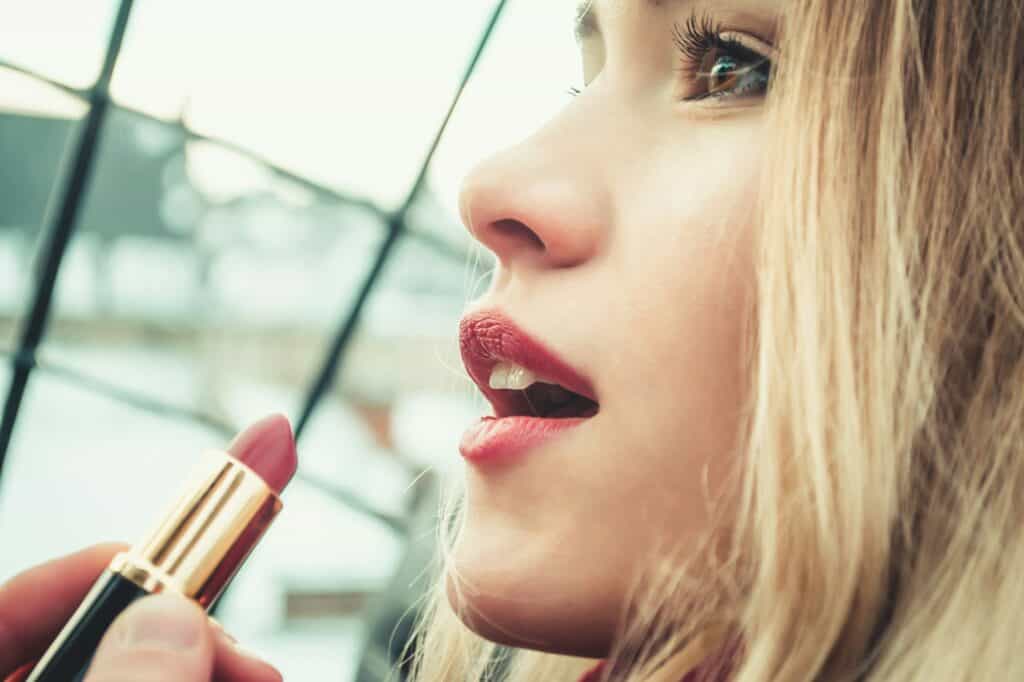
So what does that mean for your own routine? First, it suggests that softer looks travel well across settings, from a first meeting to a long dinner. Second, it reminds you that makeup speaks to others as well as to you. Even so, the study has clear limits. It used photographs rather than real conversations, and the raters were strangers. It also measured snap judgments, which are not the same as lasting regard. For that reason, take the findings as a small insight into first impressions. They do not show that anyone needs makeup to be taken seriously. If you would like to refresh what you wear, our guide to updating a makeup routine walks through it gently.
You may also like
Clothes and self-perception: enclothed cognition
In 2012, psychologists Hajo Adam and Adam Galinsky coined the term enclothed cognition. Their paper in the Journal of Experimental Social Psychology defined it as “the systematic influence that clothes have on the wearer’s psychological processes.” In their tests, people wore a white lab coat during attention tasks. When the coat was described as a doctor’s coat, sustained attention improved. When the same coat was called a painter’s coat, the effect did not appear. Simply seeing a doctor’s coat did not help either. In short, the authors argued that clothes work through two things together. They matter through their symbolic meaning, and through the physical experience of wearing them.

However, science moves forward by testing striking results again. In 2019, Devin Burns and colleagues published a preregistered replication in the same journal. They repeated one of the original lab coat tests on attention, with the plan registered in advance. This time, the coat made no detectable difference. The authors concluded that any such effect is likely too small to detect with the original design. The honest summary, then, is cautious. Clothes may shape how you feel and behave, yet the size of that effect is still debated. For a makeover, the practical lesson remains modest. Dress for the woman you want to feel like, and simply notice what changes.
A ritual of noticing
That noticing can become a ritual of its own. For instance, you might choose one piece that makes you stand a little taller, such as a silk blouse or a soft tailored jacket. Then wear it on an ordinary day, rather than saving it for an occasion. Pay attention to your posture, your pace and how you speak in it. Over a few weeks, patterns tend to appear. Certain colors may feel brighter, and certain fabrics may feel steadier. Meanwhile, pieces you never reach for can leave the closet. In that spirit, the pieces below are chosen for how they feel against the skin. Each one rewards slow, everyday wear, which is where clothing does its most personal work.
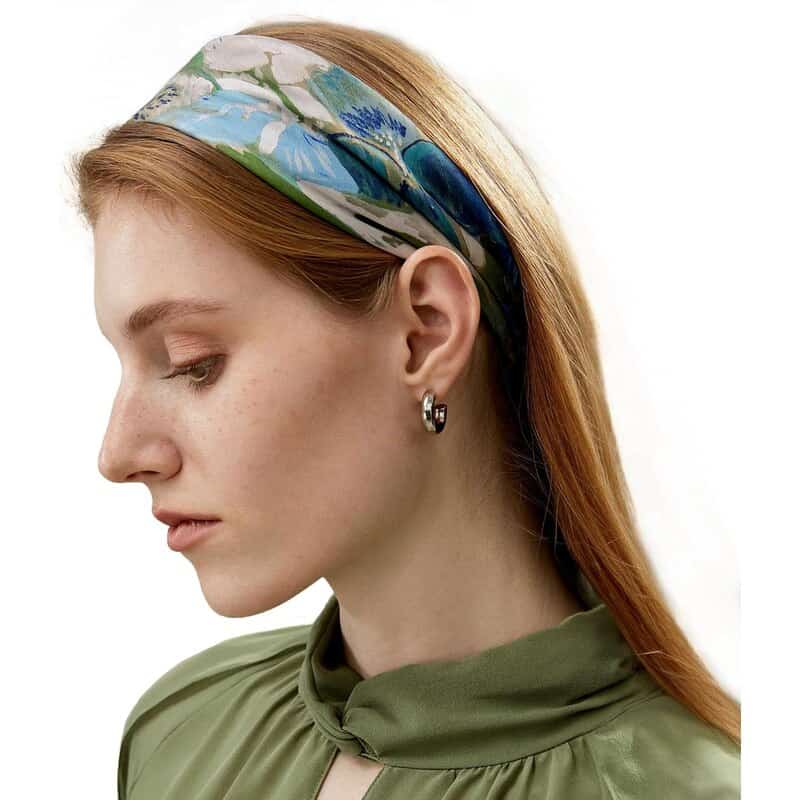
A painterly floral square, worn at the neck on an ordinary day.
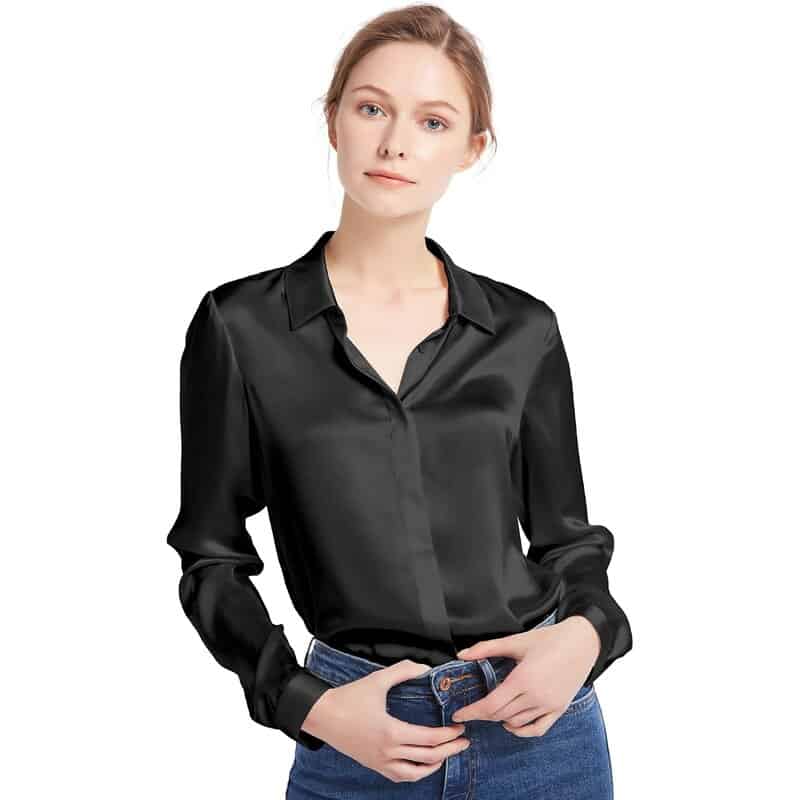
The piece that makes you stand a little taller.
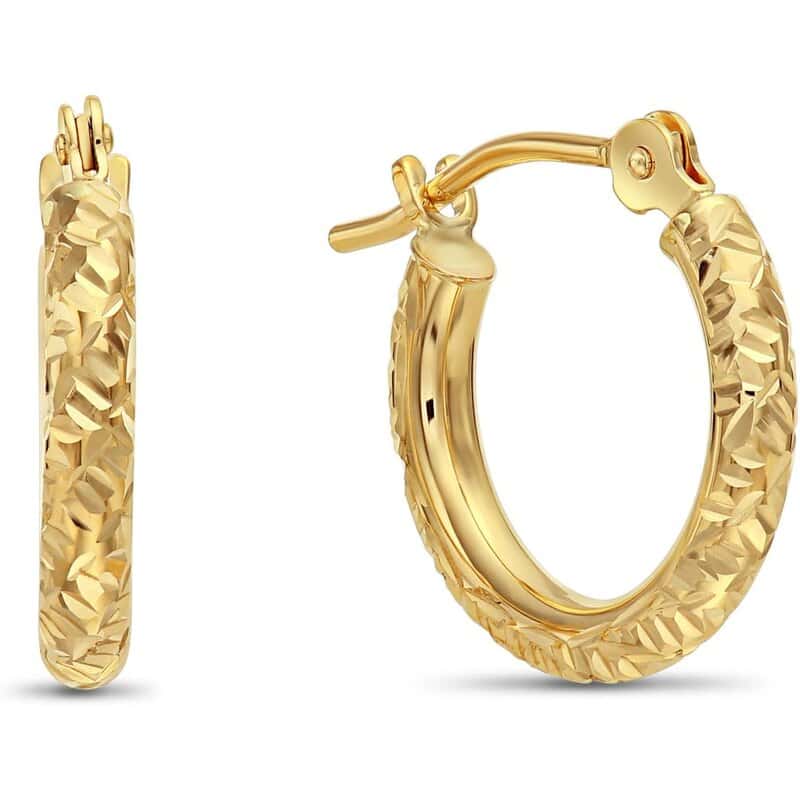
Small 14k gold hoops with a hand-engraved shimmer.
Fragrance belongs in this conversation as well, since it is something you wear close to the body. A scent can mark the start of a day in much the way a jacket does. Some women choose one for work and another for evenings, simply to signal the shift. If that idea appeals, our guide to choosing a signature scent explores how to find one that feels like yours. Accessories carry meaning, too, from a watch that belonged to your mother to earrings bought for a milestone. Their power is personal rather than measured. Still, the principle behind enclothed cognition fits them well. What you wear matters partly because of what it means to you.
Why something new feels good: novelty and fresh starts
Part of the lift from a makeover may come from newness itself. In a 2006 brain-imaging study in Neuron, Nico Bunzeck and Emrah Düzel showed volunteers images. A small midbrain region rich in dopamine neurons responded most strongly to images that were new. Notably, it responded to novelty itself, rather than to other striking features. The authors suggested that this response might help the brain learn. Their study did not test haircuts or outfits. Even so, it offers one plausible reason why a fresh look can feel energizing. A new reflection is, in a small way, new information for the brain. That may be part of why the first week of a new cut feels so bright.
Timing plays a role as well. In 2014, Hengchen Dai, Katherine Milkman and Jason Riis described the “fresh start effect” in Management Science. Across three field studies, Google searches for “diet,” gym visits and new goal commitments all rose after landmarks. Those landmarks included a new week, month or year, a birthday and a holiday. The authors proposed that such moments place past lapses in an earlier chapter. They also encourage people to take a big-picture view of their lives. That helps explain why so many makeovers begin around a birthday, a move or a new role. A landmark gives change a natural place to start, and a reason to keep going.
Join the waitlist for the 21-Day Skin & Gut Health Reset, a guided daily ritual for skin and gut, from within. Leave your email and we will write when there is news.
Occasional letters. Unsubscribe anytime.
Choosing your own landmark
You can use that pattern deliberately. Choose a date that already means something, such as a birthday, an anniversary or the first day of a season. Then let the makeover begin there, with one or two clear intentions. Some women start with the outside, through a cut, a color or a closet edit. Others begin within, with skin, digestion and rest. If that inner route appeals, the 21-Day Skin & Gut Health Reset is a guided daily ritual for skin and gut, from within. You can join the waitlist on its page. Whichever route you choose, a meaningful start date gives the change a story. Stories, after all, tend to stick.
Rest and the face: the beauty sleep study
Sleep is the least glamorous step in any makeover, yet it shows on the face. In a 2010 study in The BMJ, John Axelsson and colleagues photographed 23 healthy adults twice. One photo followed a normal night of sleep, while the other followed 31 hours awake. Then 65 untrained observers rated the photos without knowing which was which. On average, the sleep-deprived faces looked less healthy, less attractive and more tired. The researchers also found that faces judged less healthy were seen as less attractive. Admittedly, the drop in attractiveness was small, and the volunteers were young. Still, the result gives the old phrase “beauty sleep” some real, measured support.
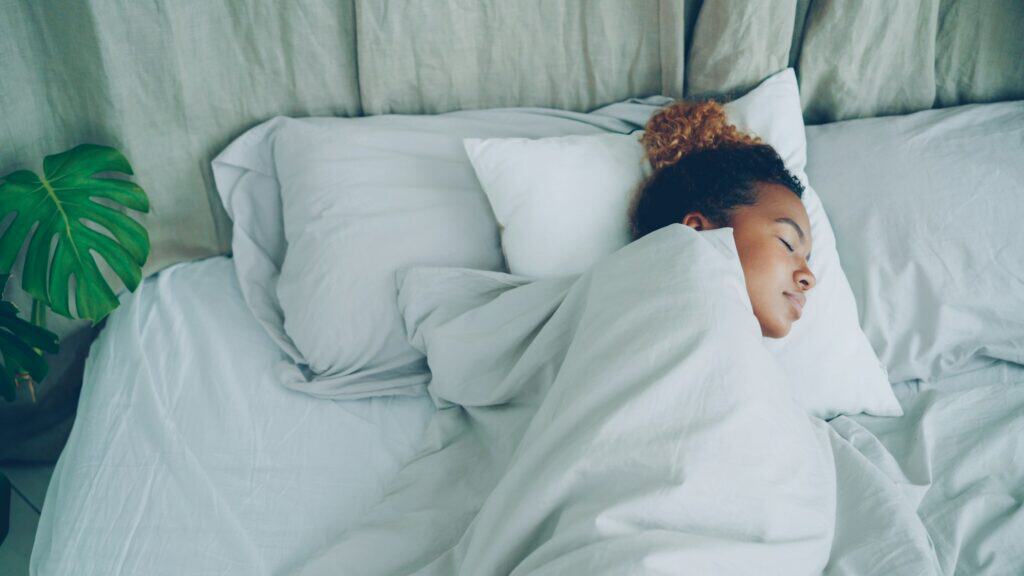
The practical message is reassuring rather than strict. You do not need an exact routine, only a steadier one. For instance, try going to bed at roughly the same time on most nights. Dim the lights an hour before sleep, and keep the bedroom cool and dark. Many women also find that an evening skincare ritual doubles as a signal to wind down. In that way, the ritual research and the sleep research point in the same direction. A familiar sequence tells the body that the day is ending. With that idea in mind, the pieces below are chosen for the last hour of the evening. Each one supports rest, reflection or both, without promising more than it can do.
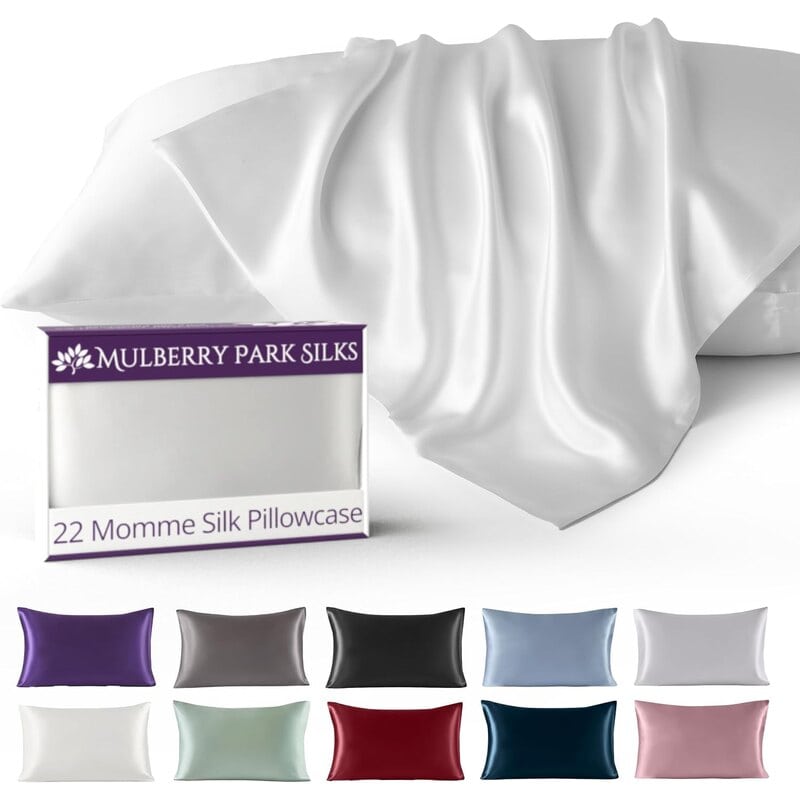
Cool white silk for the last hour of the evening.

A contoured black silk mask for a properly dark room.
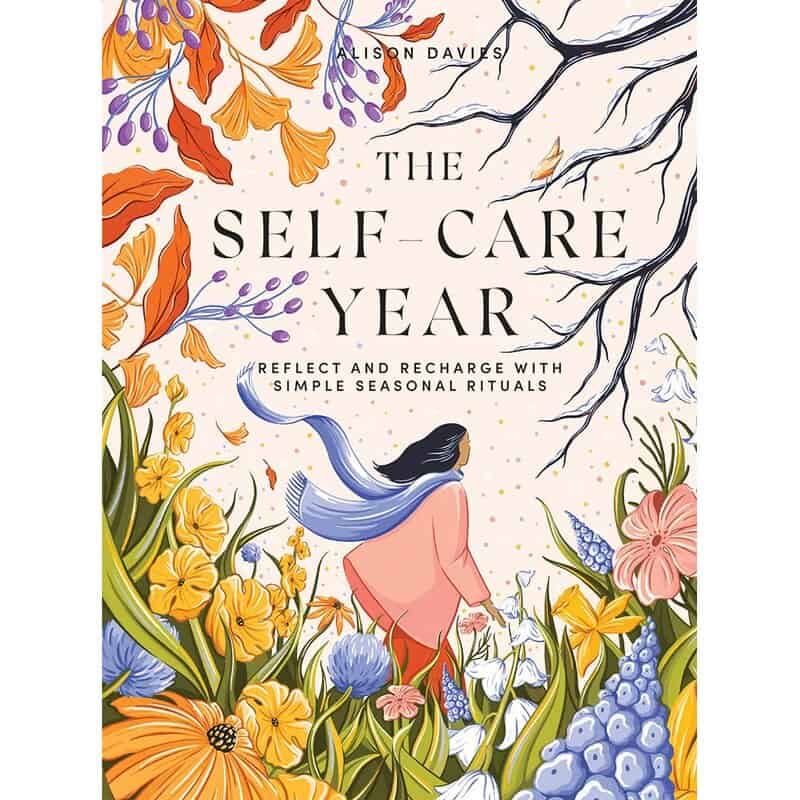
A book for the bedside
The book in that selection deserves a word of its own. The Self-Care Year by Alison Davies gathers small seasonal rituals into one gentle volume. It suits the slow, cumulative approach that the research supports. Instead of one dramatic change, it suggests a small act of care for each season. Some are practical, while others are reflective, such as writing or time outdoors. Keeping it by the bed turns reading into part of the evening ritual. Equally, a simple notebook can serve the same purpose. A few lines each night about what felt good that day can sharpen your sense of what to keep. Over time, those notes become a record of the makeover from the inside.
Beauty and wellbeing: what the surveys say
Large surveys add a wider view of the science of makeovers, although they cannot prove cause and effect. Several are also commissioned by brands, so they deserve a careful reading. Even so, they show how closely women link appearance and wellbeing. In a 2025 Beauty and Wellbeing Report, Oriflame surveyed 3,500 women across seven countries. The fieldwork was run by the research firm Toluna. In that survey, 95% of respondents said they recognize a link between beauty and wellbeing. Meanwhile, a 2024 Talker Research poll of 2,000 American women, commissioned by Doctor’s Best, found a similar theme. There, 79% agreed that feeling healthy inside helps them feel more beautiful outside.

A third survey adds a more sobering note. In 2016, Dove’s Global Beauty and Confidence Report drew on interviews with 10,500 women and girls in 13 countries. As HuffPost UK reported, 85% of women said they opt out of important life activities when they feel bad about their looks. Those activities included time with family and loved ones. That figure suggests that how you feel about your appearance can gradually shrink your life. As a result, the goal of a makeover is not a new face. Rather, it is feeling at ease enough to show up for the moments that matter. That aim is far gentler, and it is also far more achievable.
The flip side: filters, comparison and when change does not help
The same research that links beauty and wellbeing also points to a risk. When the standard is unreal, care can turn into comparison. A 2024 narrative review in Healthcare, led by Mariana Merino, examined social media and body image. It found that constant exposure to idealized images often goes with greater body dissatisfaction and distress. Similarly, a 2024 review in Frontiers in Psychology pooled 14 studies on adolescents. Its authors described how digital platforms intensify appearance culture and social comparison. Filters add another layer. In 2021, ParentsTogether surveyed more than 200 US teens aged 13 to 21. In its report, 61% said beauty filters make them feel worse about their real looks.
That sample was small, yet the finding is hard to ignore. The lesson for a makeover is to curate what you see as carefully as what you wear. For example, unfollow accounts that leave you feeling less like yourself. Instead, follow people whose faces look lived in and real. It also helps to know when outer change is not the answer. Some people feel intense, lasting distress about parts of their appearance that seem minor to the people around them. According to the Cleveland Clinic, this can be body dysmorphic disorder, and cosmetic surgery has not been shown to improve its symptoms. Cognitive behavioral therapy is the main treatment, so a doctor is the right first step.
Where outer change meets inner work
A new look can open a door. Even so, what you believe about yourself decides whether you walk through it. That is why inner work belongs in any honest account of the science of makeovers. Therapy is one route. In its 2024 Pulse on Mental Health Report, the counseling provider Thriveworks shared results from Wakefield Research. That survey of more than 2,000 US adults ran in November 2023. Among the benefits of therapy that respondents reported, 46% named enhanced overall happiness. Another 44% named improved self-esteem. Because a therapy provider commissioned the survey, read it as a snapshot of perception rather than proof. Still, it echoes a simple idea. Feeling better inside often changes how the outside feels.

For some women, the wish for a new look carries older pain. A comment from childhood, a hard relationship or a loss can live on in the mirror. In those cases, gentleness comes first, and change can wait. Our guide to trauma-informed beauty explores that tender ground with care. It looks at how to approach beauty when the mirror feels complicated. Meanwhile, small daily acts can support both sides at once. A short walk, a page of writing or a call with a friend can sit beside your skincare routine. Over time, those inner habits often make outer changes feel more like you. In the end, a makeover works best when both halves move together.
Putting the science of makeovers to work
So what does the evidence suggest for your own makeover? The pattern is consistent across these studies. Small, repeated acts of care seem to matter more than one dramatic change. A ritual you can finish may ease tension, and a regular routine may lift self-image. Clothes with personal meaning may shape how you carry yourself, although the effect is debated. Rest shows on the face, and a meaningful start date can help new habits begin. On the other hand, filtered images can erode the very confidence a makeover seeks. The table below gathers these findings in one place. It notes what each one suggests and how far the evidence goes, so you can weigh them yourself.
| Finding | Evidence | What it suggests for you |
|---|---|---|
| Rituals ease anxiety | Lab experiments, Brooks et al. 2016 | Give your routine a clear start, middle and finish |
| Makeup and mood | Open randomized trial, Veçoso et al. 2024 | A regular routine may lift self-image; it is not a treatment |
| First impressions | Photo ratings, Etcoff et al. 2011 | Softer looks read well over longer meetings |
| Enclothed cognition | Original 2012 study; 2019 replication found no effect | Notice how clothes feel, without expecting miracles |
| Novelty and fresh starts | Brain imaging 2006; field data 2014 | Begin on a date that already means something |
| Beauty sleep | Photo ratings, Axelsson et al. 2010 | Keep a steadier bedtime and a short evening ritual |
| Filters and comparison | Reviews 2024; teen survey 2021 | Curate your feed as carefully as your closet |

From there, a simple plan follows. First, choose one ritual you can finish in under ten minutes, morning or night. Next, pick one piece of clothing that changes your posture, and wear it on an ordinary day. Then set a start date that already carries meaning for you. After that, protect your sleep for a few weeks and notice your face in natural light. Alongside these steps, edit your feed until it leaves you feeling like yourself. Finally, pair every outer change with one inner habit, such as writing or walking. Review it all after a month, keeping what feels good and letting the rest go. That, in practice, is the science of makeovers at its most useful.
The research, in brief
Every study and figure in this article comes from a named source. Ritual research comes from Brooks and colleagues (Organizational Behavior and Human Decision Processes, 2016), and the makeup trial from Veçoso and colleagues (Dermatology and Therapy, 2024). First impressions come from Etcoff and colleagues (PLoS ONE, 2011). Enclothed cognition comes from Adam and Galinsky (2012), with the 2019 replication by Burns and colleagues.
Novelty comes from Bunzeck and Düzel (Neuron, 2006), fresh starts from Dai, Milkman and Riis (Management Science, 2014), and sleep from Axelsson and colleagues (The BMJ, 2010). Surveys come from Oriflame (2025), Talker Research (2024), Dove (2016, as reported by HuffPost UK), ParentsTogether (2021) and Thriveworks (2024). Reviews appear in Healthcare and Frontiers in Psychology (2024), and body dysmorphic disorder guidance comes from the Cleveland Clinic. Checked November 2026.
Sources: Dermatology and Therapy · PLoS ONE study · Neuron · The BMJ · Healthcare.
Recommended
A new look, and the woman behind it
The science of makeovers does not promise transformation in an afternoon. Instead, it describes something gentler and more lasting. A ritual you finish steadies the mind, and a routine you keep can lift how you see yourself. Clothes you love may change how you carry the day. Rest restores the face, while a meaningful date gives change a place to begin. None of this asks you to become someone else. Rather, it invites you to care for the woman you already are, with attention and pleasure. So begin with one small ritual this week. Then add another when it feels natural, and return to the research whenever you need a reminder of why it works.


Each of the tools above serves the same idea: that beauty is a ritual you choose rather than a problem to solve. The ring quiz is a gentle way to understand your own style, especially when a proposal or anniversary is near. The 21-Day ritual turns attention inward, toward skin and gut, at a pace you can keep. Meanwhile, the Makeover Bible gathers hair and skin rituals into one guided reference you can return to again and again. Each one offers a single clear next step, which is how lasting change usually begins. Choose the tool that matches the step you are on today. Then come back for the next one when you feel ready.
The 21-Day Skin & Gut Health Reset is a guided daily ritual for skin and gut, from within. Gentle, unhurried and made to fit real life. Join the waitlist to hear first when there is news.
Join the waitlistQuestions worth asking
What is the science behind makeup and mood?
Several studies link makeup routines with mood and self-image. In a 2024 trial in Dermatology and Therapy, women whose makeup use increased reported fewer depressive symptoms and better mirror self-image. The trial was small and open, however, and it measured symptoms rather than diagnosed depression. A routine can support wellbeing, but it does not replace medical care.
Why does a makeover make you feel good?
Researchers point to several factors working together. Rituals with a clear start and finish can ease anxiety. Novelty engages a dopamine-rich region of the brain, and meaningful dates make fresh goals easier to begin. In addition, clothes and makeup can shape how you feel and how others first see you. Most of these effects are modest rather than dramatic.
What is enclothed cognition?
Enclothed cognition is a term coined by Hajo Adam and Adam Galinsky in 2012. It describes how clothes can influence the wearer’s thoughts and attention, through both their meaning and the experience of wearing them. A 2019 preregistered replication did not find the original lab coat effect, so the size of the effect is still debated.
Are beauty filters bad for self-esteem?
Reviews published in 2024 link constant exposure to idealized images with greater body dissatisfaction, especially in young people. In a 2021 ParentsTogether survey, 61% of teens said beauty filters make them feel worse about their real looks. Limiting filtered content and following people who look real is a sensible part of any makeover.
Can a makeover help with low self-esteem?
A makeover can lift your mood and help you feel more at ease, especially when it builds small, caring habits. However, it cannot resolve deeper distress on its own. If worries about your appearance feel constant or overwhelming, speak with a doctor or therapist. Cognitive behavioral therapy is the main treatment for body dysmorphic disorder.
Is the science of makeovers settled?
No. Much of the evidence comes from small trials, lab experiments and brand-commissioned surveys, and at least one well-known finding failed to replicate. That is why this article names the design of each study and links every source. The overall pattern is still useful: small, repeated acts of care tend to matter most.