
The Artist · Theater
The actor looks finished in the dressing room mirror. Then the lights come up, and from row twenty her face has disappeared. There are no cheekbones and no eyes, just a pale oval under a wig. Stage makeup exists to stop that from happening. This guide is part of our pillar guide for makeup artists. It explains how distance and lighting change makeup and how to build a stage face that reads from the back row. It also covers how theater makeup artists work, from school productions to touring shows.
The short answer
Stage makeup is theatrical makeup designed to keep an actor’s features readable at a distance and under strong, often colored, stage lighting. It uses stronger definition, cream or cake bases that survive heat and sweat, and colors chosen with the lighting plan in mind. The larger the theater, the bolder the makeup needs to be.
In this guide

Why stage makeup is different
On camera, makeup is seen from a few feet away, and the camera can move closer. On stage, the audience may sit forty or fifty yards from the actor, and nobody moves closer. Distance flattens a face, so shadows, eyes and lips lose definition and the face reads as one pale shape. A curriculum unit from the Yale-New Haven Teachers Institute puts it simply: when the distance between actor and audience is slight, as in an arena staging, makeup is subtle. When the theater is large, makeup must be stronger and bolder so the actor’s features can be seen. That single principle shapes every decision in stage makeup. Everything else in this guide builds on it.
Venue size is the first thing to ask about on any new production. A black-box theater with a hundred seats calls for makeup that looks almost natural up close. There, the front row may be a few feet from the actor. A large proscenium house calls for firmer contour, stronger eyes and more defined lips. Touring productions face both, sometimes in the same month. For that reason, check the makeup from the back row and the front row before opening, and adjust the plan for each space. Meanwhile, remember that the audience also sees the actor from the side and from above in balcony seats. The face must read from all of those angles, not only from the center of the stalls.
Stage makeup and lighting
Stage lighting is brighter than daylight and often colored, and it changes how makeup looks. Strong white light washes out color and flattens contour. That is why stage makeup uses deeper shadows and more saturated color than street makeup. Colored light shifts color further. The Yale unit gives two examples: red stage lights call for a heavy pink-toned base and a rouge with a blue tint, and strong amber lights call for a pink base and heavy red cheeks. Those exact formulas date from older lighting technology, but the principle still holds. Every lighting plan changes the makeup, so the makeup must be planned with the lighting. Ask for the lighting plan as early as the costume designs.
In practice, that means working with the lighting designer early. Ask for the main color palette of each scene. If possible, test the makeup on an actor under the actual lighting rig before technical rehearsals. Then look for problems: blush that disappears, lips that turn brown or gray and contour that vanishes under a strong front light. Adjust one element at a time and photograph each test from the house, not from the stage. Meanwhile, keep a note of any scene where the makeup fails, and discuss it with the designer. Sometimes a small lighting change solves the problem more easily than a makeup change. Good collaboration saves time for everyone during technical rehearsals.
Ben Nye Media Pro HD Creme Blush Wheel — cheek color that survives the lights
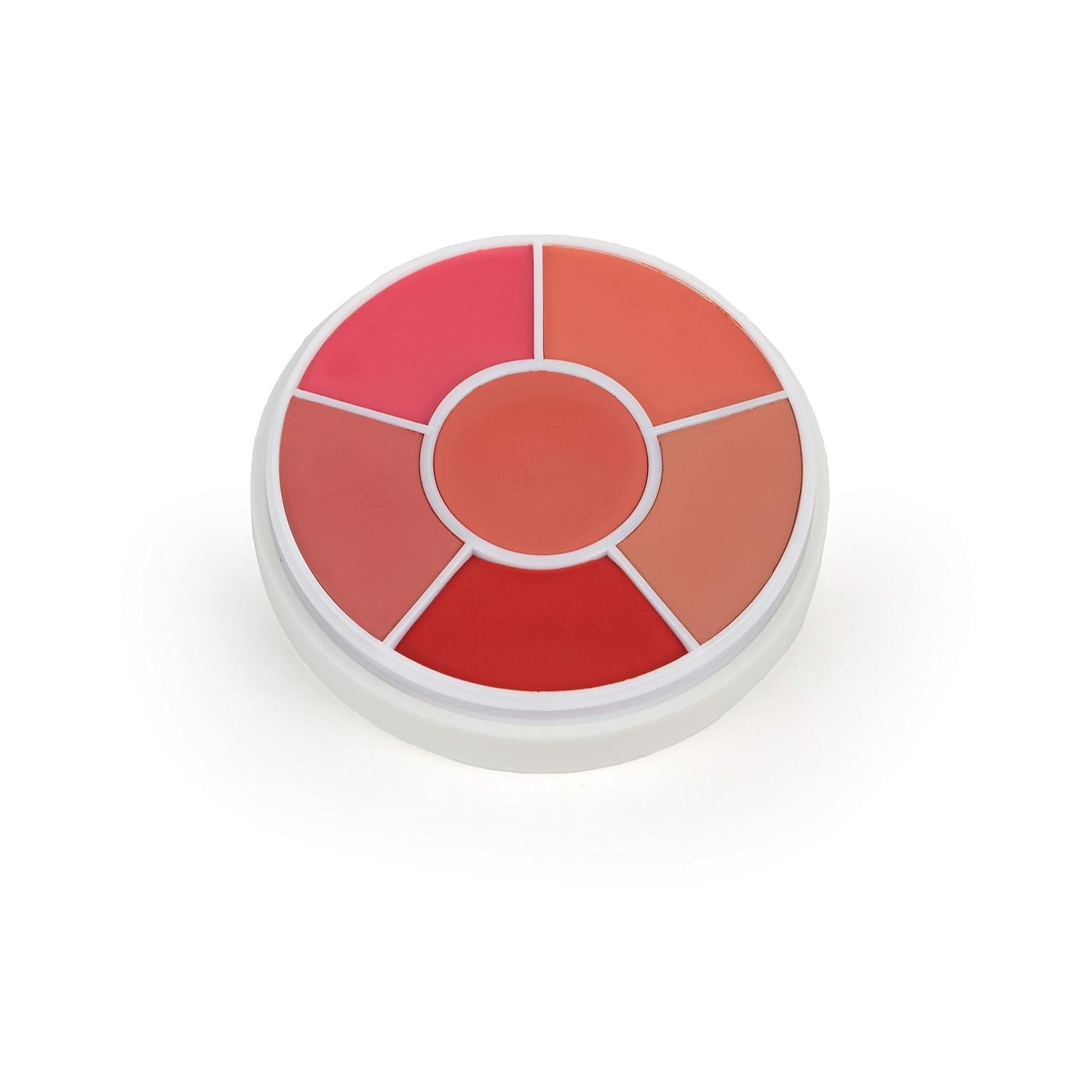
A creme blush wheel with a range of rose, coral and berry shades in one compact palette. On stage, mix shades to adjust for the lighting plan, using a cooler tone under warm light and a warmer one under cool light. Press it on with a sponge and build in layers until it reads from the house. Take product from the wheel with a clean spatula for each actor.
Building a stage face
Base
A stage base needs to cover evenly, survive heat and sweat and stay true under strong light. Cream and stick foundations are common because they blend well, cover strongly and can be set with powder. Choose a shade close to the actor’s skin or slightly warmer. Strong white light can make skin look paler and grayer. Apply it thinly with a damp sponge, building coverage only where needed. Then set it well. For a large cast, keep shade records for each actor, so understudies and dressers can match the base exactly. In addition, check the neck, ears and hands, because the audience sees far more of the body than a camera close-up would. Blend the base into the hairline and under the jaw.
Mehron CreamBlend Stick — a cream base for the stage
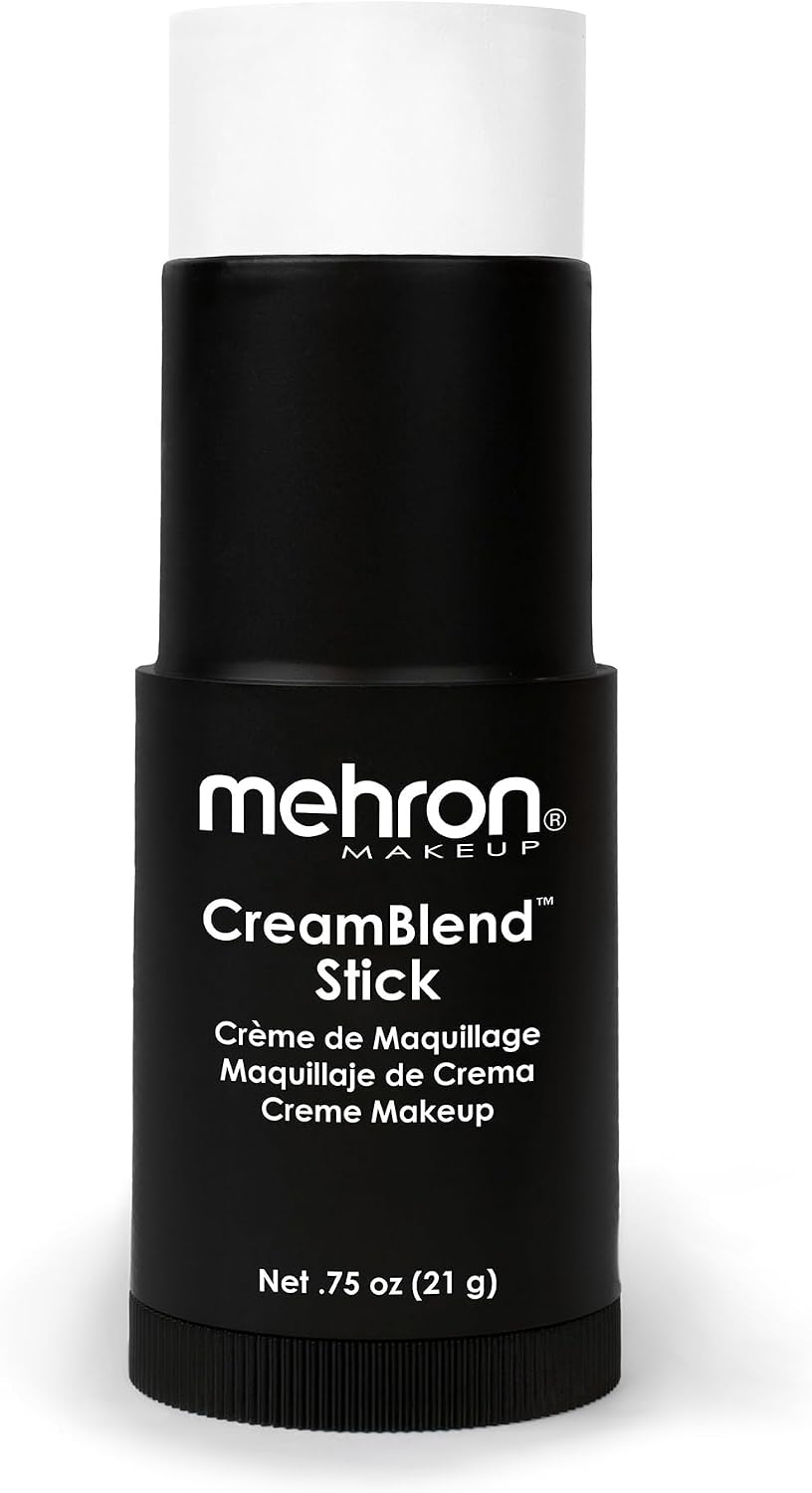
A cream foundation stick made for face and body, with strong coverage that blends smoothly. Draw a few lines on the face, then blend with a damp sponge for an even stage base. Set it with a translucent powder so it lasts under hot lights. Choose the shade under the actual stage lighting, not only in the dressing room.
Contour and definition
Definition is what makes a face readable from the house. Shade under the cheekbones, along the sides of the nose and under the jaw, and add highlight on the cheekbones, the bridge of the nose and the brow bone. For stage, these shadows need firmer edges and more contrast than for camera. However, they should still be blended so they read as structure, not stripes. Meanwhile, read the actor’s face first, because shading in the wrong place changes the face rather than defining it. Our guide to face shape theory explains how to read bone structure. Then step back to the house and check. If the face looks flat, add depth, and if it looks drawn on, soften the edges.
Eyes and lips
Eyes carry most of an actor’s expression, so they need the most definition of any feature. Line the upper lash line firmly and extend it slightly. Then line the lower lash line from the outer corner and add depth in the crease. Lashes help, especially for musical theater and dance, where the audience must read the eyes during movement. Brows need definition too, because they frame every expression the audience reads. Lips should be lined and filled in a color that reads under the lighting plan, usually a shade or two stronger than street makeup. Meanwhile, avoid very pale lips, which disappear from a distance. Very dark lips can read as black under some lights. Test both under the rig before deciding.
Ben Nye Lip Colour Palette — lip shades for the stage
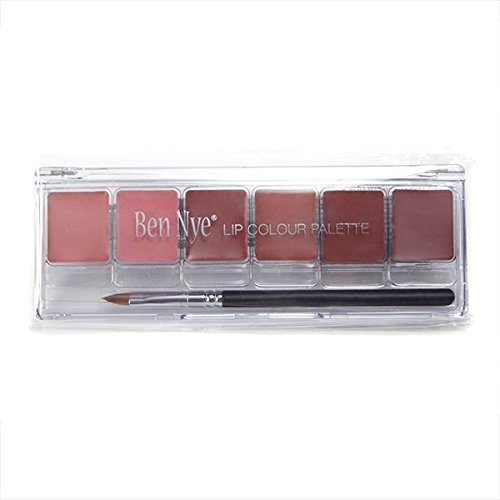
A palette of six cream lip colors in natural shades, made for theatrical use. Mix shades to match each actor and the lighting plan, and apply with a disposable or sanitized lip brush. Line the lips first so the color stays defined from the house. Record each actor’s mix for understudies and dressers.
Making stage makeup last
A show is long, hot and physical. Stage makeup must last through sweat, costume changes and sometimes stage combat or dance. Set every layer of cream makeup with powder, pressing it on with a puff rather than brushing, so the base stays in place. A translucent powder works for most actors, and it avoids changing the color of the base under the lights. Meanwhile, keep blotting papers and powder in the wings for quick touch-ups between scenes. For dance shows and long musicals, set the face again at intermission. Ask the stage manager where touch-up stations can be placed, so actors can reach them in seconds. Label each station with the actors who use it.
Mehron Colorset Powder, Translucent — setting powder for long shows
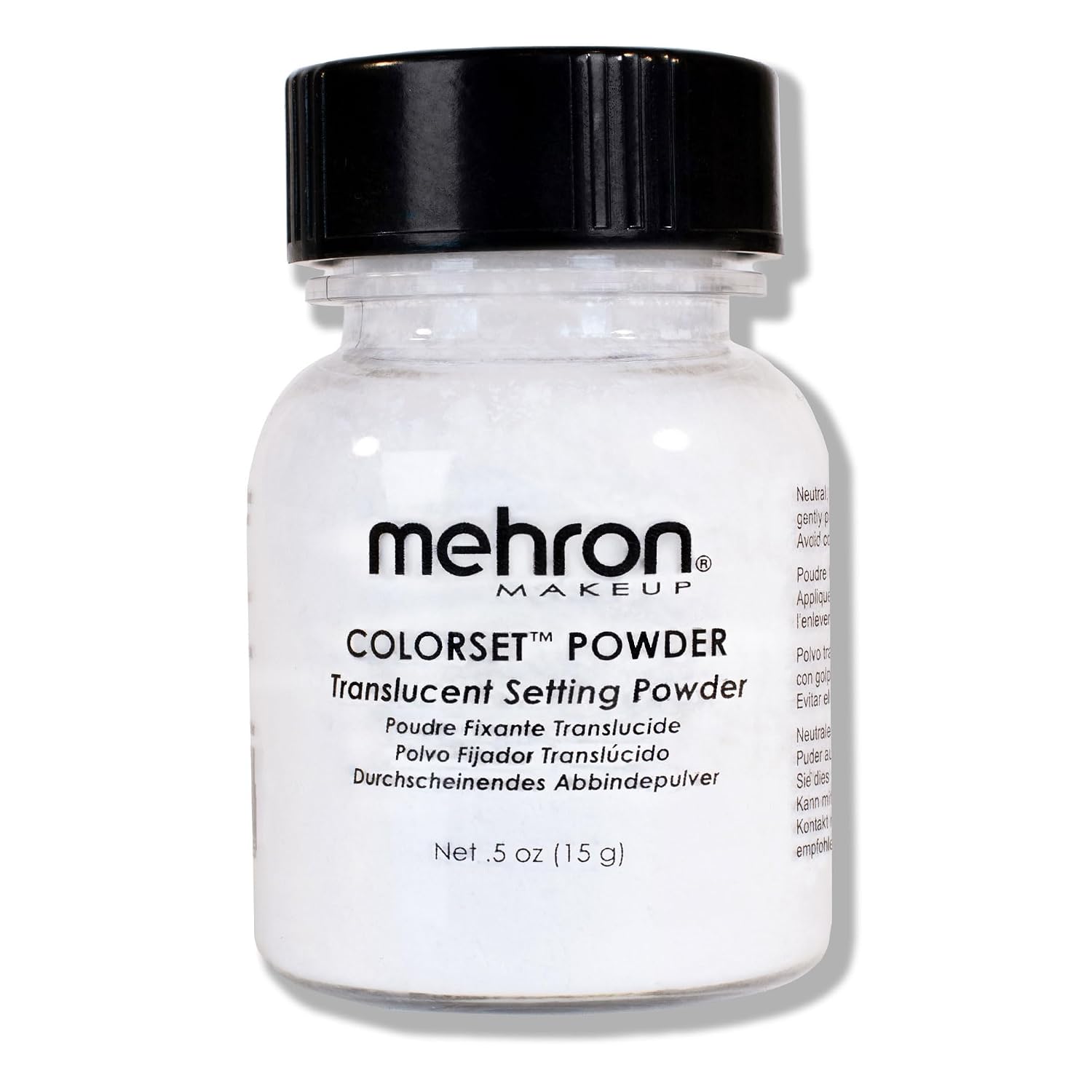
A fine translucent setting powder that sets cream makeup without changing its color. Press it on with a clean puff, wait a moment and dust off the excess. Reapply at intermission for long shows. Keep a small amount in the wings for quick touch-ups between scenes.
Quick changes add another challenge. When an actor changes costume in seconds, makeup can smudge on collars, masks and wigs. Plan each quick change with the wardrobe team: where the actor will stand, who will help and what makeup touch-up is needed. Keep a small kit at each quick-change station, with powder, a sponge, cotton swabs and the actor’s lip color. Meanwhile, ask actors to keep their hands away from their faces during changes, and protect costumes with a scarf over the face when pulling garments over the head. After the first dress rehearsal, check every costume for makeup marks and adjust the plan. Share the updated plan with the wardrobe team before the next run.

Character work: age, injuries and facial hair
Theater often asks a young actor to play someone much older, sometimes within the same evening. Stage aging relies on stronger shadow and highlight than film aging, because fine texture disappears at a distance. Shade the hollows at the temples, under the cheekbones and around the eyes, and highlight the ridges beside each fold. Add a few strong lines where the actor’s own face creases, and gray the brows and temples. Our guide to character aging work explains the anatomy and techniques in detail. Meanwhile, check the aging from the back row, because the subtle work that reads on camera often vanishes on stage. Exaggerate a little more than feels natural in the mirror, then check again from the house.

Facial hair is another common stage need, especially in period plays. Crepe hair is a braided wool or synthetic hair. It is unbraided, straightened, cut and applied in small layers to build beards, mustaches and sideburns. Work from the bottom of the jaw upward, applying small sections onto a thin layer of adhesive and pressing them into place. Then trim and shape the beard with scissors once the adhesive is dry. Meanwhile, match the color to the actor’s hair or wig, blending two shades for a natural look. Ready-made lace facial hair pieces are an alternative for long runs, because they can be cleaned and reused. They also save time in the dressing room when the schedule is tight between shows.
Mehron Crepe Hair, Medium Brown — for beards, mustaches and sideburns

A braided crepe hair used to build theatrical beards, mustaches and sideburns. Unbraid it, straighten it with steam or a damp cloth, then cut and layer it onto adhesive in small sections. Blend two shades for a natural color. Trim and shape once the adhesive has dried.
Adhesive and removal deserve care. Spirit gum is the traditional adhesive for crepe hair and small pieces: apply a thin layer, let it turn tacky, then press the hair on. It must be removed with its matching remover, never pulled off dry, because pulling damages the skin. Patch test every actor the day before, because some people react to adhesives. Meanwhile, keep adhesive away from the eyes and the hairline, and work in a ventilated room. Our guide to creating burns and cuts covers stage injuries, which often use the same adhesives and removal routines. Keep adhesive and remover in the same labeled bag, so they never get separated on a busy night.
Mehron Spirit Gum and Remover Kit — adhesive for facial hair and small pieces
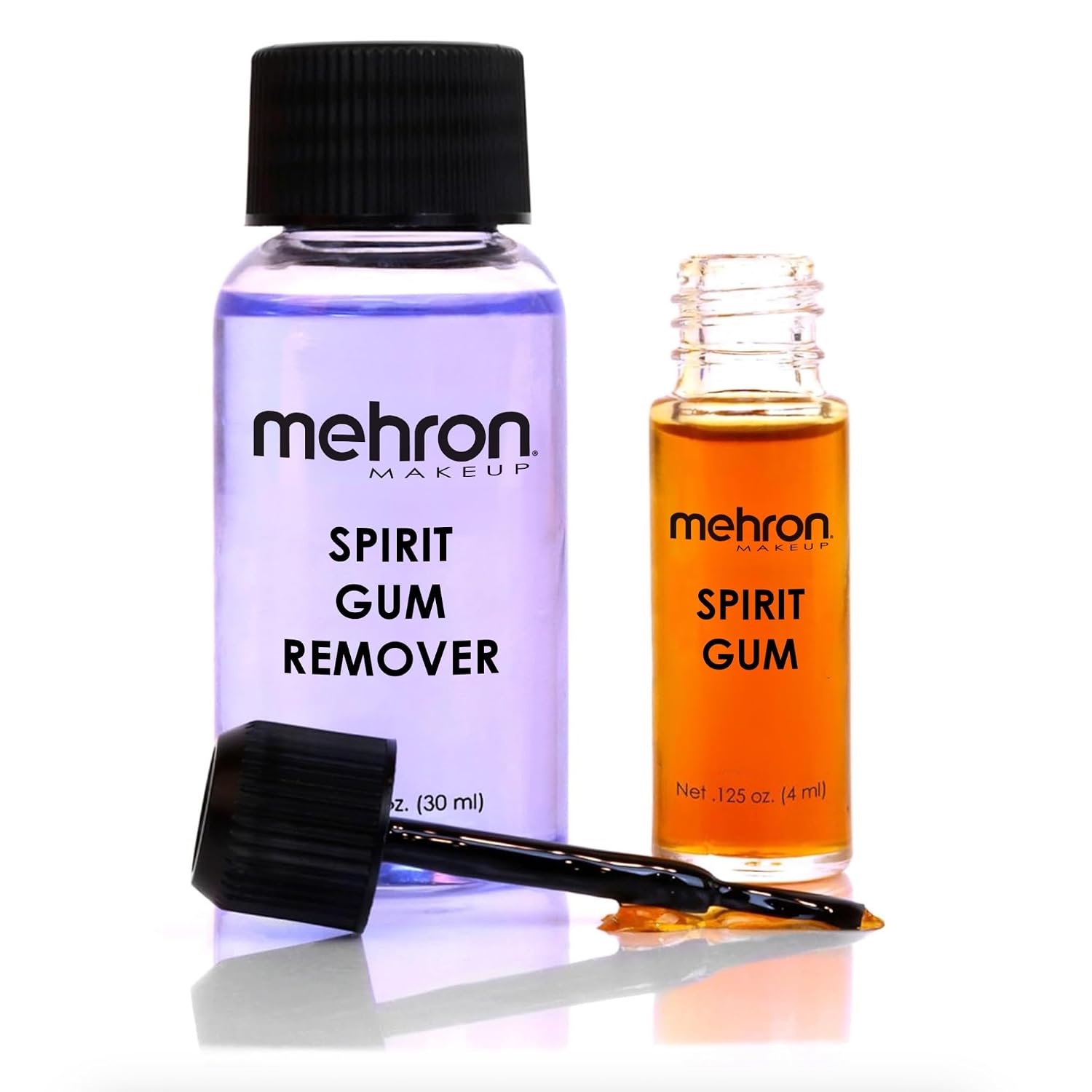
A kit with spirit gum adhesive and its matching remover, used for crepe hair, mustaches and small pieces. Apply a thin layer, let it turn tacky and press the hair into place. Remove it gently with the remover, never by pulling. Patch test each actor the day before use.
A stage makeup kit and safe products
Most theater artists build their kits around a few reliable systems. A theatrical creme kit gives a student or new artist the essentials in one case: foundation, shadow and highlight, cheek and lip color, liners, powder and sponges. Experienced artists add stick foundations in many shades, larger palettes for color and character work and a well-organized hair kit. Meanwhile, keep a separate set of products for each long-running production, labeled by actor, so nothing is shared between performers. For school and community productions, ask actors to buy their own personal kits. That improves hygiene and teaches them to maintain their own makeup. Teach a short class early in rehearsals so every actor can apply the basic design.
Ben Nye Theatrical Creme Kit TK-3 — an all-in-one stage kit
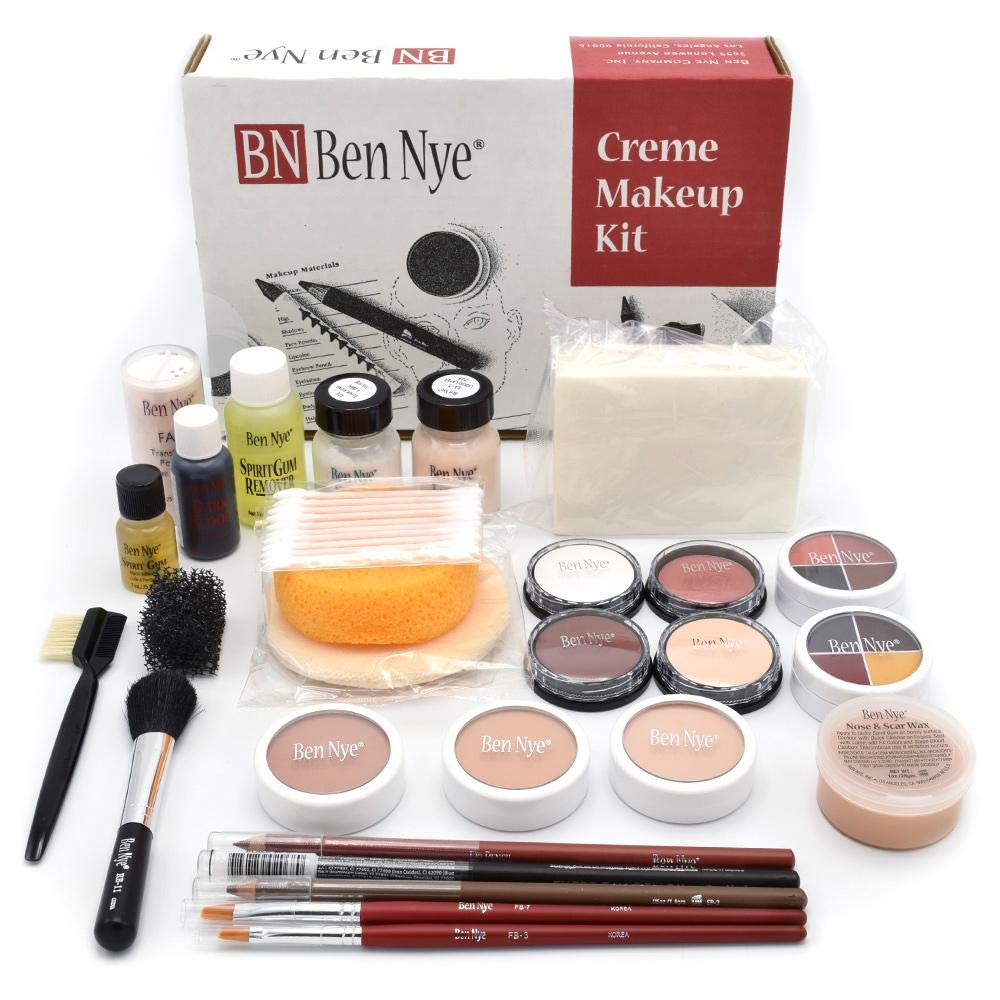
A theatrical creme kit with foundation, shadow and highlight, cheek and lip colors, liners, powder and tools in one case. It suits students, community theater actors and new artists building their first stage kit. Choose the shade range closest to the actor. Keep each kit for one person only.
Product safety matters as much on stage as anywhere else. According to the FDA’s guidance on novelty makeup, color additives in face paints and theatrical makeup must be approved for use in cosmetics. The FDA also recommends testing a new product on a small area of skin for several days before using it on the face. For that reason, buy from established theatrical brands that publish full ingredient lists, and patch test every actor before technical rehearsals. Meanwhile, keep each actor’s products separate. Use disposable applicators for eyes and lips, and clean brushes and sponges after every performance. Record any skin reactions and replace the product for that actor straight away, then tell the stage manager.
Learning stage makeup
Learning stage makeup properly takes study as well as practice, and it never really stops. The classic reference for theater artists is a long-running textbook on stage makeup, revised through many editions. It covers anatomy, color, lighting, aging and character work. Many theater programs use it in their makeup courses. In addition, practice on friends and classmates under different lighting, and keep a notebook of every character you design, with face charts and product notes. If you are considering formal training, our guide to makeup school choices compares programs in the United States and abroad. Many theater departments also offer short makeup courses, and some community theaters run workshops for volunteers. Both are good places to practice under real stage lighting.
Stage Makeup by Richard Corson — the classic theater reference
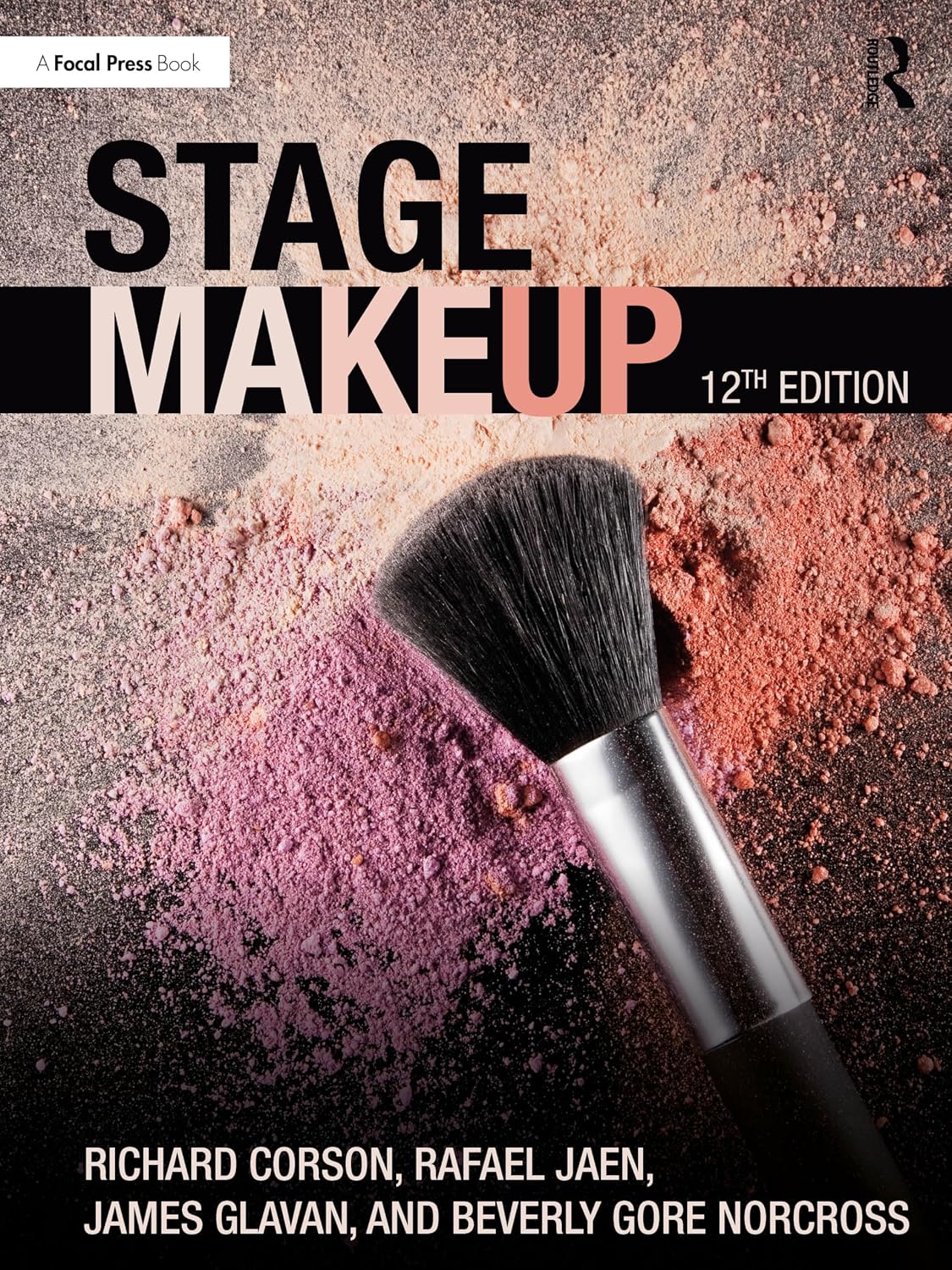
A long-running textbook on theatrical makeup, revised through many editions with updated co-authors. It covers facial anatomy, color, lighting, aging, character design and prosthetics for the stage. Use it as a reference for each new production. Many theater programs use it in makeup courses.
Working as a theater makeup artist
Theater makeup work ranges from school and community productions to regional theaters, opera, dance companies and touring shows. Smaller companies often rely on actors doing their own makeup, with a makeup designer creating the plan and teaching the cast. Larger productions hire makeup and wig teams who work every single performance, often with a dedicated supervisor. In New York and other major cities, many theatrical makeup artists are union members; our guide to IATSE Local 798 and 706 explains how the makeup unions work. Meanwhile, community and regional theater is where most artists start. Those productions build a portfolio and relationships with directors and designers.
Many skills transfer between stage and other kinds of makeup work, in both directions. Stage artists learn speed, quick changes and teamwork, all of which matter just as much backstage at fashion shows. Runway artists, in turn, bring precision and consistency that help large casts look unified. Our guide to runway makeup in practice explains how backstage teams at fashion shows are organized. In addition, film and television productions often hire artists with solid stage experience for period and character work. Keep your portfolio broad enough to show these skills, with clear photographs taken from the house as well as close-ups. Label each image with the production, the venue and the year.
Rates and agreements
Theater budgets vary widely, so agree on terms in writing before you start. A makeup design fee usually covers the design, the face charts and teaching the cast, while running a show is often paid per performance or per week. Kit costs are a separate line, because stage products are used up quickly over a long run. Meanwhile, agree on how many rehearsals you will attend, especially technical and dress rehearsals, because those days are long. For school and community productions, a smaller fee may come with flexible hours and a strong portfolio piece. Our guide to pricing makeup services explains how to build a rate from your costs.
Finally, document every production. Photograph each actor’s makeup in the dressing room and from the house under show lighting, and keep the face charts and product lists with the photos. Those records help understudies, protect continuity across a long run and become your portfolio. They also help you price future productions, because you will know how long each design takes to apply. Meanwhile, keep in touch with directors, designers and stage managers after each show closes. Theater is a small world, and most bookings come from people who have already worked with you. A reliable, calm artist is remembered long after a show closes, and recommended for the next production.
Sources
Sources checked October 2026
Making faces read from the back row
Stage makeup is a conversation between the face, the distance and the light. Start with the venue: the larger the house, the bolder the definition must be. Then work with the lighting designer, test under the real rig and adjust color for each scene. Build a base that survives heat and sweat, define the eyes and lips for distance and set everything well. Above all, check every face from the back row before opening night. Your audience will never see the makeup up close. So the only test that matters is whether the actor’s expressions reach the last seat in the house. Walk to that seat before every opening night, look at each face in turn and make your final adjustments from there.
Tools and library

The three tools above support the business side of theater work. The calculator helps you price makeup design, show runs and teaching sessions, so long productions are paid properly. Meanwhile, the quiz helps you decide whether theater, film, editorial or bridal work suits you best, which shapes the skills worth building first. The library gathers the career guide, notebooks and workbooks, including pages for face charts and show records. Start with the quiz if you are still choosing a direction. If you are already designing shows, start with the calculator and review your design fee. Revisit all three as your career grows, because the right tools change as your work changes.
From the Artist Library
Stage, film and editorial work each follow their own path. The guide covers training, portfolios and pricing, in plain terms.
Questions worth asking
What is stage makeup?
Theatrical makeup designed to keep an actor’s features readable at a distance and under strong, often colored, stage lighting.
Why do actors wear makeup on stage?
Distance and bright lighting flatten the face. Makeup restores definition so the audience can see expressions from every seat.
How is stage makeup different from film makeup?
Stage makeup uses stronger definition and color for distance. Film makeup is subtler, because cameras see fine detail up close.
How does stage lighting affect makeup?
Bright light washes out color and contour, and colored light shifts color. Test makeup under the actual lighting rig before opening.
What foundation is best for stage?
Cream and stick foundations are common because they cover well and can be set with powder to survive heat and sweat.
How do you attach a stage beard?
Crepe hair or a lace piece is applied with spirit gum in small sections, then trimmed. Remove it with the matching remover, never by pulling.
