The Artist · Kit
On set, the kit that matters most is not the one in the trailer. It is the small bag you carry to the camera, the case that rolls your kit from the car and the chair that keeps you and the talent comfortable through a twelve-hour day. A good makeup artist set bag keeps touch-ups within reach without slowing you down. This guide, part of the hub for professional makeup artists, covers what to look for in set bags, rolling kit cases and tall chairs, with verified picks in each category.
Every product below was checked on Amazon on 28 October 2026: live, in stock and priced in US dollars. Prices change, so check before you buy.
The short answer
A makeup artist set bag is a small, usually clear bag for the products you need at the camera: powder, blotting papers, lip color, brushes and continuity notes. Pair it with a rolling case for the full kit and a tall folding chair with a footrest for the talent. Choose clear, wipeable materials, sturdy zips and a size you can carry with one hand.
In this guide
What a set bag is for
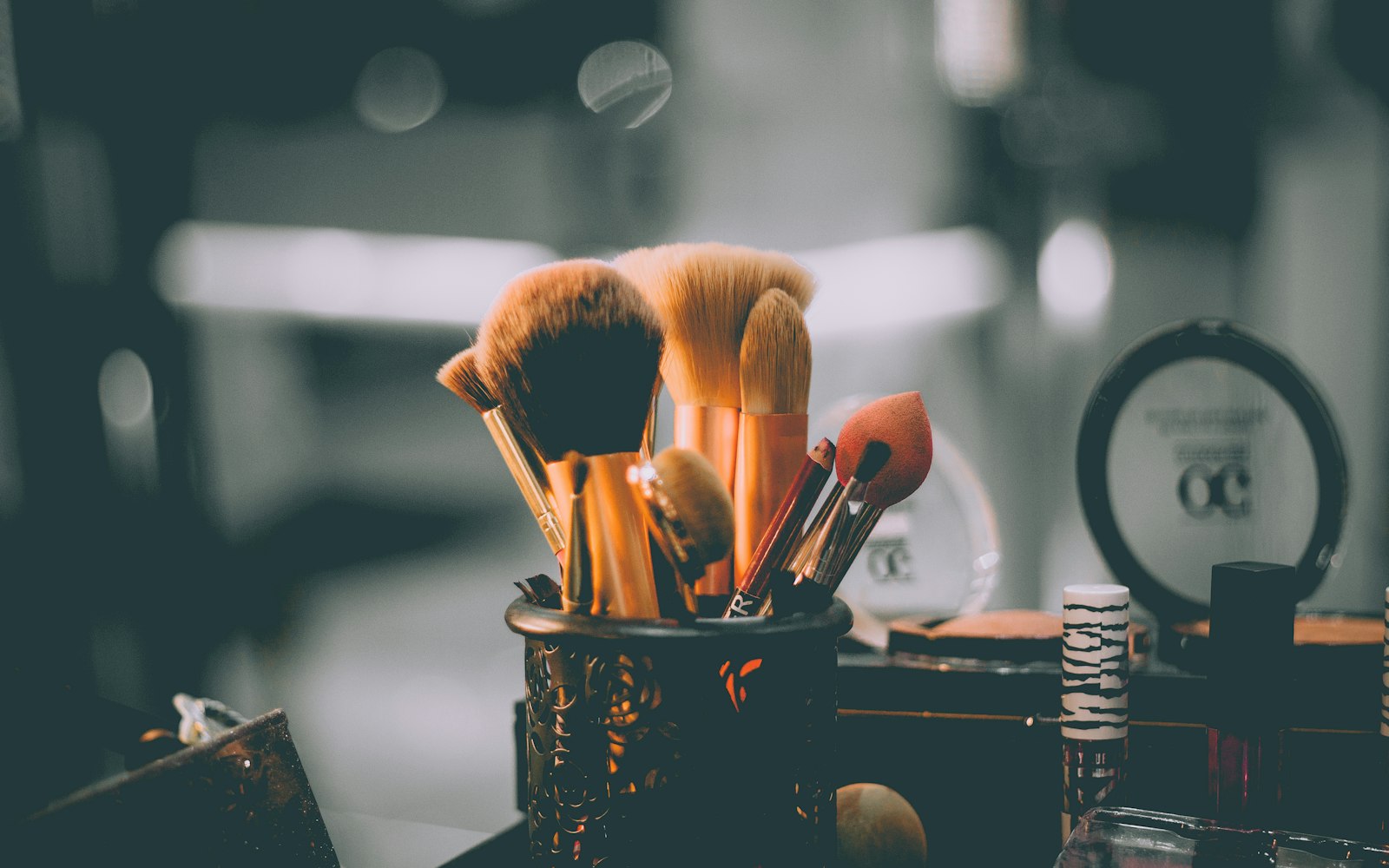
A set bag is the artist’s mobile station. While the main kit stays in the trailer or at the makeup station, the set bag goes to the camera with you, so you can touch up between takes without leaving the set. On film and television work, the bag usually holds powder, blotting papers, a few brushes and sponges, lip colors for each actor, tissues, hand sanitizer and continuity photographs or notes. Bridal and event artists use the same idea for touch-up kits during ceremonies and receptions. Because you open it dozens of times a day, the bag needs to be easy to search, easy to clean and light enough to hold for long periods. In short, a set bag is about speed and hygiene, not storage.
Set bags across specialties
Each specialty uses the set bag a little differently. On a film set, the bag follows the actor to every setup, and continuity notes matter as much as products. On a fashion shoot, the bag stays near the photographer, ready for quick fixes between looks. At a wedding, it becomes a touch-up kit for the bride and her party. Meanwhile, theater artists often keep a small bag in the wings for quick changes during a show. The contents change with the job, but the principle stays the same. Carry only what you need at arm’s length, and keep it clean, labeled and easy to search.
Because the bag works so hard, it is worth thinking about before you buy. The right makeup artist set bag is one you barely notice during a busy day. It opens easily, shows you everything and closes securely when you move. The wrong one slows every touch-up and invites mistakes, such as using one actor’s lip color on another. For that reason, choose deliberately rather than grabbing the first clear pouch you find. The sections below explain what to look for, then show three verified options.
How to choose a makeup artist set bag
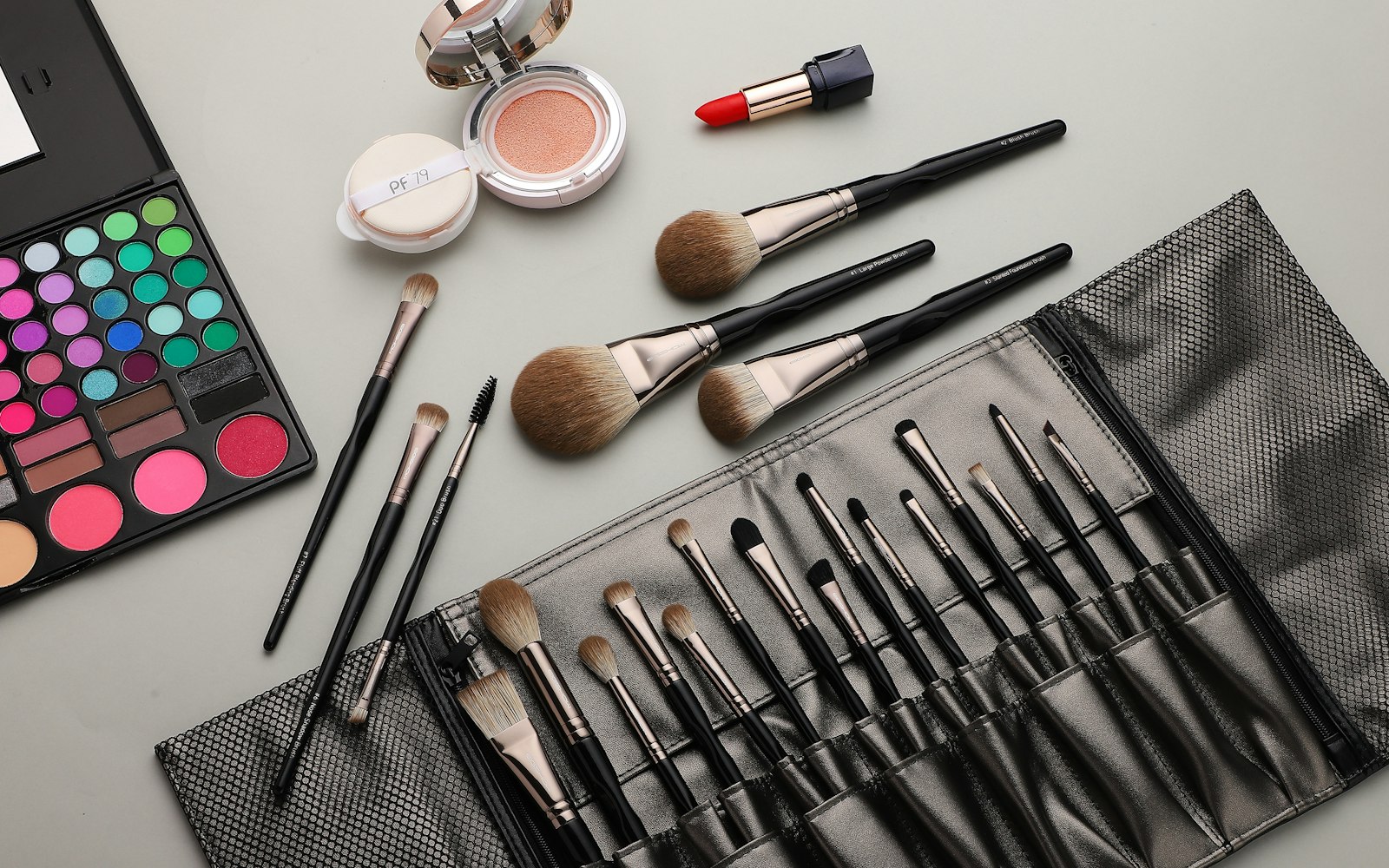
Most working artists look for four things in a makeup artist set bag. First, clear material, so you can see every product without unzipping each pocket. Second, a wipeable surface, so you can clean the bag between actors or at the end of the day. Third, a size that fits the essentials and nothing more, because a heavy bag slows you down on a moving set. Fourth, a strap or handle you can carry comfortably while holding a brush or a mirror. Beyond that, choose by working style. Some artists prefer one large open bag. Others like several small labeled pouches, one per actor. Try both before you commit, ideally on a real shoot rather than at home.
Straps, handles and pockets
Carrying comfort matters more than most artists expect. A set bag spends hours in one hand or over one shoulder, so check the handle and strap before you buy. A wide, padded strap spreads the weight. Meanwhile, a short top handle is useful when you need to grab the bag and move quickly between setups. Pockets help too, but only if they are clear and easy to open. Too many small pockets slow you down, because you forget where things are. In practice, two or three large sections usually work better than many small ones.
Hygiene and organization
Hygiene matters as much as convenience. Use disposable applicators where possible, decant products into small labeled containers and keep used tools in a separate pouch. Label each actor’s products, so lip colors and powders are never shared by accident.
You may also like
Breaking Into Film and TV Makeup: IATSE Local 798 and Local 706

You may also like
SFX Wound Makeup: Cuts, Bruises, Burns and Horror Effects
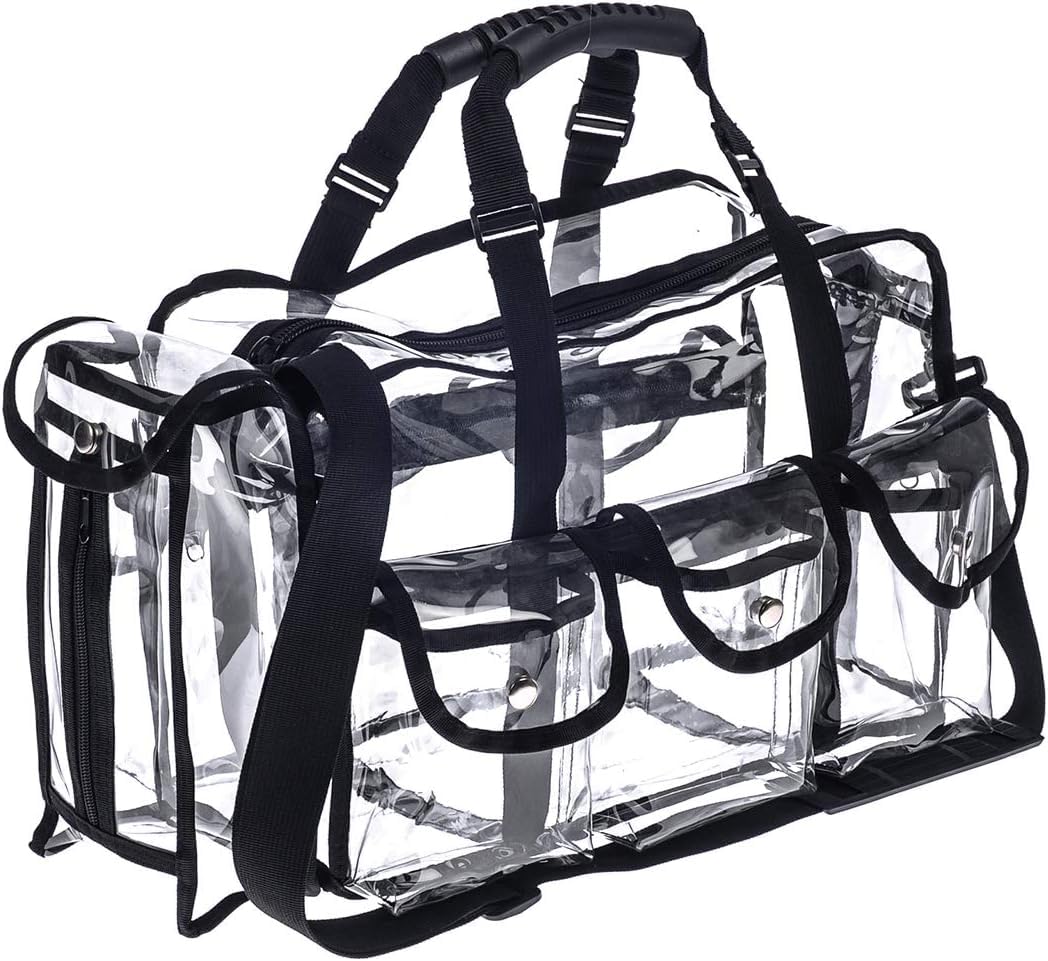
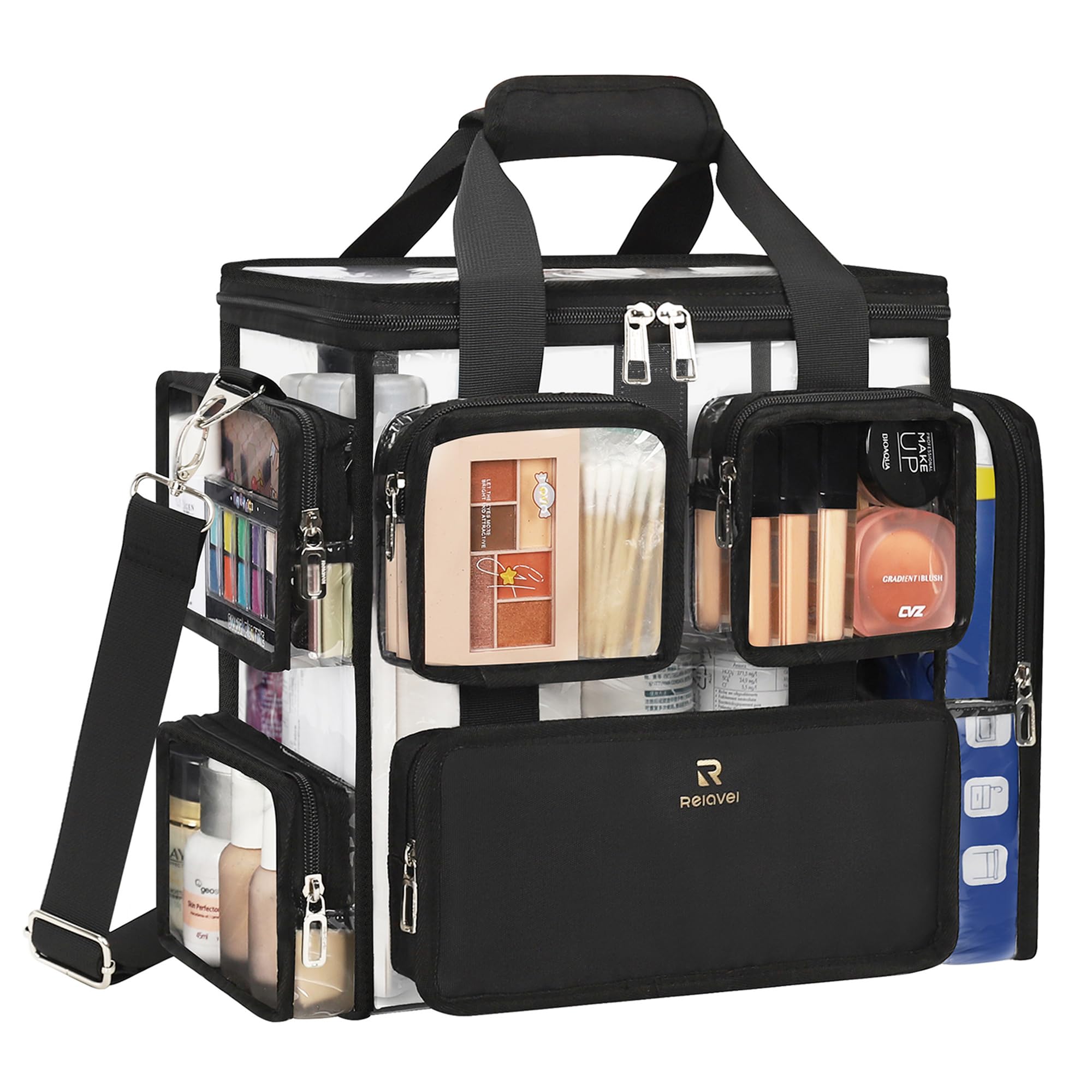
Clear PVC set bags have become the standard choice for exactly these reasons. They let you find a product at a glance, they wipe clean in seconds and many stand open on their own, which is useful when you are working from a stool beside the camera. The three bags below cover the main styles: a compact carry-all, a larger bag with removable dividers and a free-standing open bag. All three are made of clear PVC and sized for touch-up kits rather than full kits. When you choose, think about how many actors you usually look after and whether you need to keep their products separate. For several principals, dividers or multiple bags help. For a single performer or a bride, a compact carry-all is usually enough.
Three clear set bags
Each of these makeup artist set bags was live and in stock on Amazon on 28 October 2026. Prices change, so check the listing before you buy. They differ mainly in size and structure, so start with how you work on set. If you move constantly between cameras, choose the smallest bag that holds your essentials. If you work from one spot beside the monitor, a larger free-standing bag can act as a small station. Meanwhile, if you look after several actors, a bag with dividers keeps each person’s products apart. Whichever you choose, keep a second bag packed and ready, so you can swap in a clean one mid-day.
Sizes and materials
Size is the first decision. A small bag holds a day of touch-ups for one or two actors. A larger bag can hold products for a whole principal cast. Measure the products you carry before you buy, and allow a little room for the unexpected. Material comes next. Clear PVC is the common choice because you can see inside and wipe it clean. Look for thick, flexible PVC that will not crack in cold weather. Check the zips as well, because a stiff or weak zip is the first thing to fail. Finally, look at the base. A flat, firm base lets the bag stand on a table or stool without tipping over.
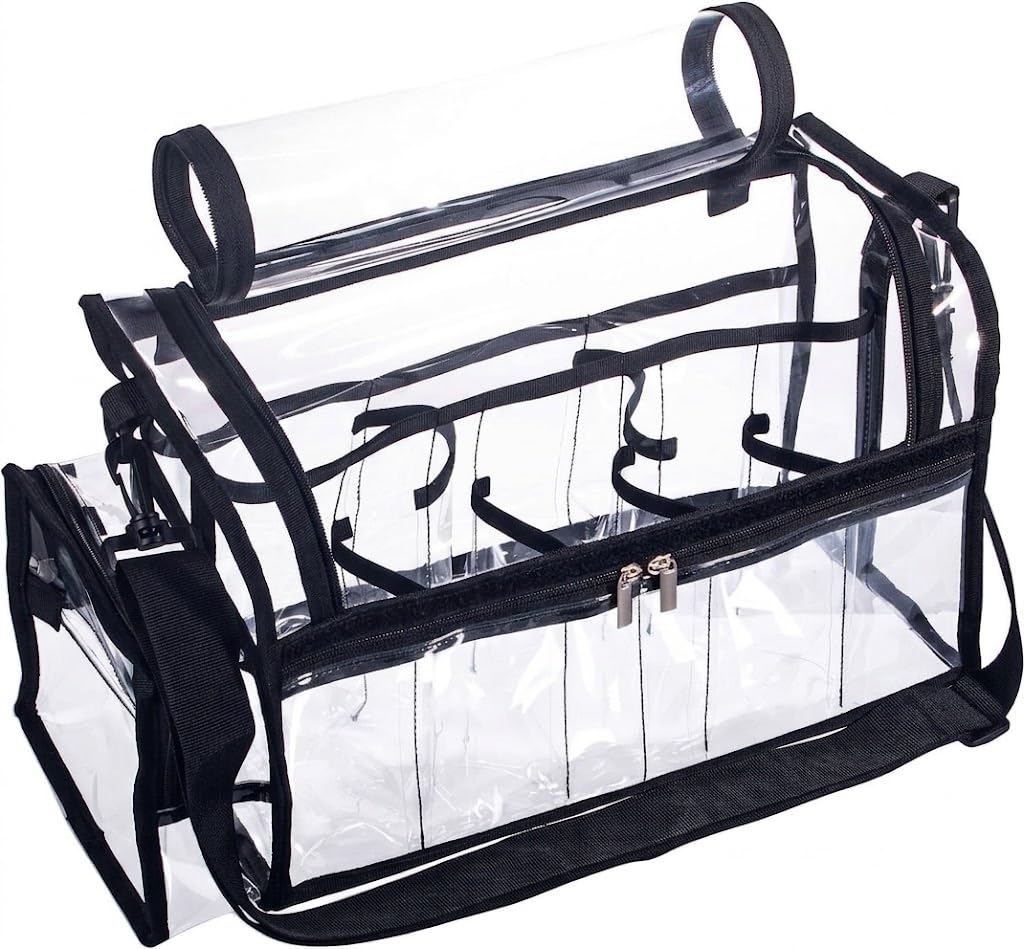
Stands open beside the camera as a mini station.
A set bag only works if it is packed with discipline. Before each day, check the call sheet and pack for the actors and scenes you will cover. Include powder, blotting papers, lip colors, a few clean brushes and sponges, cotton swabs, tissues, a small mirror and hand sanitizer. Add continuity photographs, either printed or on a phone, so you can match each look quickly. Meanwhile, leave out anything you will not use at the camera, because every extra item slows your search. At the end of the day, empty the bag, clean it and restock it. That routine takes ten minutes and saves far more time on the next shoot.
Cleaning your set bag
A set bag picks up powder, lip color and fingerprints quickly, so clean it at the end of every working day. Empty it completely, then wipe the inside and outside with a cosmetic-safe disinfectant and let it dry open. Clean every reusable brush and replace disposable applicators. Meanwhile, check each product for contamination and throw away anything that has touched broken skin or a mouth without a clean applicator. Once a week, wash the bag more thoroughly and check the zips and seams for wear. A clean bag is a visible sign of professional standards, and actors and clients notice it.
A touch-up kit for weddings
Bridal artists use the same idea in a different setting. A wedding touch-up kit stays with the bride or a trusted bridesmaid after you leave, or with you if you stay for the ceremony. It usually holds blotting papers, a pressed powder, the lip color and liner, a lip brush, cotton swabs and a few lashes with glue. A small clear makeup artist set bag works well here too, because the bride can find everything at a glance. Label it with her name and the date. Then explain what is inside before you leave, so nobody has to guess later in the day. A short note inside helps too.
Mirrors, lights and continuity
A few small extras make the set bag far more useful. First, a compact mirror lets the actor see a touch-up without leaving the set. A small, rechargeable light helps in dark corners of a location. Meanwhile, a phone with continuity photos sorted by scene keeps every look consistent. Some artists also carry a printed continuity sheet for each actor, in case a phone battery runs out. Keep all of these in one pocket, so you can reach them without searching. Small habits like these are what make an artist feel calm and prepared on a busy set. They also reassure the actors you look after.
Rolling kit cases
The set bag carries the essentials. The rolling case carries everything else, from foundations and palettes to tools and effects materials, between the car, the trailer and the location. For working artists, wheels are not a luxury. A full kit is heavy, and carrying it every day takes a toll on the back and shoulders. Look for strong wheels, a telescoping handle, sturdy zips and compartments that let you find products quickly. Modular cases that separate into stacking sections are useful, because you can take only the section you need into a small space. Our professional makeup kit checklist covers what to pack inside. Choose the case after you know the kit, not before.
Stagiant 4-in-1 Rolling Makeup Case — a modular case on wheels
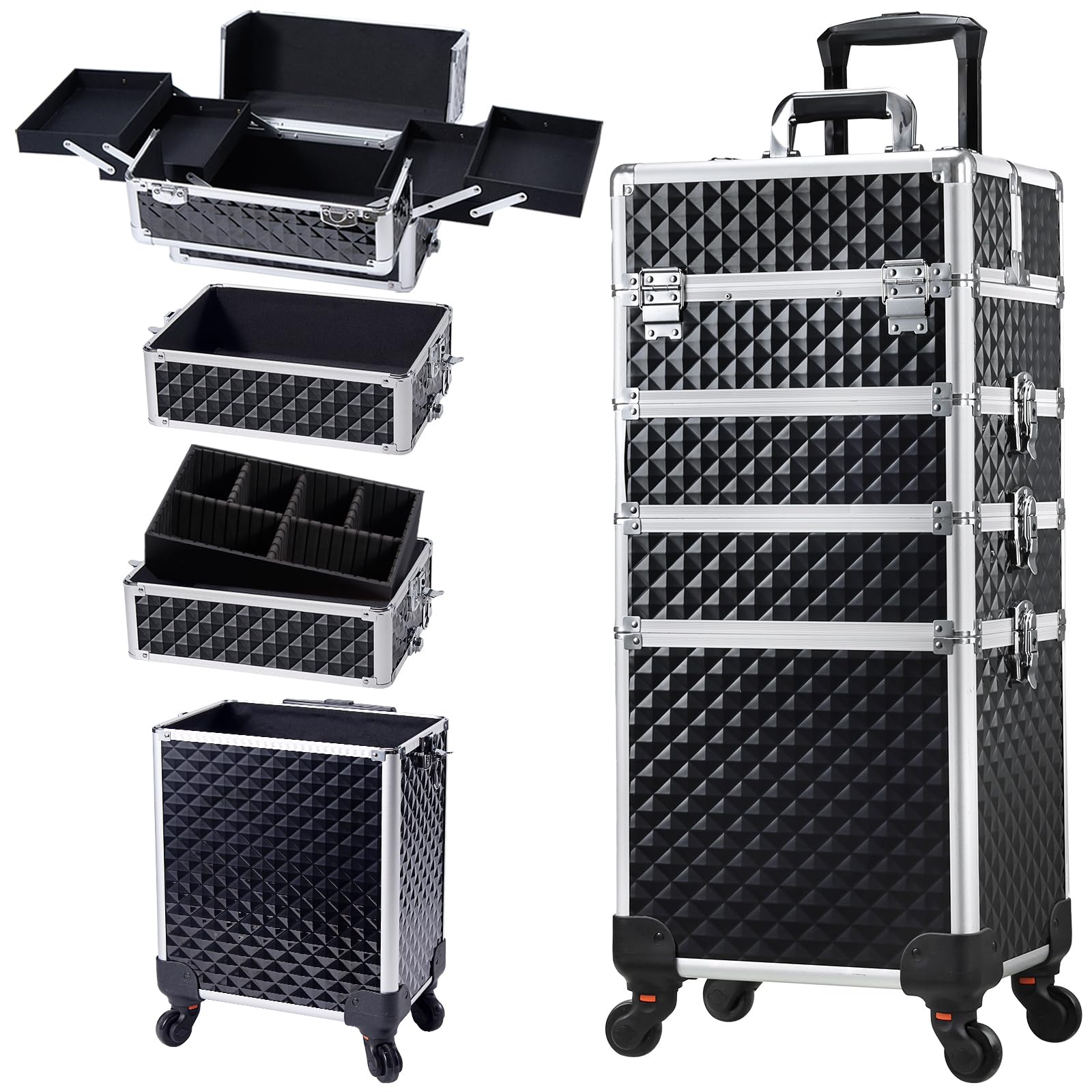
A rolling case that separates into four sections, so you can take only the part you need onto set or into a small getting-ready room. It suits bridal and event artists who move a full kit daily. Checked on Amazon on 28 October 2026 at $98.99, in stock.
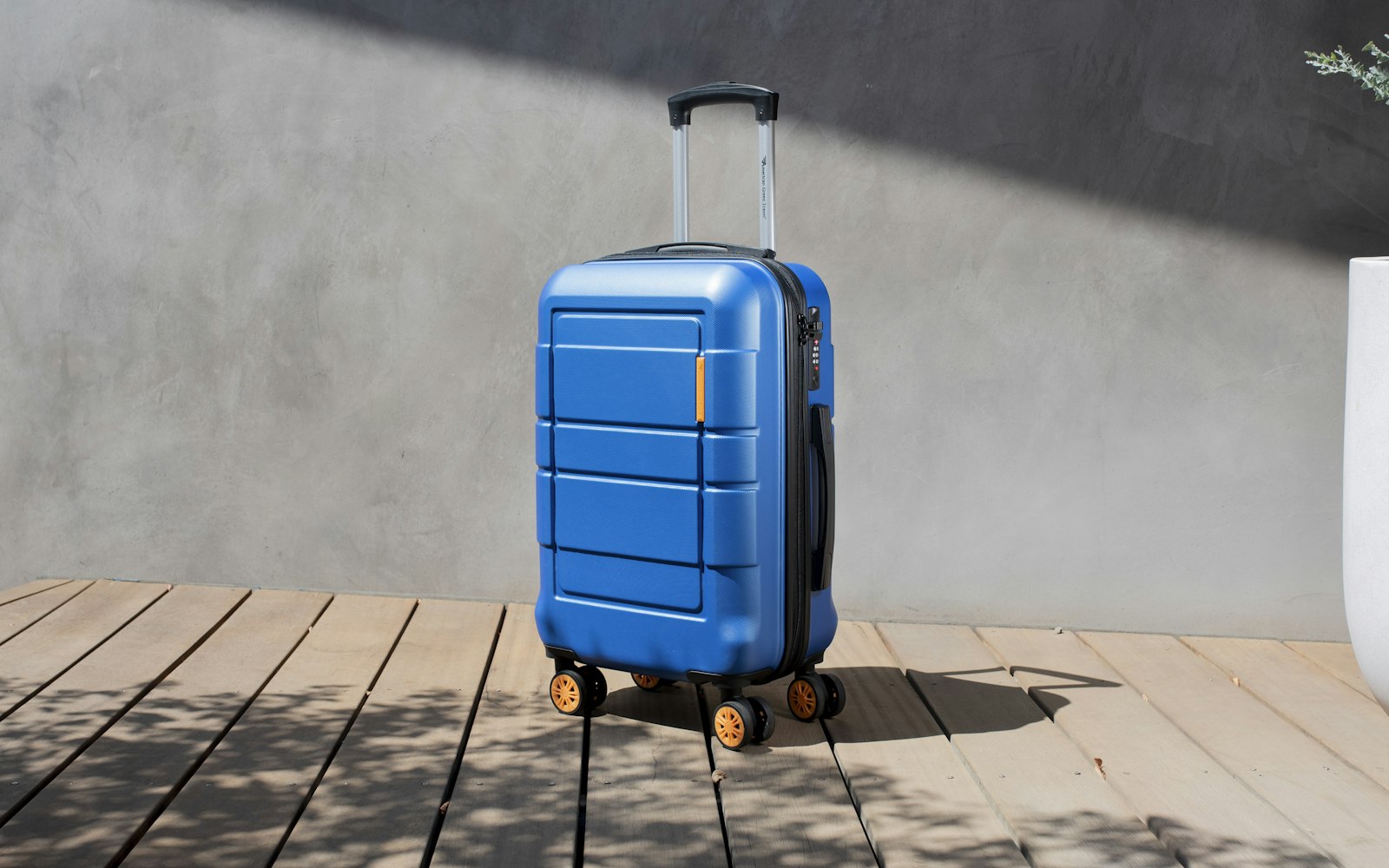
Hard and soft cases each have their place. Hard-sided modular cases protect fragile palettes and stack neatly, which suits artists who work from the same kind of location every day. Soft-sided nylon cases are lighter and flex to fit into tight car trunks and crowded trailers, which suits artists who travel constantly. Many working artists own one of each and choose by job. Whichever you pick, check the case is within any airline size limits before you fly with it, and keep liquids sealed in bags inside. Meanwhile, label the outside with your name and phone number, because kit cases look alike on a busy set. A case that rolls smoothly and opens cleanly saves minutes every single day.
Stagiant Soft-Sided Rolling Makeup Case — lighter for travel
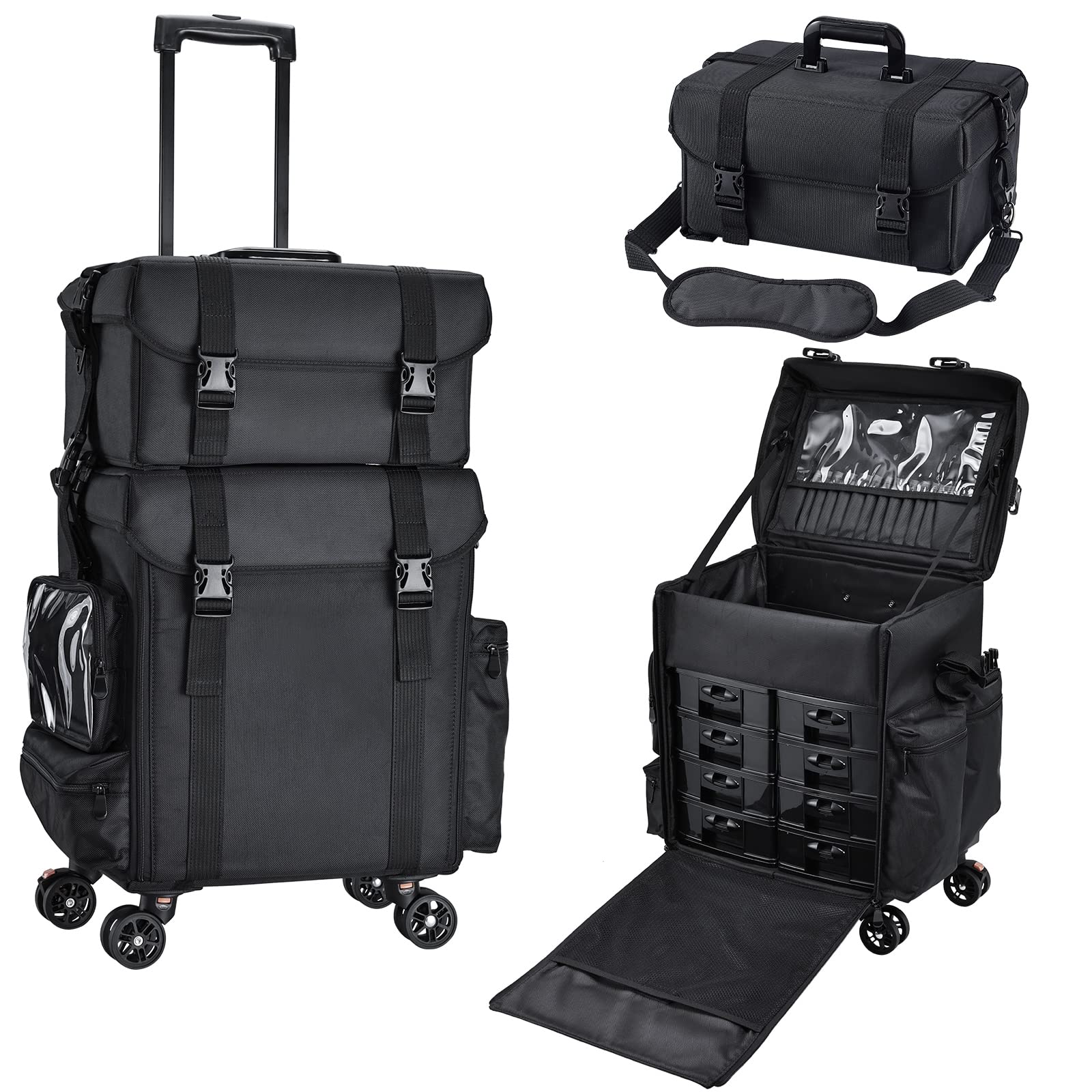
A soft-sided nylon rolling case that is lighter than a hard modular case and easier to fit into a car or trailer. It suits artists who travel between locations. Checked on Amazon on 28 October 2026 at $169.90, in stock.
Travel work adds its own rules. When you fly with a kit, carry the most valuable and irreplaceable items in your cabin bag, including brushes, palettes and anything you could not buy at your destination. Check liquids against the current security rules before you pack, and put them in sealed bags inside the case. Meanwhile, photograph the packed case before you close it, which helps with insurance claims and with repacking at the end of the job. For destination weddings, confirm whether you need a local license or permit to work, and build travel days into your fee. Our bridal business guide covers travel terms and fees. A little planning keeps the kit, and the job, on schedule.
Packing a case for location work
Pack the rolling case in the order you will unpack it. Put the products you need first, such as skin prep and foundation, in the top section. Keep effects materials and backups lower down. Wrap glass bottles and palettes so they cannot knock together on rough ground. Meanwhile, keep a small cleaning kit near the top, with sanitizer, wipes and a brush cleaner. Finally, add a printed packing list inside the lid. Tick it off as you pack and again as you leave the location. That simple step stops most lost brushes and forgotten products, and it makes the end of a long day much quicker.
Makeup artist chairs
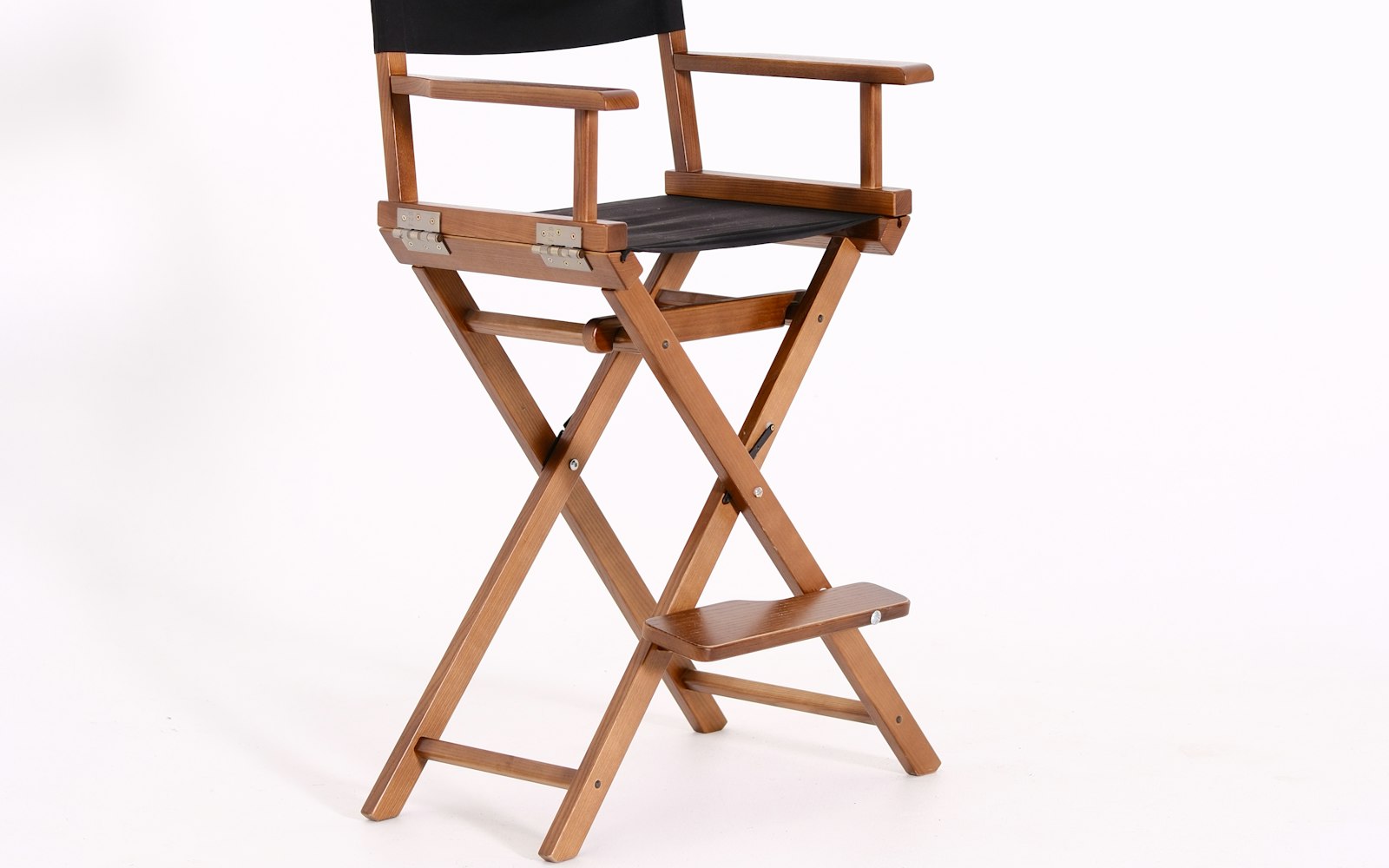
A tall chair is one of the most important pieces of equipment you will buy. It lifts the client to a working height, so you can stand straight instead of bending over a low seat for hours. Most makeup artist chairs are tall folding director’s chairs, with a seat around 30 inches high and a footrest for the client. Look for a sturdy frame, a stable base, a comfortable back and a footrest at a sensible height. Folding matters too, because you will carry the chair to locations, hotel rooms and sets. Some chairs add side tables or pockets, which are useful for holding a palette or brushes during the application.

You may also like
Bridal Makeup Business: Trials, Bookings and Building a Team

You may also like
Makeup Artist Contracts, Deposits and Cancellation Policies
Why chair height matters
Your back is the reason to take chairs seriously. Makeup artists spend long days standing, often leaning toward the client, and a low chair forces you to bend at the waist for every application. A tall chair brings the face up to your working height, which reduces strain on the neck, shoulders and lower back. Over a career, that difference matters a great deal. Meanwhile, the client is more comfortable too, with a footrest and a back to lean on. When you choose, sit in the chair if you can, check that it does not wobble and confirm the folded size fits your car. The three chairs below are tall, folding designs at different prices.
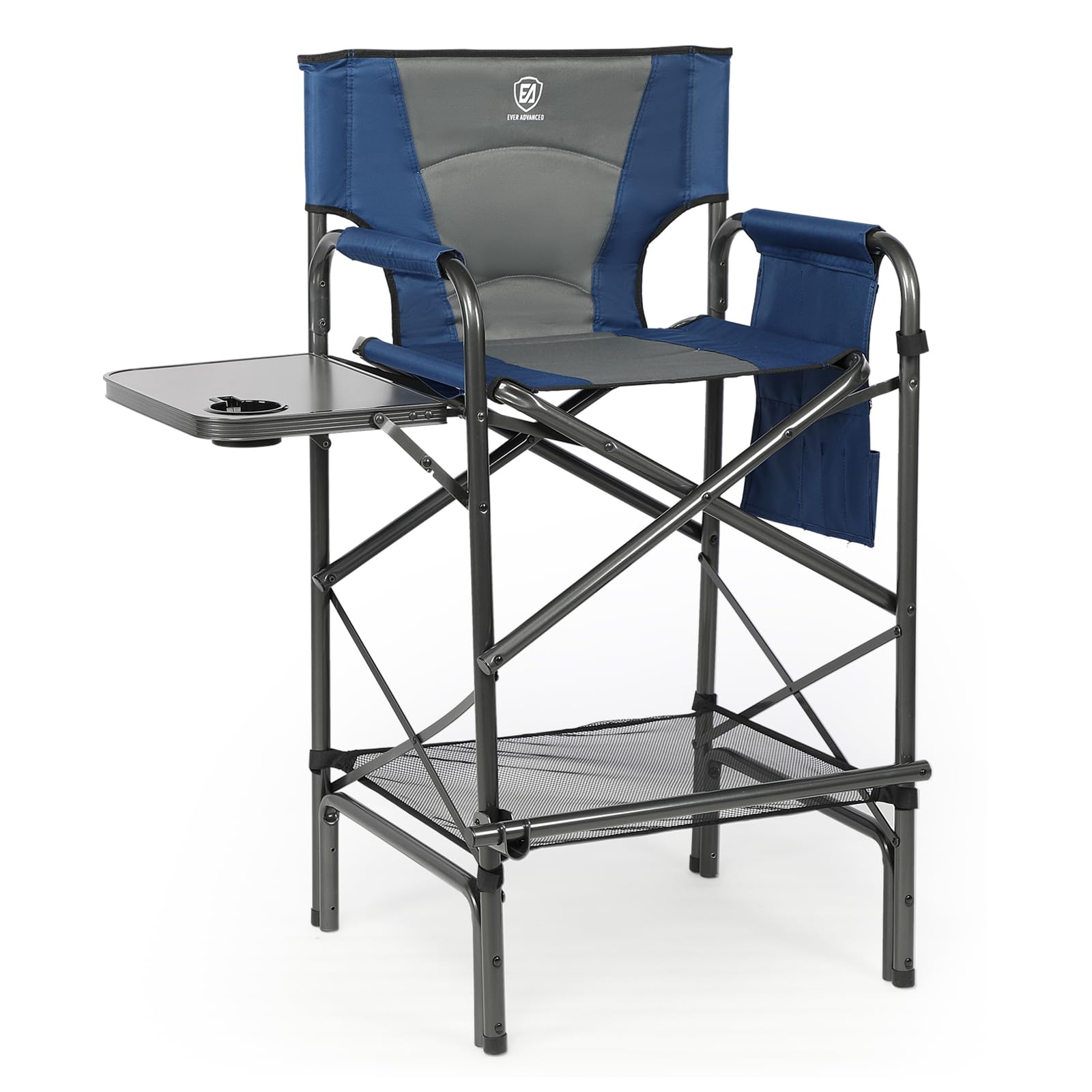
A bar-height folding director’s chair.
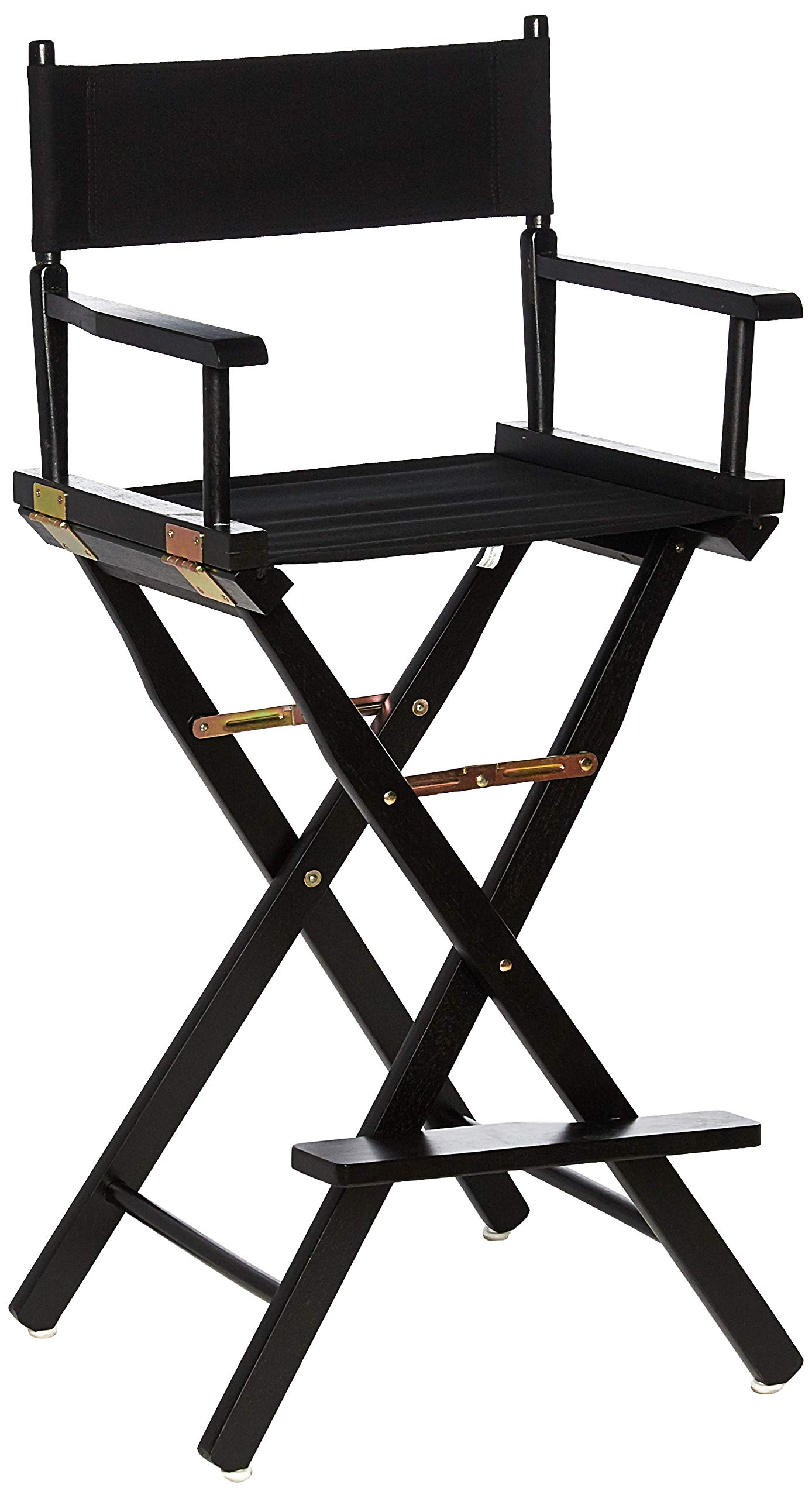
The classic wooden-frame director’s chair.
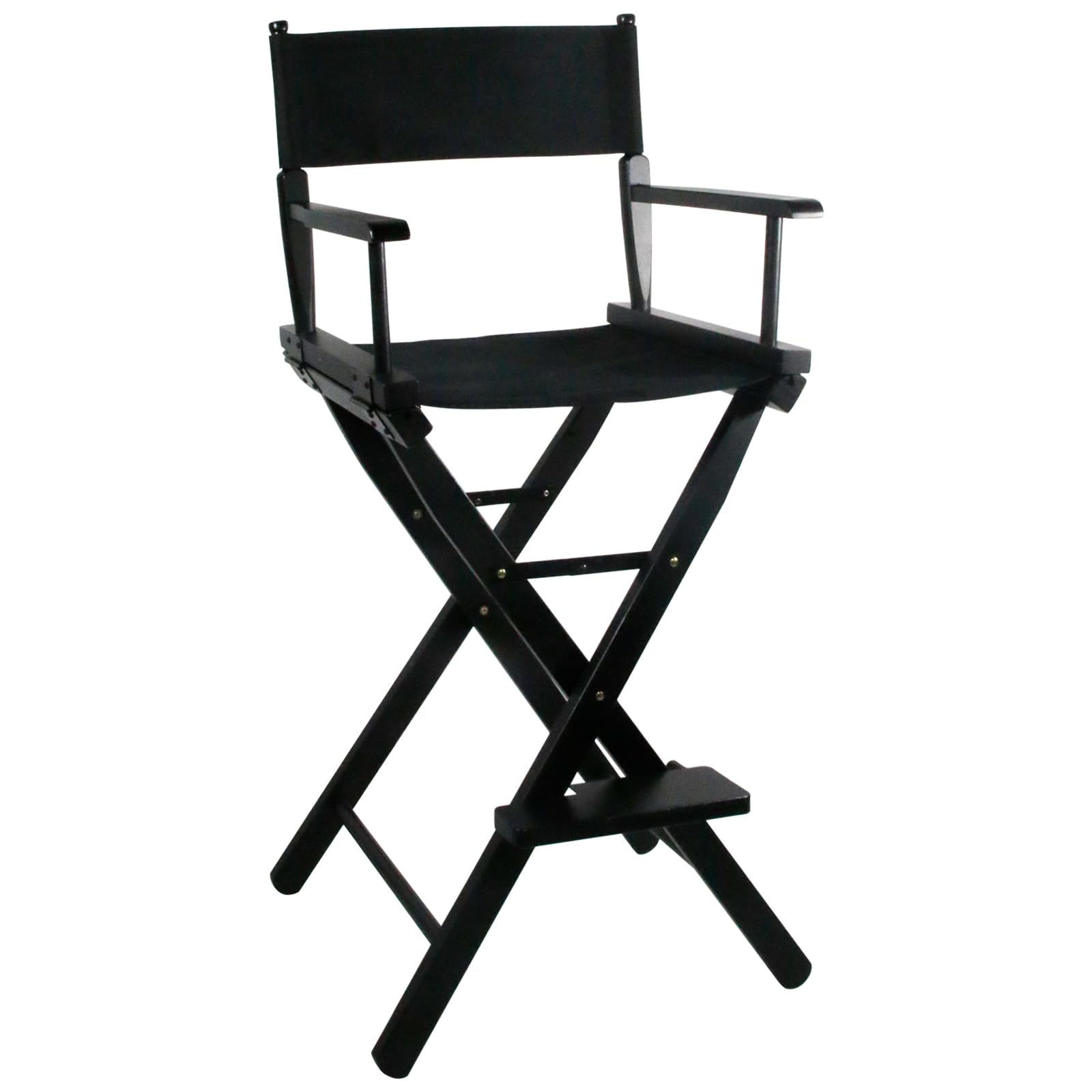
A portable chair with a footrest for clients.
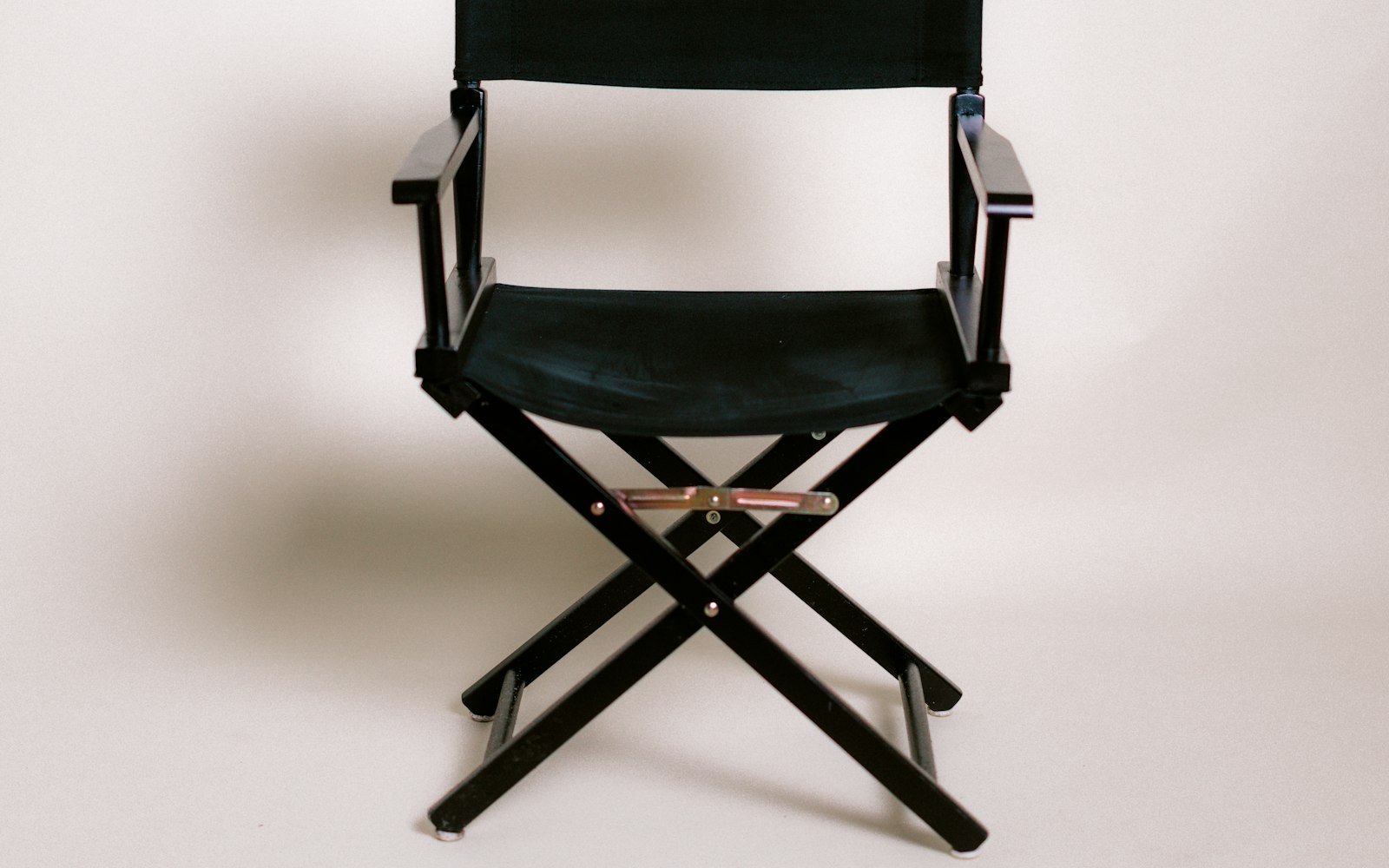
Chairs, bags and cases work best as a system. The rolling case brings the kit to the location, the chair sets up the station and the set bag follows you to the camera. When all three are chosen together, setup and breakdown become quick routines rather than daily puzzles. For that reason, measure your car trunk before buying, and make sure the folded chair and the case fit together with room to spare. Meanwhile, keep a small pouch of spare parts, such as chair pins and case wheels, if the makers sell them. Our guide to breaking into film and TV makeup explains how set life works on union productions. Good equipment, chosen carefully, lasts for years.
Chair care and safety
A tall chair needs a little care to stay safe. Check every joint and pin before each job, and tighten anything that has worked loose. Make sure the chair stands on level ground before a client climbs into it. Offer a hand as clients step up and down, especially brides in long dresses. Meanwhile, wipe the seat and arms between clients, and wash or replace the canvas when it wears. Store the chair folded and dry, so the frame does not warp. A safe, clean chair is part of the professional experience you offer.
Buying on a budget
You do not need to buy everything at once. Start with the item that solves your biggest daily problem. For most new artists, that is the chair, because a low seat hurts your back on every job. Next, add a clear makeup artist set bag for touch-ups, which costs little and saves time every day. Then invest in a rolling case once your kit grows heavy. Meanwhile, buy quality where it matters most: strong zips, stable frames and good wheels. Cheap equipment that fails on a job costs more in the end.
Equipment that supports the work
The right equipment does not make you a better artist, but it lets your skill show. A clear set bag keeps touch-ups quick and hygienic. Meanwhile, a rolling case protects your kit and your back. Then a tall chair keeps clients comfortable and lets you work standing straight. Start with the piece that solves your biggest daily problem, and add the others as your bookings grow. Meanwhile, look after what you buy: clean bags weekly, check wheels and zips monthly and tighten chair fittings before every season. Over time, a well-kept kit becomes part of your professional reputation, because clients and crews notice it. They remember the artist who arrives organized.
Recommended
Recording your purchases
Whatever you buy, keep the receipts and record each item in your business accounts, because kit and equipment are part of the cost of doing business. Our guide to how working artists set prices explains how to build those costs into your rates. Meanwhile, replace worn bags and cases before they fail on a job, because a broken zip on set costs more than a new bag. Think of equipment as an investment that pays back over many bookings. Choose carefully, maintain it well and upgrade only when a real need appears. Above all, let the work, not the gear, be what clients remember. Good gear simply makes that easier.
Tools and library

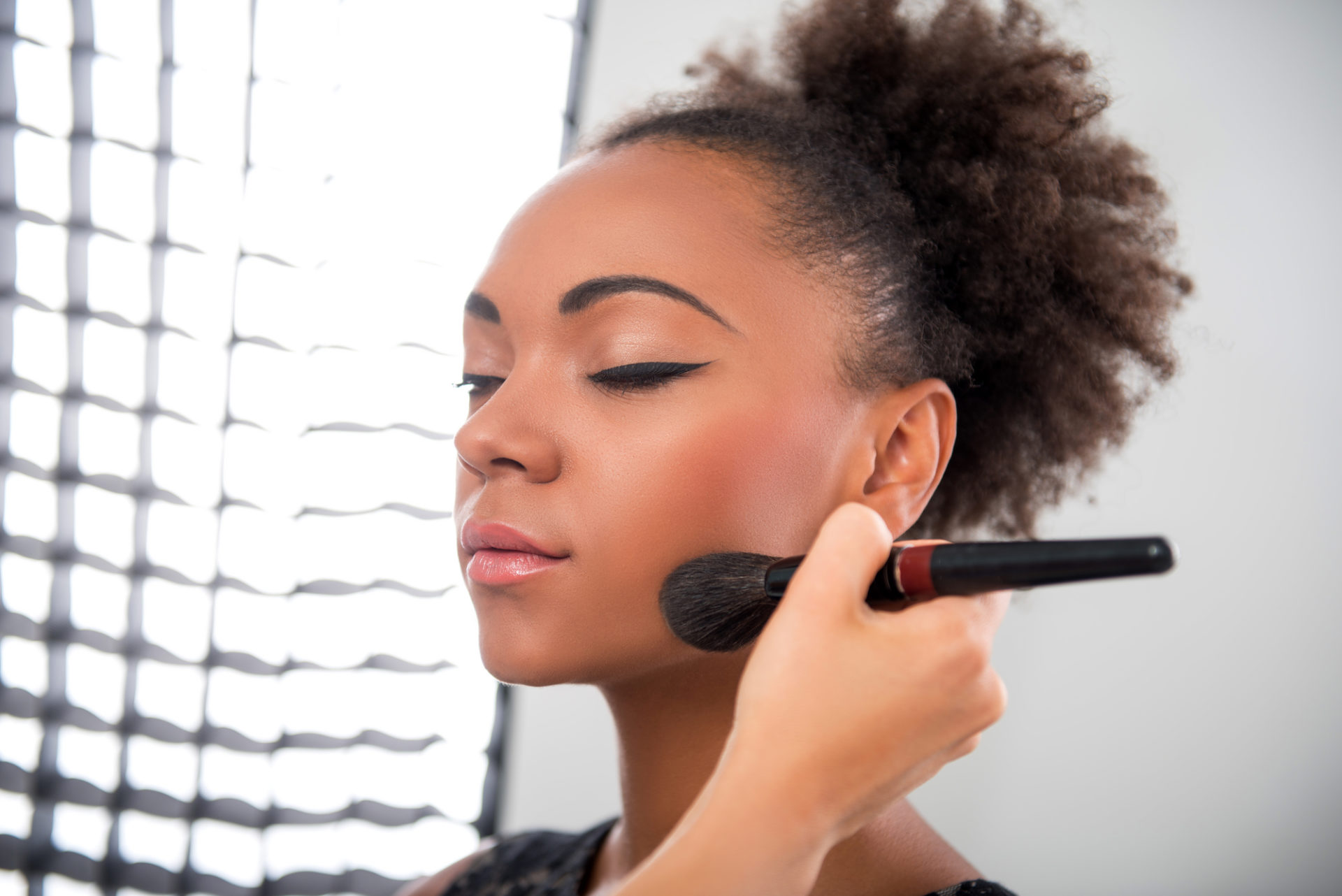
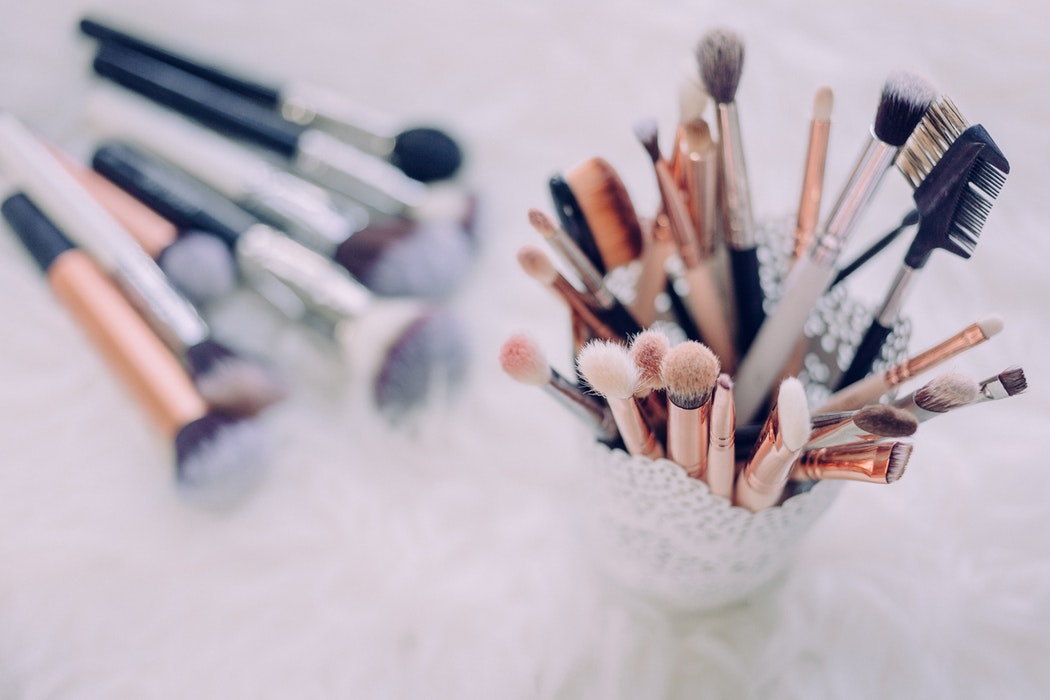
The three tools above support the business behind your kit. The calculator includes kit and equipment costs, so the bags, cases and chairs you buy are covered by your rates. Meanwhile, the quiz helps you choose a specialty, which decides whether you need a set bag for film, a touch-up kit for weddings or both. The library gathers the career guide, notebooks and workbooks, including kit inventories and packing lists. Start with the calculator if you are about to invest in new equipment. If you are still deciding on a direction, start with the quiz. Either way, revisit all three each season as your kit, your bookings and your work change.
From the Artist Library
The guide covers the working side of the craft in plain terms: pricing, contracts, agencies, kit economics and the first five clients.
Questions worth asking
What is a makeup artist set bag?
A small, usually clear bag that holds the products you need at the camera, such as powder, blotting papers, lip colors and brushes, so you can touch up between takes.
What should be in a makeup artist set bag?
Powder, blotting papers, lip colors for each actor, a few clean brushes and sponges, cotton swabs, tissues, a small mirror, hand sanitizer and continuity photos or notes.
Why do makeup artists use clear bags?
Clear bags let you find products at a glance and wipe clean between actors, which saves time and supports hygiene on set.
What height should a makeup artist chair be?
Most professional makeup chairs are tall director-style chairs with a seat around 30 inches high and a footrest, so the client’s face is at your working height.
Is a rolling makeup case worth it?
For working artists, yes. A full kit is heavy, and wheels protect your back. Modular cases also let you take only the section you need.
Should I choose a hard or soft kit case?
Hard modular cases protect fragile products and stack well; soft cases are lighter and easier to fit into cars and trailers. Many artists own one of each.
