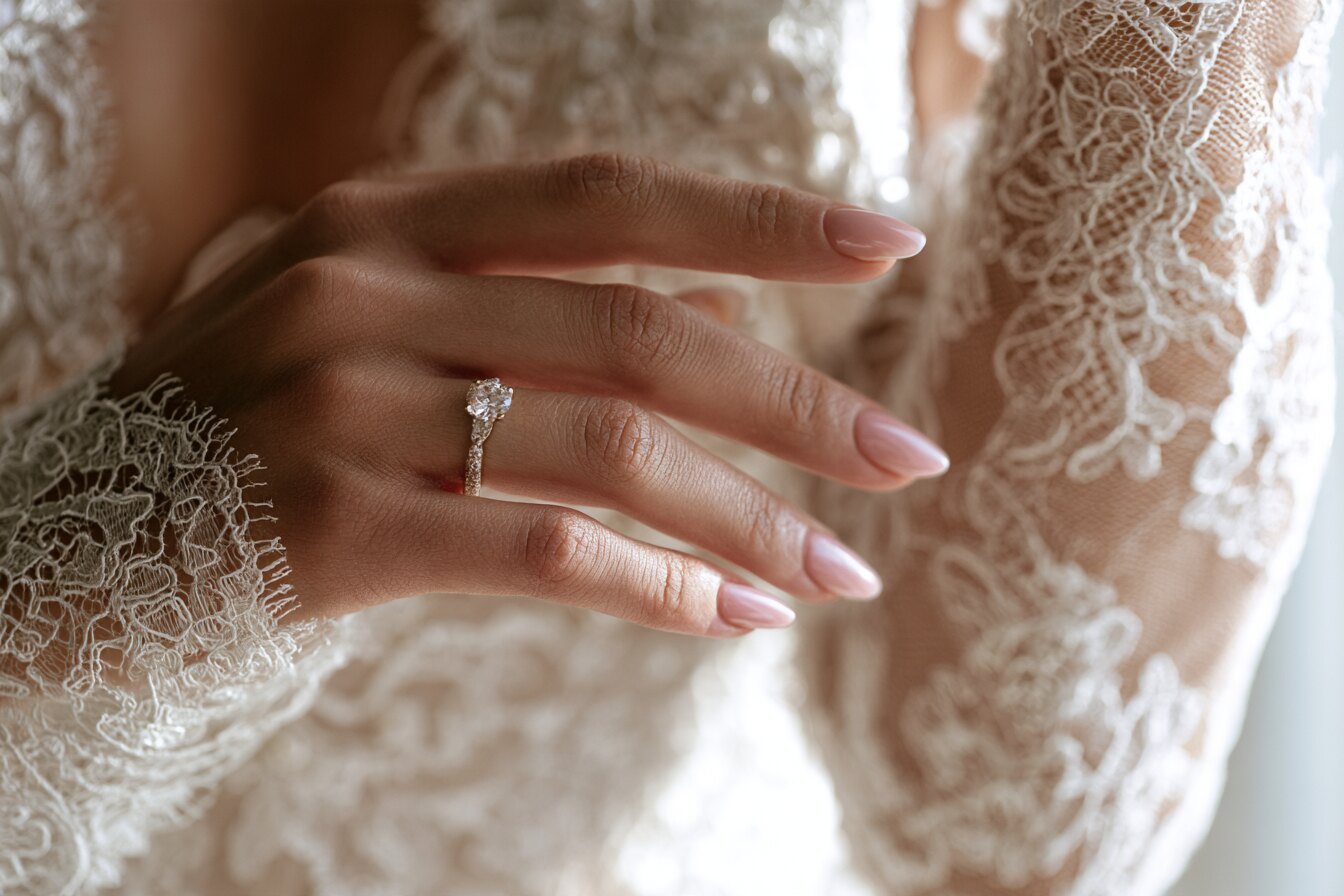
Begin about six months before the wedding with a gentle routine of moisture, rest and careful filing, so your nails are strong by the day. Book a trial manicure a few weeks ahead. The American Academy of Dermatology advises saving gel for special occasions, protecting hands from the lamp with SPF 30 sunscreen, and resting nails afterward.
Bridal nails are about to be photographed more than almost any other detail, so they deserve a plan. This guide, part of our nail features at Cossèt Môi, follows the manicure from engagement to the aisle. It covers shape, color, a trial appointment and the wedding week, along with dermatologist advice on gel, sunscreen and rest. Follow it, and your hands look calm and polished in every photograph.
Why bridal nails deserve their own plan
Few details are photographed as often as a bride’s hands, so bridal nails matter. There is the ring, the bouquet, the first dance and the quiet moment when the veil is set. In each frame, your nails sit close to the camera. Because of that, bridal nails reward planning, and they reward patience even more.
A plan also protects your nails. Wedding months are busy, and busy hands get tired. Dishes, packing, travel and last-minute tasks all challenge a nail. If you add a new polish, a lamp and a rushed removal on top, nails can start to peel just when you need them most. A calm timeline avoids that, and it keeps your hands comfortable too.
This guide works backward from the date. It begins with simple care in the months before, then moves to choices of shape and color. After that, it covers the trial, the wedding week and the day itself. Finally, it looks at the weeks after, when your nails deserve a rest. Read it through once, then keep the table close for the countdown.
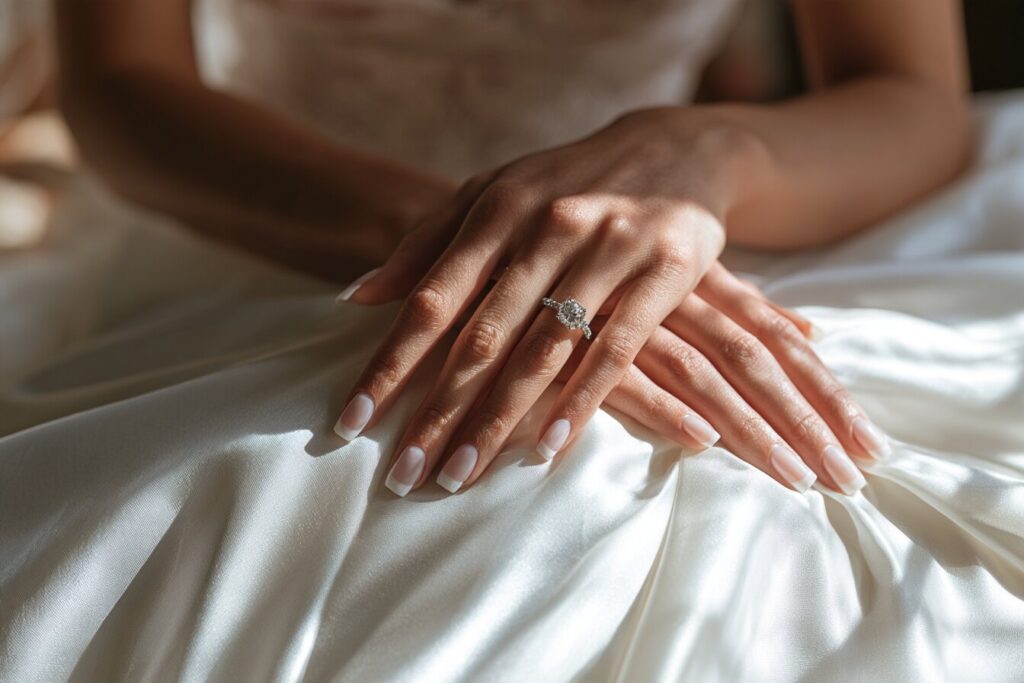
The bridal nail timeline
Every wedding runs on a countdown, and nails fit neatly into it. The table below gives a suggested rhythm from six months out to the weeks after. It draws on the American Academy of Dermatology’s advice on gel manicures, artificial nails and healthy nail habits. Adjust it to your own date, and treat it as a guide, not a rule.
What should your nails be doing in the months before the wedding?
| When | What to do | Why it helps |
|---|---|---|
| Six months before | Start a daily routine of cream, oil and gloves for wet work | Dry, thin nails need time to recover |
| Three months before | Choose your shape and shade, and try a few at home | You can see which look suits your hands |
| Six weeks before | Book a trial manicure with your manicurist | You can test color, length and wear |
| Two weeks before | Take a break from any harsh polish, and moisturize often | The academy suggests a polish holiday of one to two weeks or longer |
| The week of the wedding | Book the final manicure, with SPF 30 sunscreen on your hands first | The academy advises sunscreen before a lamp |
| The wedding day | Carry a mini file, clear top coat and cream | Small touch-ups keep nails smooth |
| After the honeymoon | Have any gel removed gently, then rest | Gentle removal protects the nail |
Notice how the table puts rest at both ends, with care before and recovery after. Strong nails are built slowly, and recovery matters as much as the manicure itself. If you wear gel for the wedding, plan removal and a break straight after. Your nails will thank you, and your next manicure will look better for it.
Six months out: building strong nails
The months before the wedding are the best time to improve nails. Start with moisture, because dryness is behind most peeling. Apply hand cream after every wash, and press oil into the cuticles each night. The academy recommends rehydrating nails with a moisturizer such as petroleum jelly several times a day between polishes. Any thick, plain balm works.
Next, protect your nails from water. The academy’s tips for healthy nails say that too much water exposure can weaken nails, causing them to split, peel or break. It recommends gloves for cleaning and washing dishes, and moisturizer after washing your hands. During wedding planning, you will wash your hands often, so keep a cream at every sink.
Shape your nails with care. File gently with an emery board, and keep the edges smooth so nothing snags on a dress or a veil. The same tips say not to bite your nails or remove the cuticle, since doing so can damage the nail. Never use your nails as tools either. Keep a small blunt tool in your bag for opening packages.
Choose a few tools now and use them consistently. A fine emery board, a cuticle oil and a rich hand cream form a complete kit. In six months, the difference is visible. Cuticles soften, the nail surface smooths, and your nails become strong enough for any manicure you choose. The picks below cover three simple tools for the months ahead.
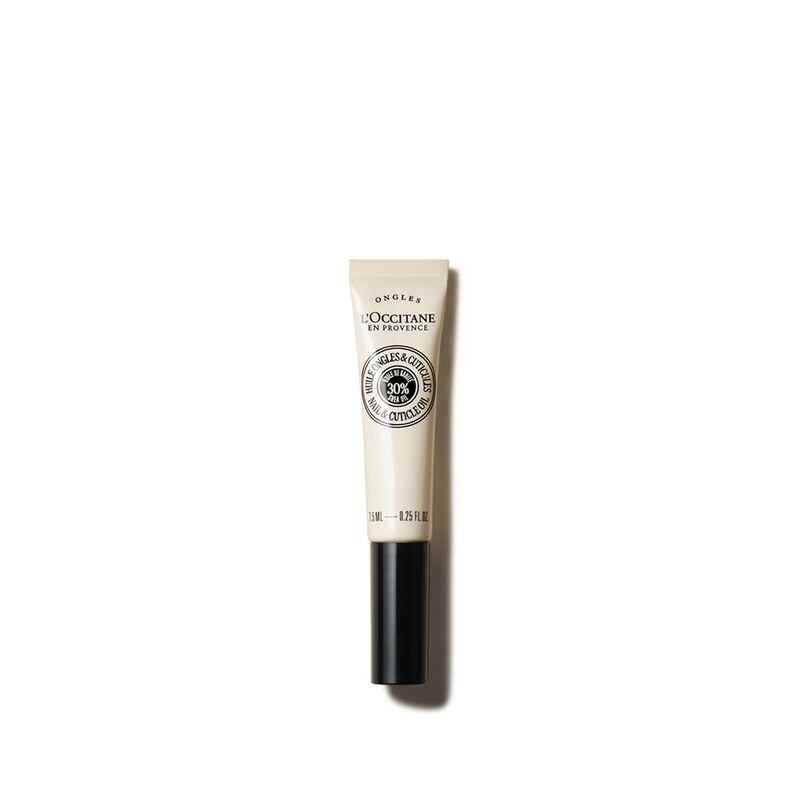
A nourishing cream for nails and the skin around them.
Do not worry if your nails are not ideal today. Most nails improve with steady, gentle care. If you notice persistent changes, such as unusual ridges, pain or swelling, see a board-certified dermatologist, as the academy advises. A small problem is easier to solve six months out than six days out.
Bridal nails for engagement photos and the ring
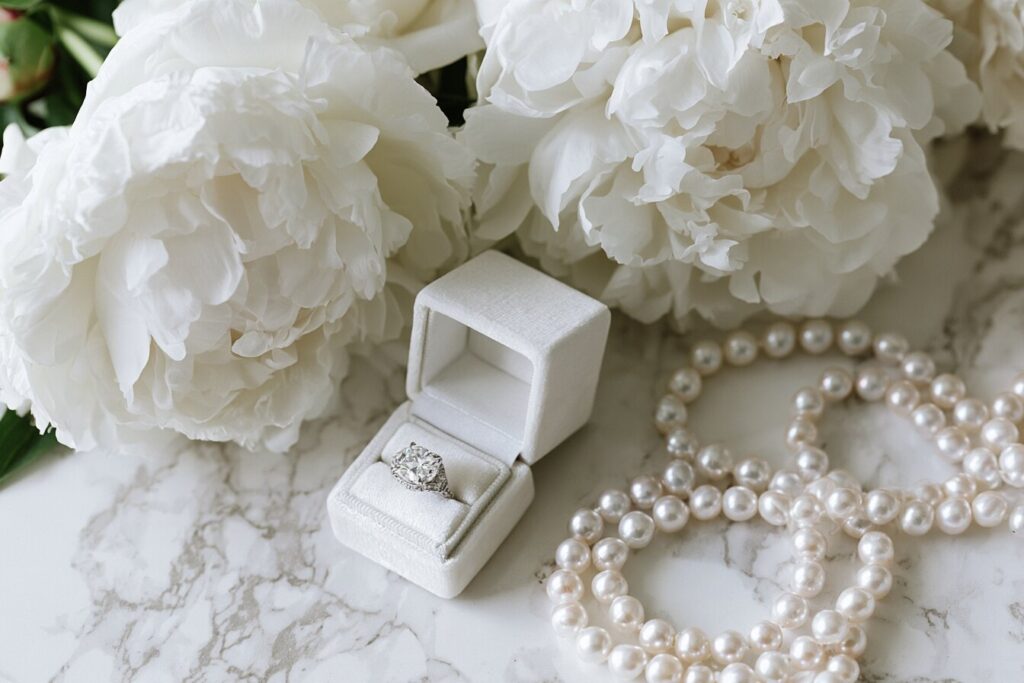
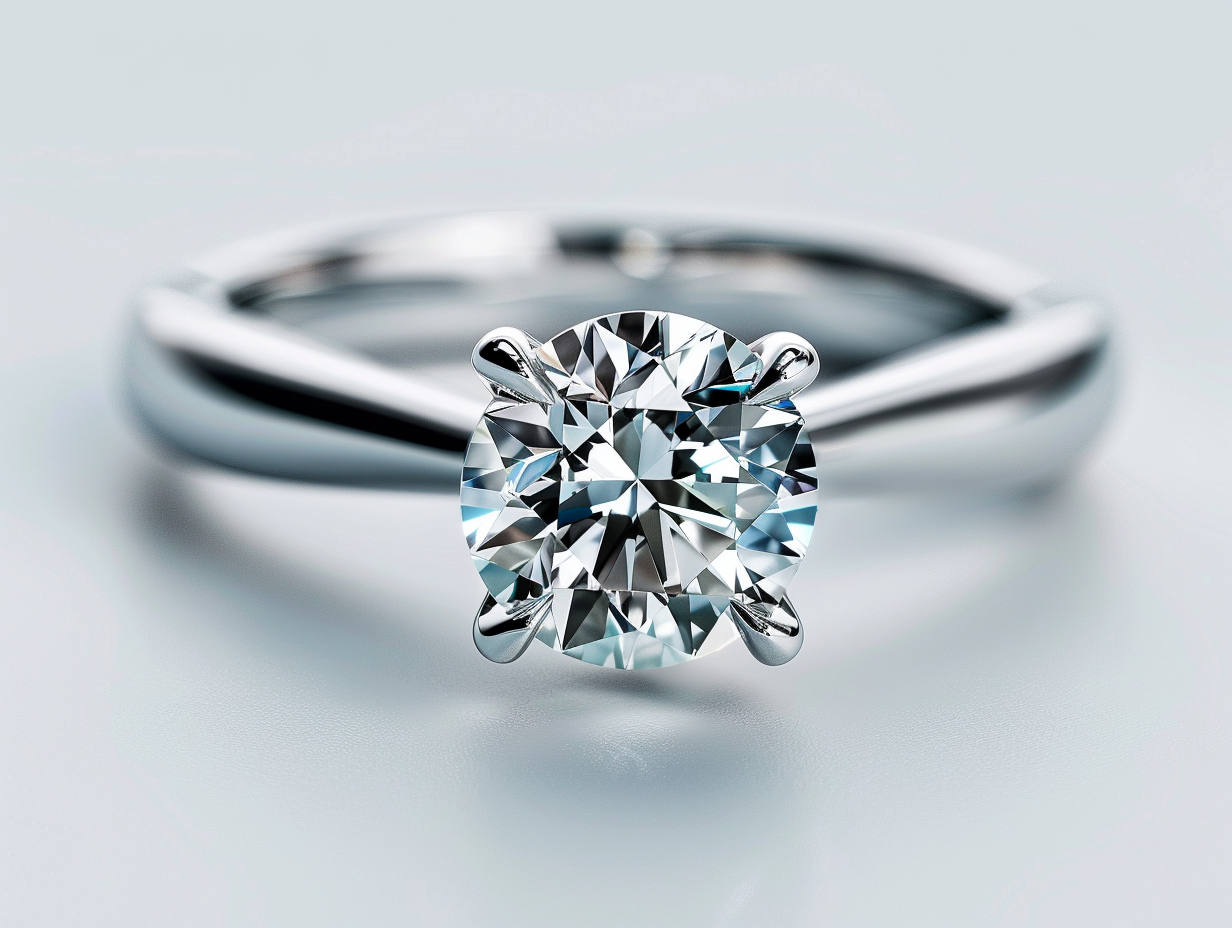
Many couples take engagement photographs months before the wedding, and the ring is often the star. A little planning helps your bridal nails look as polished as the diamond. Book a manicure a day or two before the shoot, and choose a shade that flatters the ring’s metal. Sheer pinks and milky nudes work with every setting, and they keep attention on the stone.
Pose with intention too. A soft, relaxed hand reads better than a stiff one. Rest your fingers gently on a shoulder, a bouquet or a partner’s lapel, and let the ring catch the light. Ask the photographer to include a close detail shot of your hands. In that frame, clean cuticles and smooth edges show clearly, which is another reason to keep up your cuticle routine.
Choosing a shape and length for the ring
Your ring is the star of the photographs, so choose a nail that frames it. Short to medium nails look elegant and feel comfortable. Soft oval, almond and squoval shapes flatter most hands, and they make fingers look longer. A natural length also keeps your hands practical on a day full of hugs and handshakes.
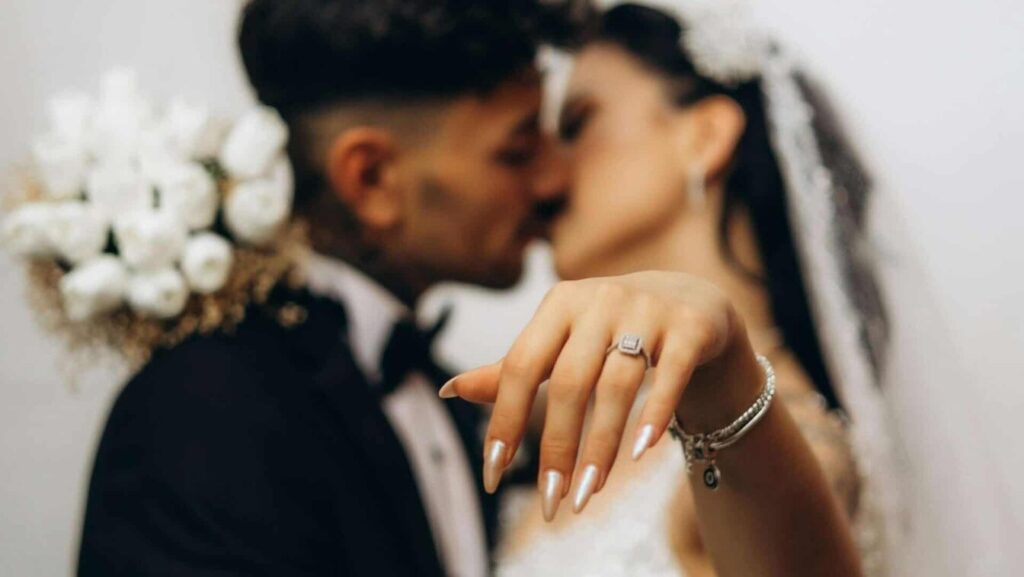
Very long nails can compete with the ring and catch on lace. Square, sharp tips can also snag a veil or a dress. Consider how you will move on the day. You will hold a bouquet, sign a certificate and exchange rings, so choose a length that does all of that easily. Comfort shows in photographs, because relaxed hands look graceful.
If you have short nails, a softly rounded shape looks refined and sturdy. If your nail beds are wide, a gentle oval can elongate them. Try your shape for a week before the trial, so you know it suits your daily life. Then tell your manicurist exactly what you like, with a photograph if you have one.
Choosing color for bridal nails
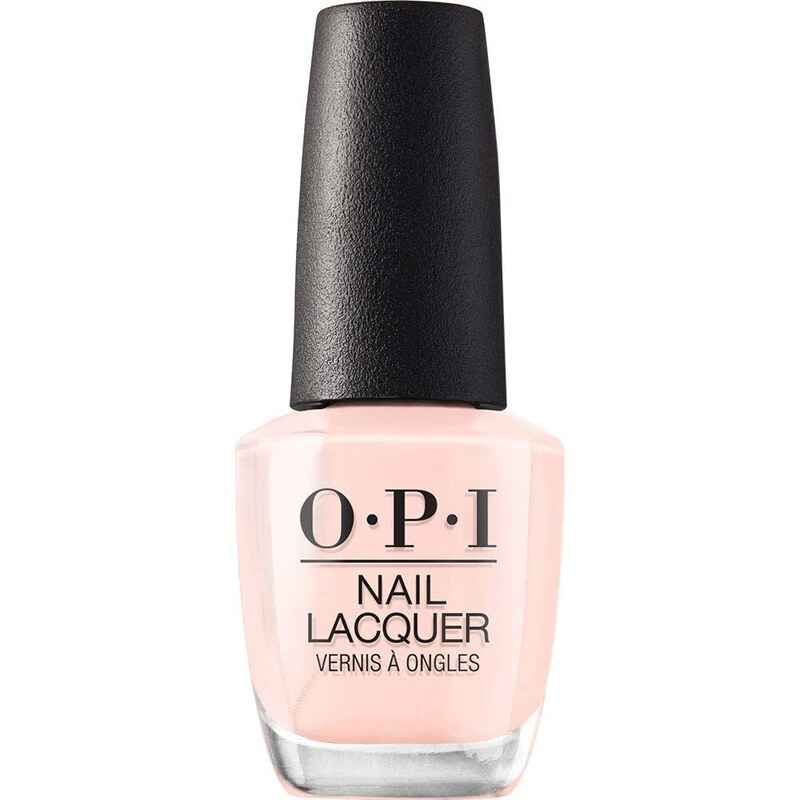
Color is the most personal choice, and a sheer shade is the safest. Soft pinks, milky roses and gentle nudes suit every skin tone and every dress. They photograph cleanly, hide regrowth and look polished for weeks. Because bridal nails are close to the camera, a sheer finish also forgives small flaws.
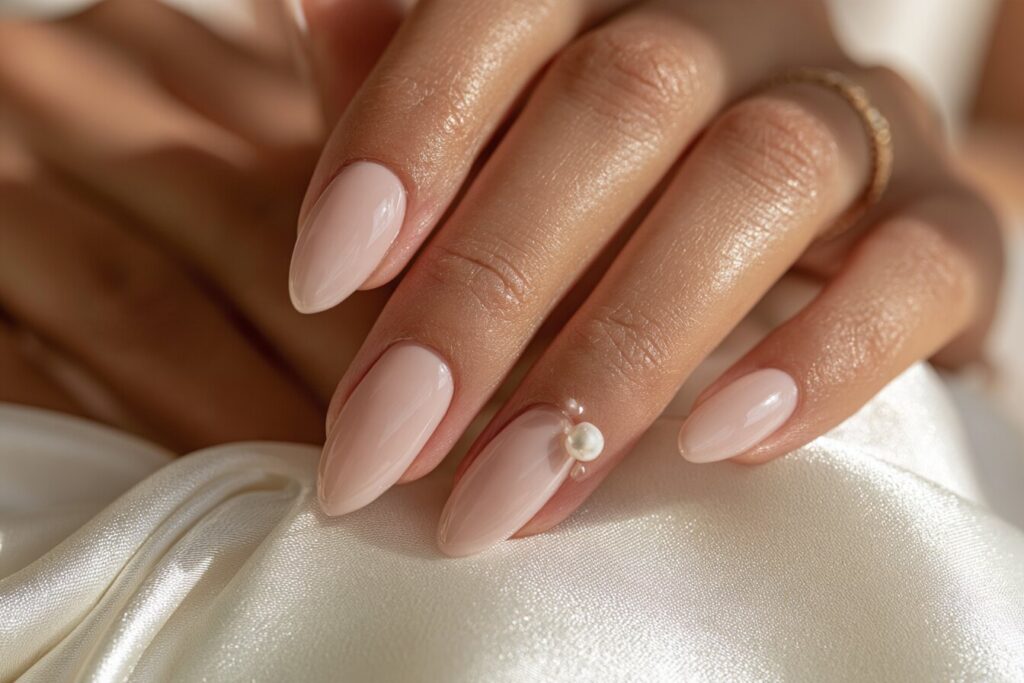
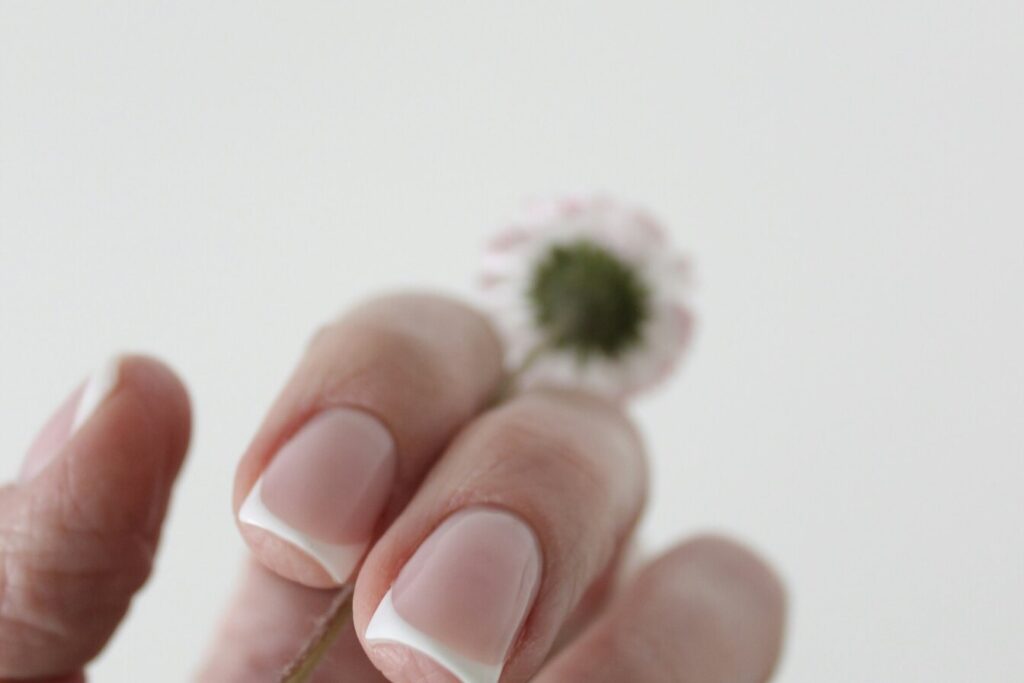
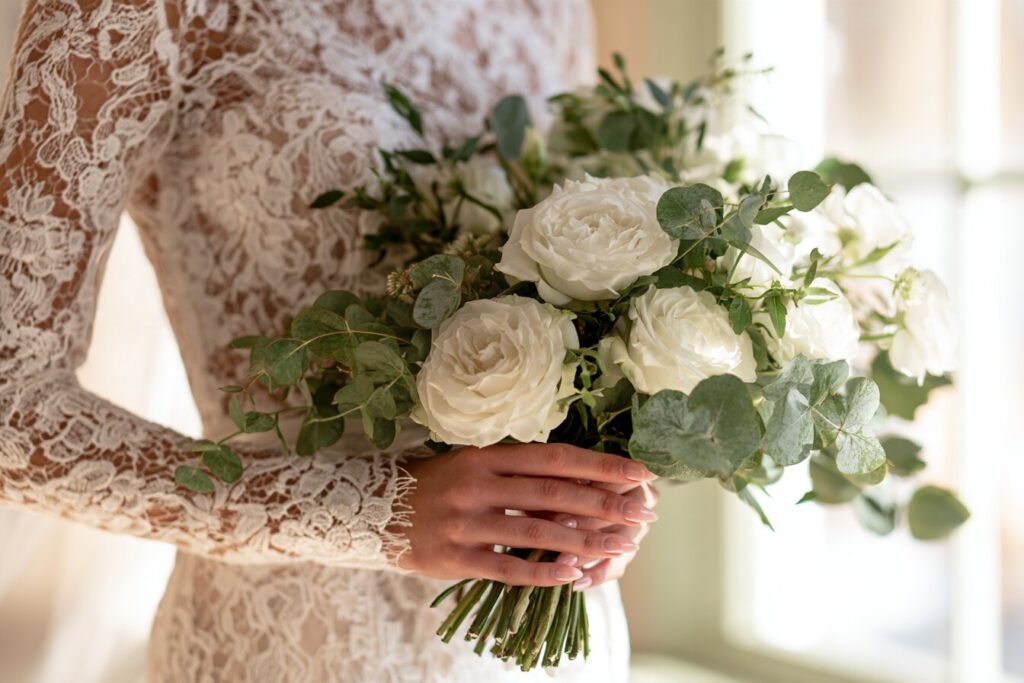
A classic French manicure remains a favorite for good reason. Its white tips echo lace and pearls, and they keep hands looking clean and light. A softer version, with a barely-there tip, feels modern. Another idea is a single accent nail, such as a pearl or a tiny line of gold, which you can wear on your ring finger.
Think about your dress and bouquet. A warm ivory gown flatters a rosy pink, while a crisp white gown suits a cool pink or a milky white. Hold your swatch against the fabric in daylight before you decide. Avoid very dark or glittery shades if you want the ring to lead. Take your dress swatch to the trial, and choose together.
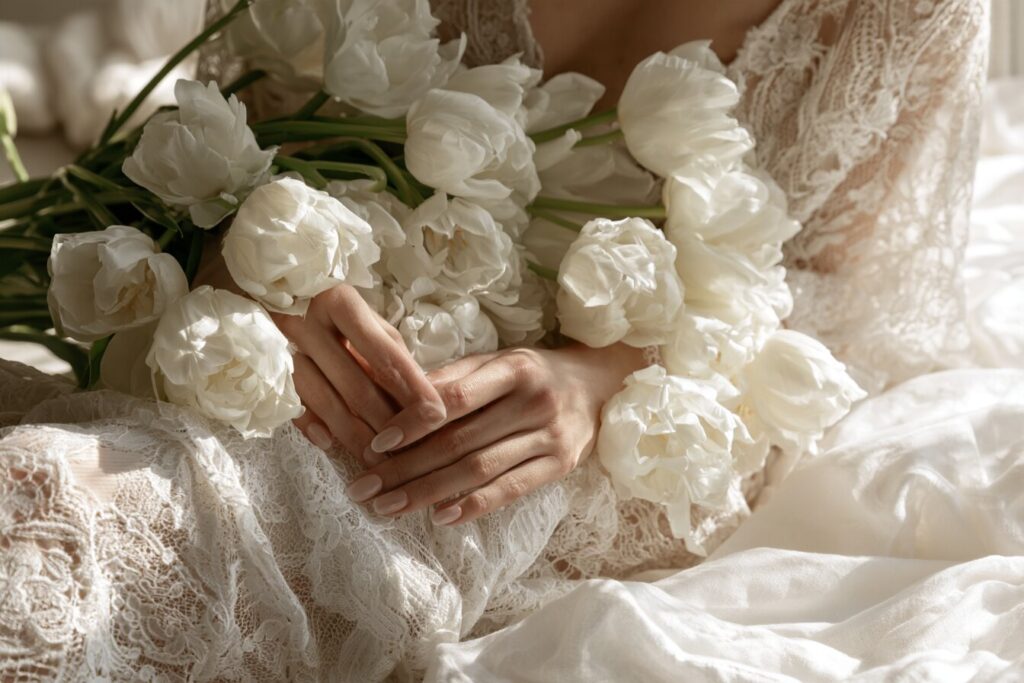
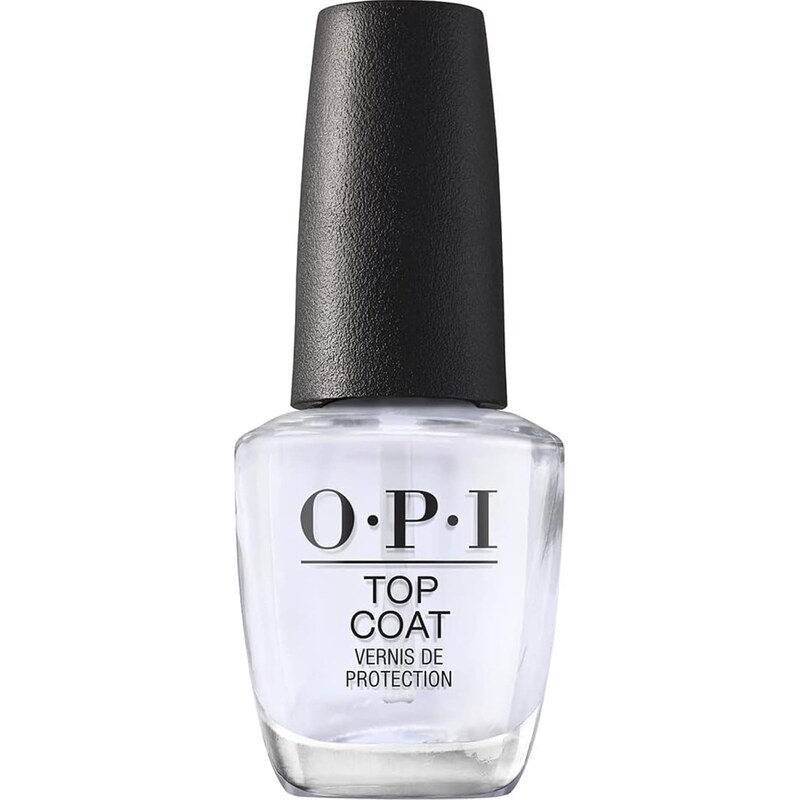
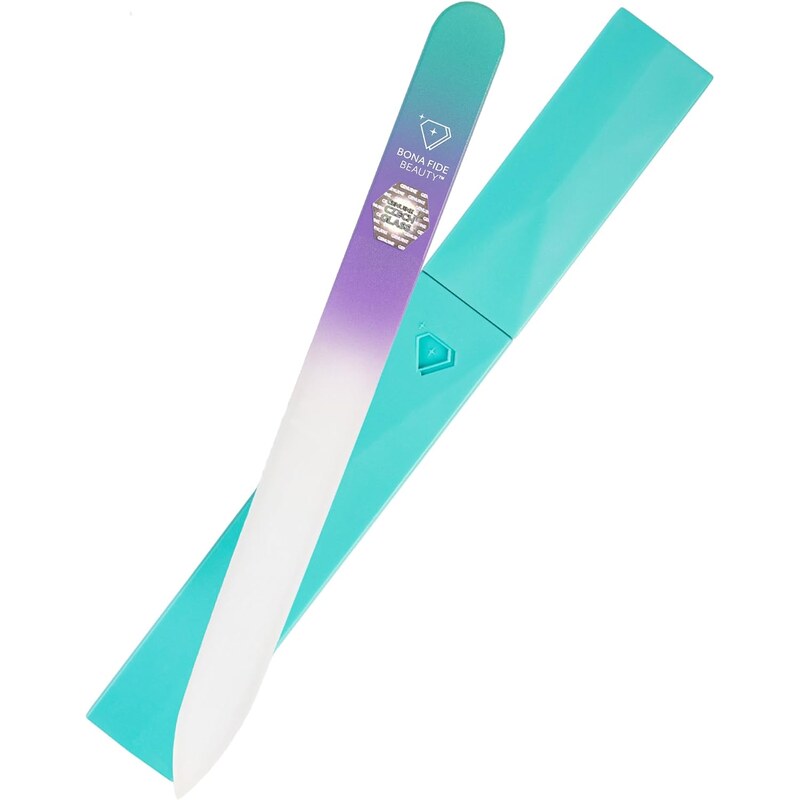
Whatever you choose, apply the color in thin layers. Thick coats stay soft and smudge easily, and they chip sooner. A good base coat and top coat make any shade last longer. The picks below cover a sheer polish, a top coat and a glass file for last-minute shaping.
Bridal nails for different wedding styles
Your wedding style can guide your nails. At a garden wedding, soft natural shades such as a sheer pink or a milky white echo the flowers. Winter weddings welcome a little more depth, perhaps a rosy nude or a pale gray-pink, which warms the hands against cool light. For a beach wedding, short, neat nails work best, since sand and wind are not kind to length.
Formal ballroom weddings allow more drama. In that setting, a glossy sheer finish with a delicate gold line can suit a satin gown, and a pearl accent suits lace. Still, restraint reads as elegant in photographs. Bridal nails that echo the dress rather than compete with it tend to age well in an album. When in doubt, choose the softer option and let the ring shine.
Think about your skin tone as well. Warm skin tones glow with peachy pinks and warm nudes, while cool tones flatter blue-toned pinks and soft rose. Deeper skin tones look beautiful in rosy nudes, mauve and creamy neutrals. Test shades against your skin in daylight, and choose the one that makes your hands look rested. A good manicurist will help you decide.
The trial manicure
A trial manicure is as useful as a hair and makeup trial. Book it about six weeks before the wedding, so there is time to adjust. Bring your dress swatch, a photograph of your ring and any color ideas. Ask the manicurist to try your chosen shade and shape, and then see how it feels over a few days.
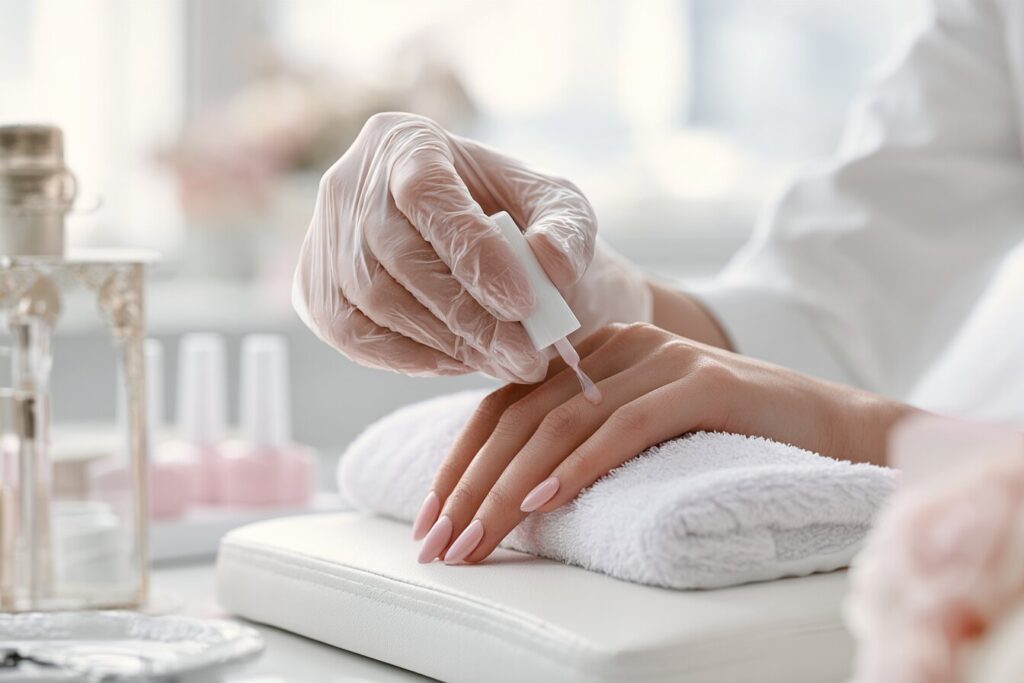
Use the trial to ask questions. Ask whether tools are sterilized and whether the technician disinfects them after every client, as the academy advises. Say you would like your cuticles left alone, since it recommends never letting a manicurist push or cut them, because that could lead to inflammation and infection. A thoughtful salon will welcome these requests.
The Cossèt Môi Letter: new beauty features and rituals, sent with care.
Unsubscribe anytime.
Wear the trial manicure for a few days and note what you notice. Take a photograph in daylight and another indoors, since light changes how a shade looks on camera. Does the shade look right in daylight and indoors? Is the length comfortable at a desk and in the kitchen? Does the finish still look smooth after washing up? Then adjust the plan. A small change now saves worry later.
Gel or traditional polish for the wedding
Many brides ask whether gel is right for the wedding. The answer comes from the American Academy of Dermatology. Its guidance on gel manicures says gel can be beautiful and long-lasting, yet it can cause nail brittleness, peeling and cracking. It advises gel for special occasions only, and a wedding is a clear example.
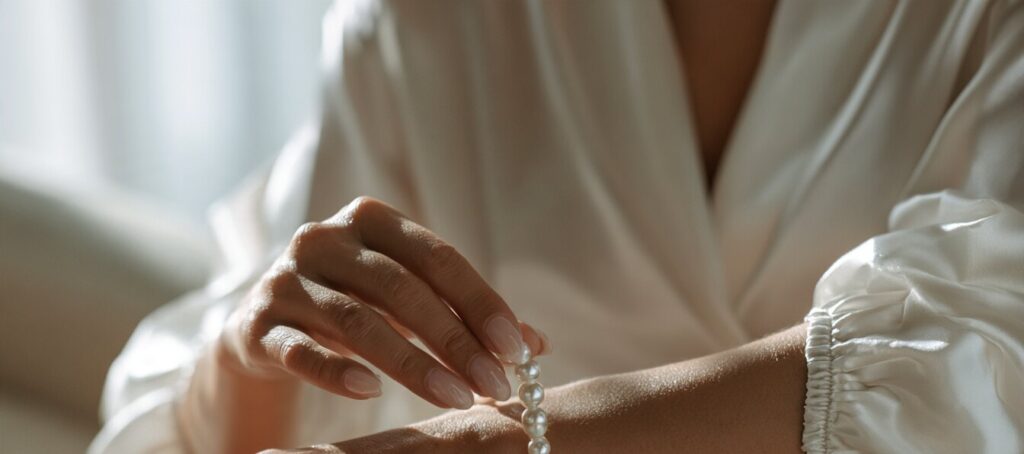
So gel can suit the wedding week, if you plan for it. Have it applied a few days before the date, and have it removed gently soon after. In the months before, avoid repeated gel, so your nails are strong when you need them. Many brides wear traditional polish for most of the countdown, then choose gel for the final week.

Traditional polish is a good alternative if your nails are thin or brittle. It needs no lamp, and it removes easily. With a good base coat and top coat, it can last a week or more. Applying a thin layer of top coat every few days refreshes the shine. The choice is personal, and both can look beautiful on the day.
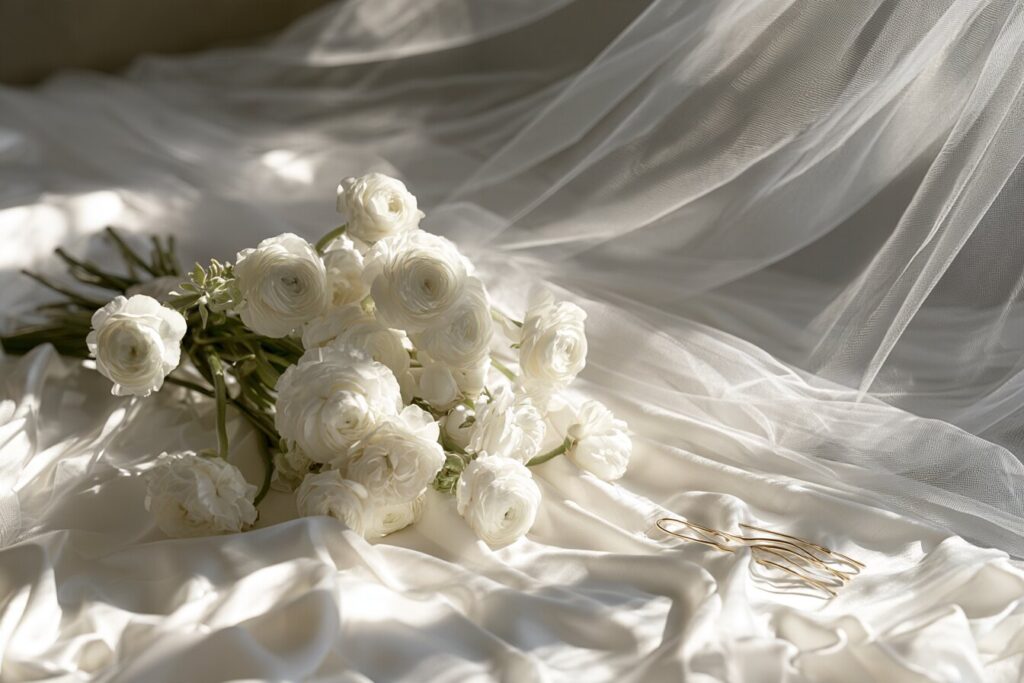
A note on artificial nails
Some brides want extra length for the day, so artificial nails come up often. The American Academy of Dermatology advises caution. Its guidance on artificial nails says they can leave nails thin, brittle and parched, and that frequent touch-ups can seriously damage the natural nail. It also says they are not recommended for people who are prone to fungal infections or have brittle nails.
If you still want them, plan carefully. Choose a skilled technician, and ask what products are used, since some substances can cause an allergic reaction. The academy’s manicure safety advice notes that artificial nails can be fine for people with healthy nails, as long as they are not worn continuously. So apply them for the wedding week only, and have them removed soon after.
Do not use artificial nails to cover up a nail problem. The academy warns that covering up brittle, soft or damaged nails can worsen existing problems. If your nails are in poor condition, spend the months before the wedding on care instead. A short, healthy natural nail in a sheer shade is always lovelier than a thick extension over a weak nail.
The wedding week
The final week should be calm. Book your last manicure for two to four days before the wedding. That gives the polish time to settle, and it leaves a little time for a fix if needed. Do not schedule a new technique in this week. Choose the shade and shape you have already tested.
If you choose gel, protect your hands from the lamp. The academy says to apply a broad-spectrum, water-resistant sunscreen with an SPF of 30 or higher to your hands before a gel manicure, to help prevent skin cancer and premature skin aging. It also suggests dark, opaque gloves with the fingertips snipped off as another option. Apply the sunscreen at home before you go.
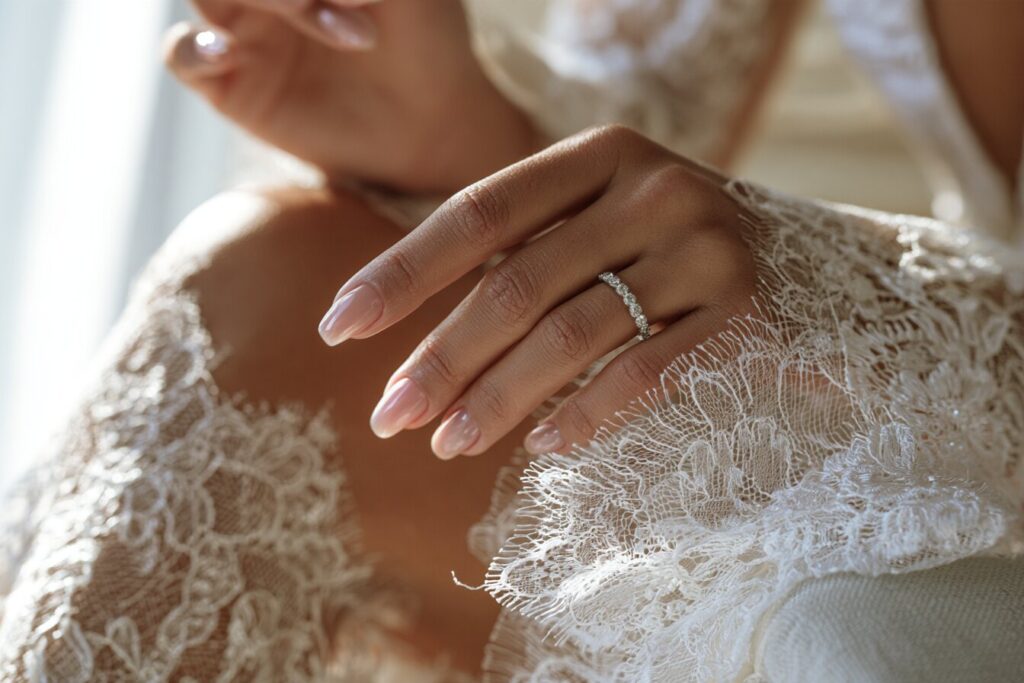
Keep your hands soft in the days before. Moisturize often, and wear gloves for any wet task. Avoid picking at your cuticles or biting your nails when nerves run high. If a nail chips, do not peel the polish. Instead, fix it gently with a drop of top coat, or visit your manicurist. Small habits protect your hands in the final days.
Remember the ring itself. Your ring will sit on your hand for the whole day, and it looks best against clean, smooth skin. A little cream the night before softens the skin around the finger and makes the ring slide on easily. Wipe away extra cream before you put it on, so the ring stays sparkling and the manicure stays neat.
The wedding day kit
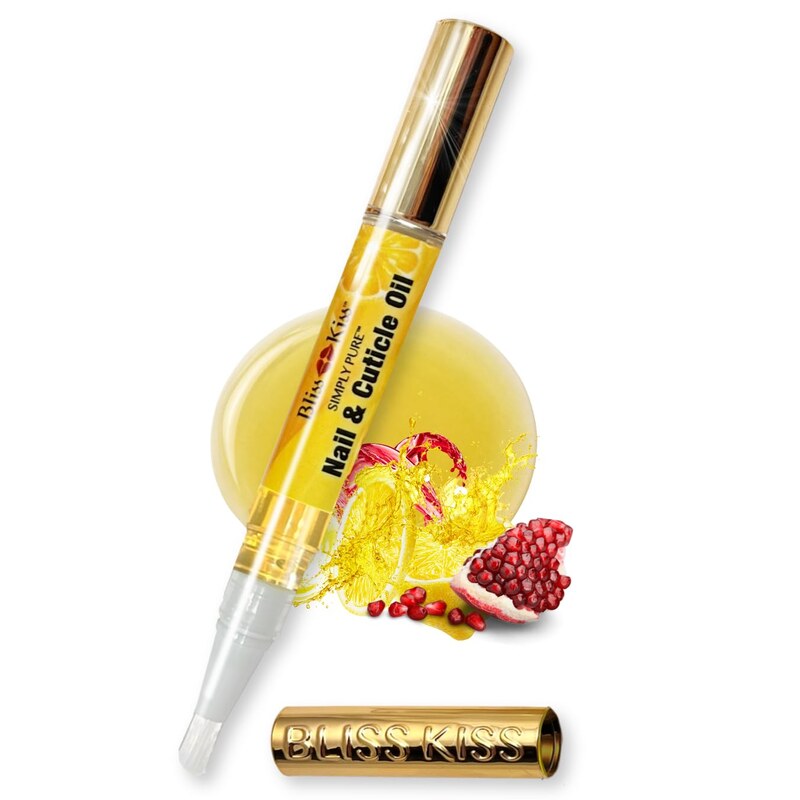
A tiny kit solves most problems on the day. Pack a mini emery board, a bottle of clear top coat, a small tube of hand cream and a cuticle oil pen. Give the kit to a bridesmaid or your mother, so you never have to think about it. If a nail snags, a quick file smooths it in seconds.
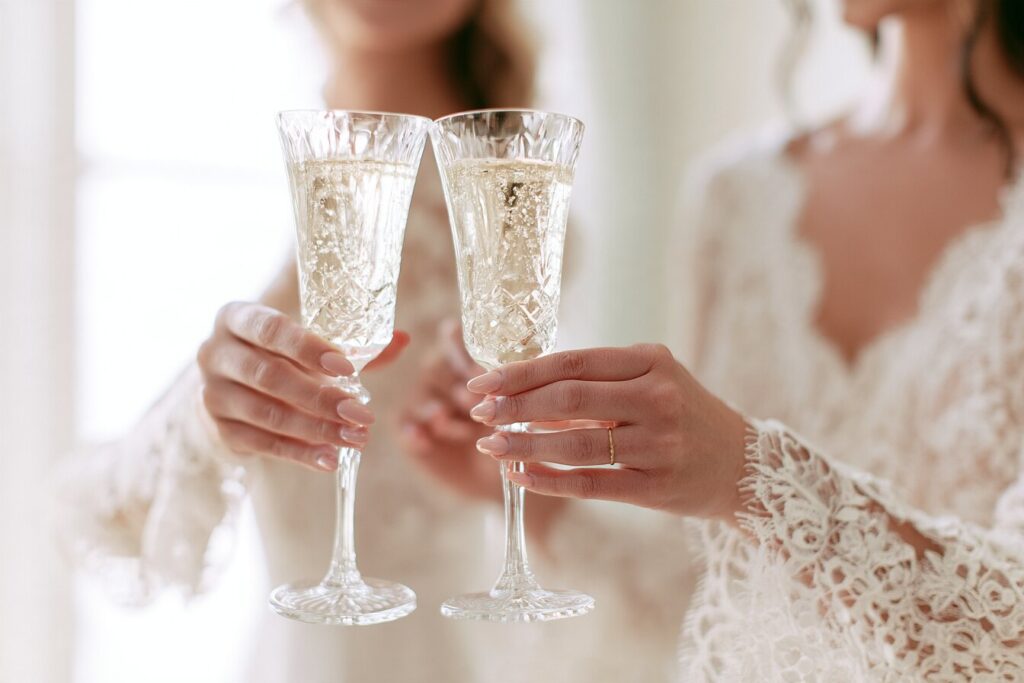
Apply a little cream before you dress, and let it absorb fully before you handle the dress. Put on the ring after the cream has set. During the day, sip water, and keep your hands relaxed. In photographs, a soft, natural hand pose looks best. Let your fingers rest gently, rather than tense, and your nails will look graceful.
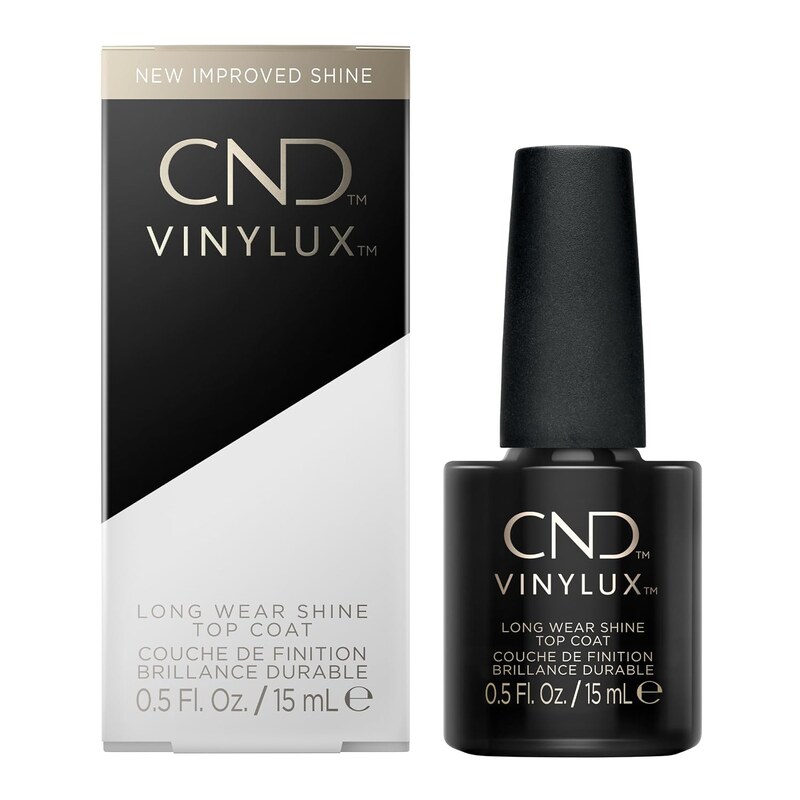
If you need a touch-up, use a thin layer of clear top coat on a chip, and let it dry before you move. Do not use acetone or remover on the wedding day, because you will not have time to repair the result. The picks below form a wedding day kit.
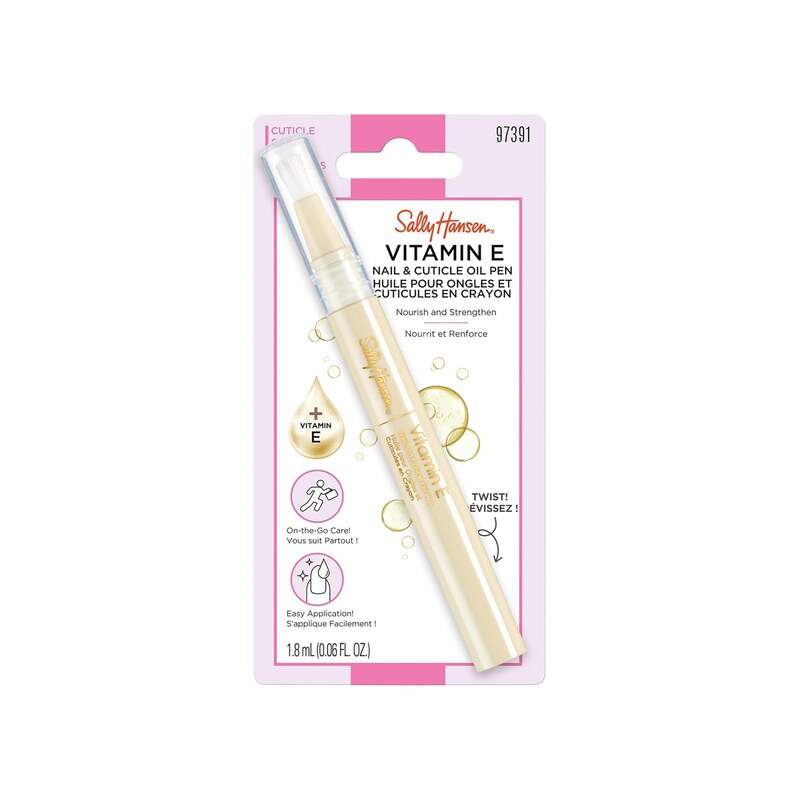
A tiny pen for the cuticles in a clutch.
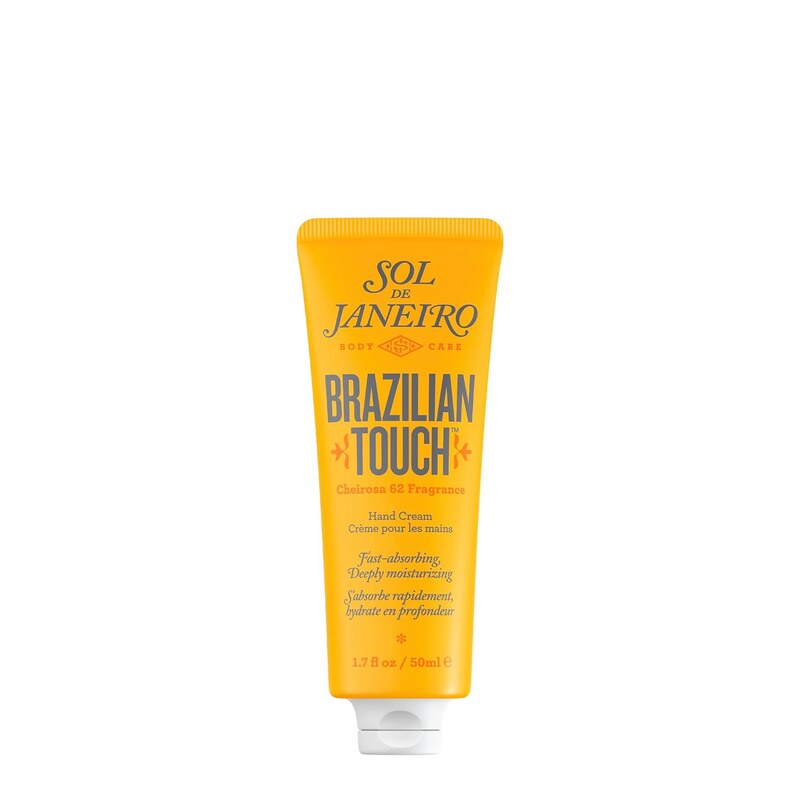
A softening cream to apply before the ring goes on.
After the wedding: removal and rest
After the wedding, your nails need rest. If you wore gel, book a gentle removal soon, since leaving it on for weeks stresses the nail. The academy says not to pick or peel gel. Instead, make an appointment with your manicurist. When removing it, it advises soaking only your fingertips in acetone, which protects the surrounding skin.
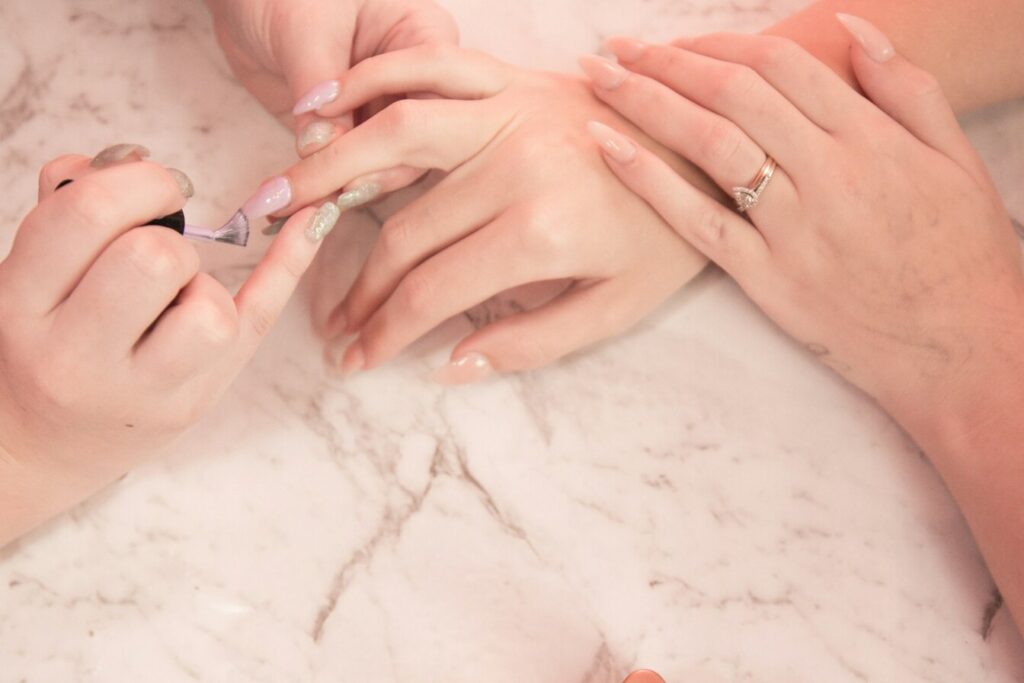
Another option is acetone-soaked cotton held on each nail with a small piece of foil. After about 15 minutes, the academy says, the polish should come right off. Afterward, wash your hands and apply oil to the nails and cuticles. The nail may feel thin, so be gentle with it for a few days.
Then take a nail polish holiday. The academy suggests going without polish for one to two weeks or longer, so nails can repair. During that time, moisturize several times a day. This is a good moment to enjoy the honeymoon, with soft hands and natural nails. When the nails feel firm, you can return to color if you wish.
Recommended
Bridal party and the mothers
Your bridal party can share the plan. Send the timeline to your bridesmaids, and suggest sheer shades that suit everyone. A matching pink or milky nude looks cohesive in group photographs without being identical. Book appointments together if you like, since a morning at the salon becomes part of the celebration.
The mothers and grandmothers deserve care too. Mature hands need extra moisture, and gentle polish suits them well. Our guide to nail care for mature hands offers advice on brittle nails, ridges and sun protection. Share it with the women in your family, so every hand in the photographs looks comfortable and polished.
For the groom and groomsmen, a simple tidy is enough. Clean, short, neatly filed nails look smart, and a little hand cream helps. Nobody needs polish. Suggest a quick manicure the week before, or a simple home trim. It is a small kindness that shows in the photographs.
A closing note on bridal nails
Bridal nails ask for very little: early care, a thoughtful shade and a calm week. When you follow a gentle timeline, your hands look relaxed, and your ring takes center stage. The details are small, but they appear in many photographs.
Begin tonight with a little cream and a drop of oil. Choose a shape you love, and book your trial. Write the timeline in your planner beside the florist and the caterer, since nails belong on the same list. Small, early steps remove last-minute stress, and they leave you free to enjoy the weeks before the wedding. Protect your hands from the lamp, and give your nails a rest afterward. Your wedding is a celebration, and your hands will carry it, in every embrace, every toast and every quiet moment. Enjoy them. If you are still choosing a ring, try our engagement ring style quiz.
Three ways to continue
A few simple questions in the Ring Style Quiz read your taste in fine jewelry. Guided rituals for hair and skin fill the Makeover Bible, so a good manicure sits inside a wider routine. Meanwhile, the 21-Day Reset turns attention inward, to skin and gut together, and you can join its waitlist below without any commitment. Whichever you choose, the idea stays the same as in this guide. Small, informed choices add up to a routine that feels entirely yours, and calm hands are part of that picture.
Your hands, after all, are always on show. They deserve the same care as everything else you wear each day, and a few quiet habits go a long way. Begin with one tool, and let the rest unfold in its own time.
A daily ritual for skin and gut, working from within. Join the waitlist to hear first when the next Reset opens.
Join the waitlistQuestions worth asking
When should I book my bridal manicure?
Book a trial about six weeks before the wedding, and the final manicure two to four days before. That gives the polish time to settle and leaves room for a fix. Plan removal and rest soon after the wedding.
Is gel a good choice for bridal nails?
It can be, if you plan for it. The American Academy of Dermatology advises gel manicures for special occasions only, and a wedding qualifies. Apply SPF 30 sunscreen to your hands before the lamp, and have the gel removed gently afterward.
What color suits bridal nails best?
A sheer pink, milky rose or soft nude suits most skin tones and dresses, and it hides regrowth. A classic French tip is another favorite. Hold your shade against the dress in daylight before you decide.
What length and shape should bridal nails be?
Short to medium nails in a soft oval, almond or squoval shape are comfortable and elegant, and they frame the ring. Avoid very long, sharp tips that can snag lace or a veil.
How do I protect my nails before the wedding?
Moisturize daily, wear gloves for cleaning and washing dishes, and file with an emery board. The academy says too much water exposure can weaken nails, and it advises not to bite them or remove the cuticle.
What should I do about my nails after the wedding?
Have gel removed by your manicurist or soak only your fingertips in acetone. Then take a polish holiday of one to two weeks or longer, and moisturize several times a day.