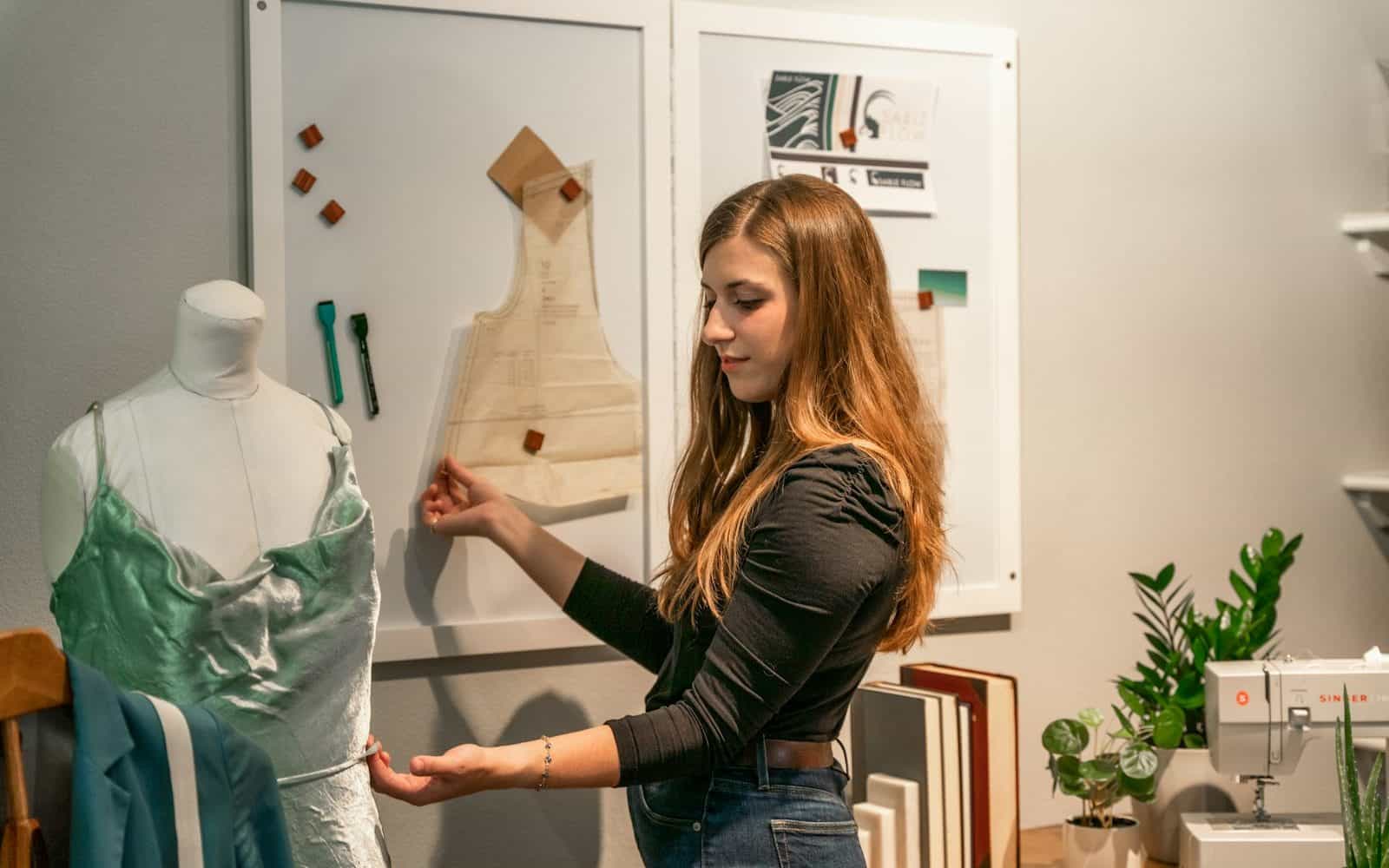
A call sheet lands at nine at night: a commercial shoot in two days, eleven looks, three sizes, and a returns deadline on Friday. If you have tried to explain that week to a friend outside the industry, you know the question that follows. What does a stylist do, exactly? The honest answer depends on the segment you work in. Editorial, commercial, celebrity, personal and e-commerce styling share the same core skills.
However, they run on different calendars, different clients and very different ways of billing. We wrote this guide for working and aspiring stylists in the US. It maps each segment day to day, explains how the money moves, and points you to deeper guides on pulls, returns, rates and taxes.
The short answer
What does a stylist do? A stylist researches a look, sources the clothing and accessories, fits them to a real body, and protects that look on set or on the day. Afterwards, the stylist returns or settles every piece. Editorial stylists build stories for publications. Commercial stylists dress campaigns and ads. Celebrity stylists manage a client’s public appearances. Personal stylists work with private clients on their wardrobes. E-commerce stylists dress product for retail sites, often as employees. Because each segment bills differently, knowing yours shapes your rates, your contracts and your week.
In this guide
- What does a stylist do? The work every segment shares
- Editorial styling: stories for publications
- Commercial and advertising styling
- Celebrity and talent styling
- Personal styling and personal shopping
- E-commerce and in-house styling
- TV, film and costume work
- How to become a fashion stylist
- The business side every stylist carries
- Choosing the work that fits the life you want
- Questions worth asking

What does a stylist do? The work every segment shares
Start with what the official data can and cannot tell you. The Bureau of Labor Statistics does not publish a separate occupation for fashion stylists. Its closest profile covers fashion designers, and that profile also counts costume designers for stage, film and television. According to the BLS Occupational Outlook Handbook profile for fashion designers, the median annual wage was $80,960 in May 2025, and the category held about 32,700 jobs.
That figure describes designers, not stylists, so treat it as context rather than a benchmark. In practice, most styling income comes from freelance day rates, client packages or in-house salaries that no federal survey isolates. As a result, the clearest way to understand the job is to look at the work itself. Every segment below shares the same backbone.
That backbone has four stages. First comes research: references, mood boards, the brief, and a clear read of the body you are dressing. Next comes sourcing, which means buying, renting or borrowing pieces. Borrowing is where paperwork matters, and our guide to how stylists get clothes from showrooms covers the request, the letter and the etiquette. Then come the fittings and the day itself, when you pin, steam, tape and adjust under time pressure.
Finally, you settle every piece through returns, receipts, damage notes and invoices. Running a clean returns day protects both your money and your brand relationships. So, what does a stylist do between those stages? Mostly logistics. Clients see the finished image, while the stylist carries the spreadsheet, the courier receipts and the risk.

Editorial styling: stories for publications
Editorial stylists build fashion stories for magazines, newspapers, digital titles and brand journals. The work begins with a concept from an editor or photographer. From there, you translate it into looks, pull from showrooms and PR agencies, and confirm credits for every piece. On the day, you dress the model, watch every frame, and adjust hems, sleeves and drape between shots. Editorial sets reward a strong point of view.
However, they also demand accuracy, because publications credit each designer, and a wrong credit reaches print. Once the shoot wraps, you return the samples on schedule and log anything that went missing or came back marked. Many editorial stylists freelance for several titles at once. Meanwhile, the volume of pulls and returns rises fast, so your system matters as much as your taste.

How editorial stylists earn
An editorial fee comes from the publication’s budget, so ask early what it covers: prep, assistants, couriers and kit, or none of them. Many stylists take editorial work for the image rather than the fee. That image builds the book that commercial clients review. For that reason, secure your credit in writing before the shoot and collect the pages afterwards. Our guide to tear sheets and styling credits explains how to request them and how to document work where your name was left off.
Still, a thin budget has a cost. Kit, couriers, travel and assistants come out of it, and unpaid prep days add up quickly. So set a rule for yourself. Decide which titles are worth the investment, and track what each story actually cost you to produce.

Commercial and advertising styling
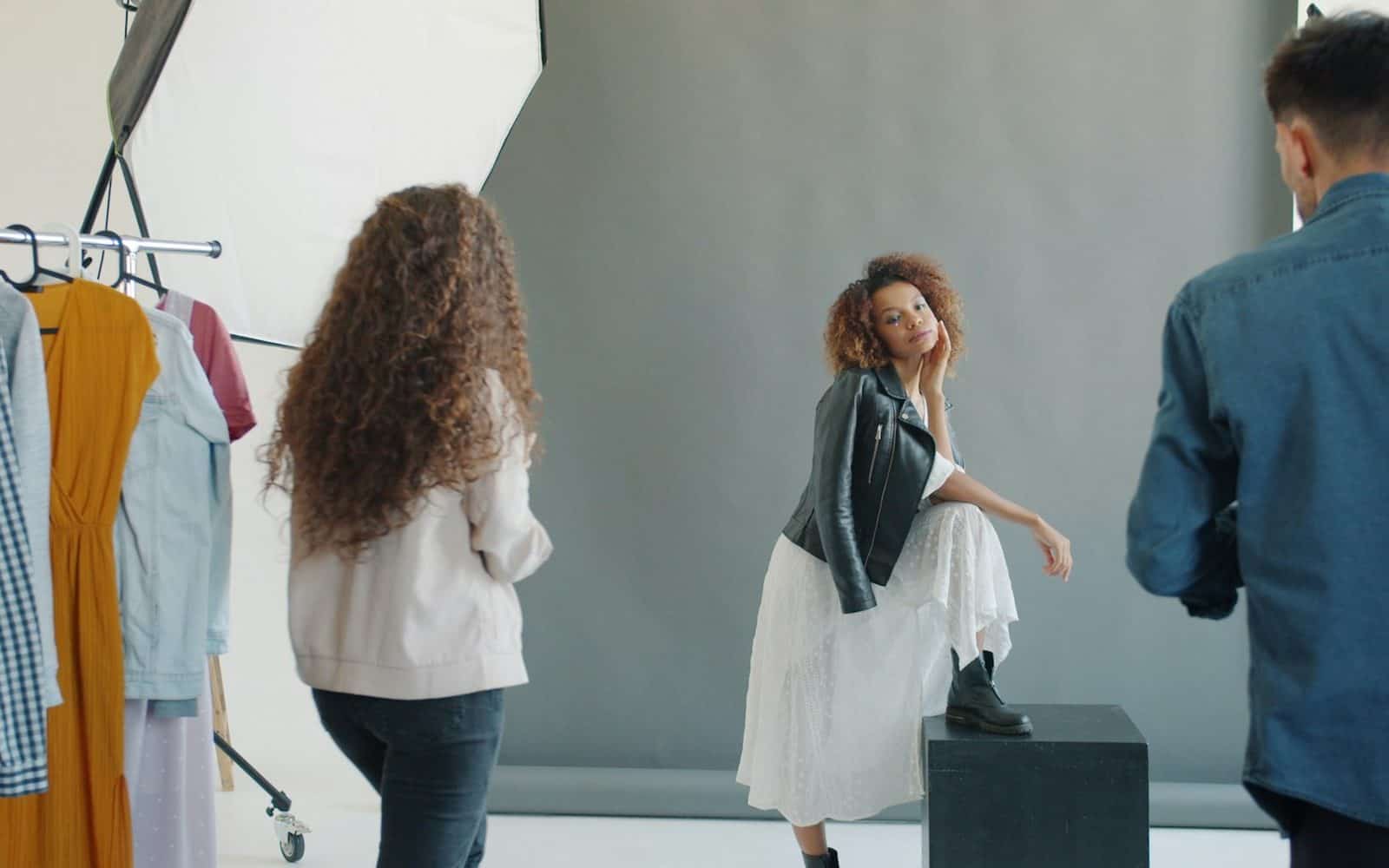
Commercial stylists dress advertising campaigns, catalogs, lookbooks, television spots and brand social content. The brief comes from an agency or a brand team, and it usually arrives with approvals, product lists and legal limits. Unlike editorial, the brand’s own product often sits at the center of the frame. Your job is to make that product read clearly while the styling around it supports the story.
Prep includes shopping, fittings with talent and building alternates for every look. On set, you work alongside the photographer, the hair and makeup team and the client, and you answer to all of them. As a result, your kit has to solve problems quickly. Our guide to the on-set stylist kit covers steamers, clamps, fashion tape and the tailoring fixes that keep a shoot moving.
How commercial jobs bill
Commercial work usually runs on a day rate, and the structure of the quote matters as much as the number. A clear quote separates shoot days from prep and wrap days, lists kit fees and shopping time, and states overtime terms. It also covers usage, meaning where the images run and for how long. Our breakdown of how stylists bill day rates and usage walks through each line.
Meanwhile, purchases for a campaign create their own exposure. You may front money on a personal card, wait for reimbursement, and absorb the cost of anything that cannot go back. For that reason, agree in writing on purchasing limits, return windows and payment terms before you shop. Keep every receipt in one place, because reconciliation often happens weeks after the shoot.
Style Wise — a working stylist’s career textbook
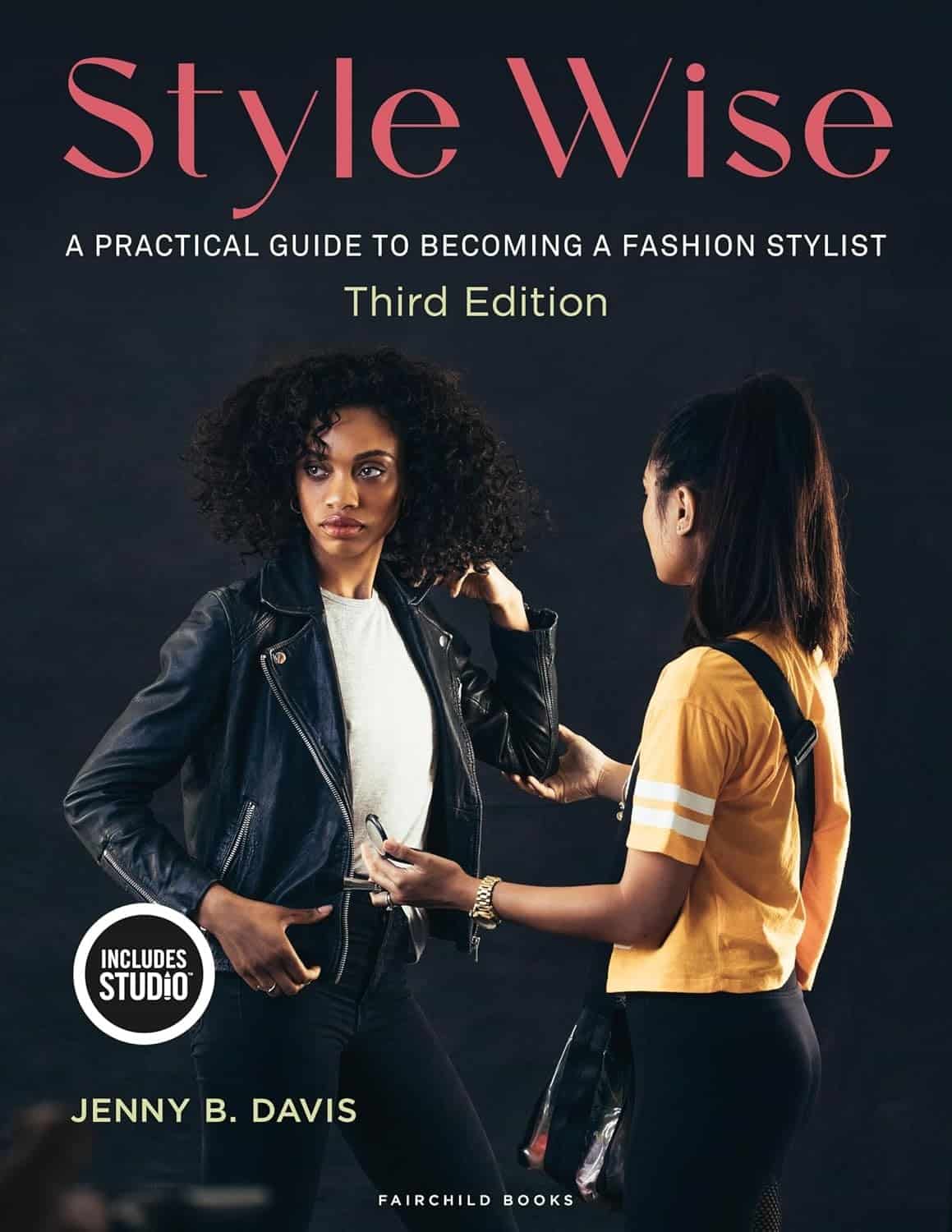
For a fuller picture of how commercial work differs from editorial, a structured reference helps. Style Wise: A Practical Guide to Becoming a Fashion Stylist is a textbook by Burns-Tran and Davis on the working stylist career. It covers editorial, commercial and set work, so it maps closely onto the jobs this section describes. In practice, it suits assistants moving toward their own bookings and stylists adding advertising clients to an editorial book.
Read the commercial chapters before a first agency job, because budgets, approvals and paperwork differ from magazine work. Then compare its guidance with how your regular producers actually run a day. Also keep a copy on the studio shelf, since it gives new assistants a shared vocabulary before their first call.
Borrowed pieces add a second layer of risk. Showrooms and PR agencies may ask for a credit-card hold, and some will bill you when a sample comes back marked, stretched or missing. Commercial shoots raise that risk, because long days and multiple talent changes put more wear on every garment. Our guide on who pays when a pull goes wrong sets out how holds work and how to agree on responsibility in advance.
In practice, the safest habit is documentation. Photograph each item at pickup and again at return, note existing marks, and keep the courier proof. Also, read the production contract for a loss-and-damage clause. If none exists, ask for one before you sign. Clear terms protect the relationship when something tears at hour eleven of a long day.
Celebrity and talent styling
Celebrity stylists, often called talent stylists, dress public figures for red carpets, press tours, performances, premieres and campaigns. The client is a person, but the brief often comes through a publicist, manager or agent. The daily work is a cycle of fittings, pulls, alterations and appearances, sometimes several in one week. You build relationships with designers and brand teams, request looks well ahead, and coordinate a tailor for each fitting.
On the day, you dress the client and then handle the return. However, the role is less glamorous than the photos suggest. Hours are irregular, travel is frequent, and one public look can draw scrutiny from press and brands at once. Many working talent stylists began as assistants. Our guide to assisting a celebrity stylist describes what that job involves.

How talent styling earns
Talent styling budgets vary by client, appearance and contract, so this segment has no single rate card. Some stylists bill per appearance or per day, while others agree a fee for a whole press cycle. Either way, the fee should reflect fittings, prep and the hours spent on pulls and returns, not only the day of the event. Clarify early who pays for tailoring, couriers and purchases, because those costs grow quickly across a tour.
Also confirm who signs for each loan and who answers to the brand if something goes wrong. In addition, keep your own records of every request, approval and return. Those records protect you during a dispute. They also show a future client how carefully you run a calendar, which matters in a segment built on trust and discretion.
Talent work also exposes one of the industry’s oldest problems. Runway samples come in a narrow range of sizes, and many brands lend only those. If your client wears a different size, the usual pull pipeline narrows or closes. Your options then shift to buying, custom work, made-to-measure orders or skilled tailoring of retail pieces. Our guide to styling beyond sample size covers how to source, fit and protect those looks without treating your client as a problem to solve.
Meanwhile, the same skills serve personal clients, commercial talent and models outside sample sizes. A stylist who can dress a full range of bodies well brings a real advantage to every segment. It also widens who you can work with, which in turn shapes the business you build.
Personal styling and personal shopping
Personal stylists work with private clients rather than productions. The client might be an executive changing roles, a parent returning to work, or someone who wants a wardrobe that fits a new life. For that client, the answer to what does a stylist do is personal and practical. The work starts with an intake conversation about schedule, budget and how the client wants to feel. Next comes an edit of what they already own, and our guide to a closet audit clients will pay for explains how to structure and price that session.
After the edit, you shop with the client or on their behalf, and build outfits they can repeat. Unlike set work, success shows up slowly, in a client who dresses with ease months later. That makes communication central to the role.

Personal shopping sits close to personal styling, yet the two roles differ. A personal shopper selects and buys on a client’s behalf, sometimes as a freelancer and sometimes inside a department store or brand. Stores may employ shoppers to serve their regular customers, while private clients hire freelancers for time they lack. Some clients are public figures who cannot easily shop in person. In each case, you have to know the client well enough to choose for them when they are absent.
You also introduce new pieces and help them build a coherent image over time. Many stylists move between the two roles in one week. Still, each needs its own service terms, because a shopping trip and a wardrobe overhaul carry different hours, different deliverables and different expectations from the client.
How personal stylists earn
Personal styling usually runs on packages or hourly rates rather than day rates. A clear structure separates the closet edit, the shopping session and follow-up support, so the client sees what each stage includes. Remote work adds another layer. Clients in other cities can buy a lookbook, a shopping list or a video consultation, and our guide to virtual styling packages covers tools and pricing logic.
In addition, commissions or store discounts may enter the picture when you shop through retail partners. If they do, disclose them to the client in writing. That transparency keeps your advice clearly yours. Finally, decide your cancellation and rescheduling terms before your first booking. A calm, written policy saves difficult conversations later and keeps your calendar from absorbing other people’s changes of plan.
Notes for working stylists: pulls, pricing, clients and career, sent occasionally.
Occasional letters. Unsubscribe anytime.
Credentials come up most often in this segment. The Association of Image Consultants International runs a tiered certification program. According to the AICI CIP candidate handbook, the Certified Image Professional is its second level. Candidates must have held the entry-level Certified Image Consultant credential for at least one year. Those programs focus on image consulting, which overlaps with personal styling but is not identical to it. So weigh the time and cost against the clients you want to serve. Our guide on whether a personal stylist certification is worth it compares the paths in detail. Meanwhile, a portfolio of client outcomes, shared with permission, can persuade private clients just as directly as a certificate on your website.

E-commerce and in-house styling
E-commerce stylists dress product for retail websites, apps, email and social feeds. Most of the work happens in a studio, and much of it is in-house. A Shopbop editorial stylist listing describes styling both on-figure and off-figure stories, owning shoots from planning through retouching notes, and working with buying, merchandising and marketing teams. It asks for five or more years of experience in e-commerce or high-volume production.
On-figure means dressed on a model, while off-figure covers flat lays, ghost mannequins and still life. Pace is the defining feature of this segment. You may style dozens of looks in a day, clipping and pinning each garment so it reads true to the product. Our guide to in-house e-commerce styling covers shot lists, pinning and pace.
How e-commerce styling earns
E-commerce is the segment most likely to offer a salary or an hourly wage. Retailers hire staff stylists, seasonal stylists and assistants, and freelancers often fill extra studio days. That steadiness carries real value, especially if you are tired of chasing invoices. However, the trade-off is creative range. The brand sets the look, the product leads every frame, and the shot list rarely changes.
Many stylists use in-house work to fund their editorial and personal projects. Off-figure work offers another route into studios, and our guide to still-life and flat-lay styling work explains how stylists win product-shoot bookings. Either way, the skills transfer. Speed, garment care and a consistent eye make you useful on every set you join next, whatever the segment.

TV, film and costume work
Television, film and stage productions use the word costume rather than styling, and the structure of the work changes. A costume designer creates the look for each character across a production, often with deep research into period, place and story. The Bureau of Labor Statistics includes costume designers within its fashion designers profile. Behind the designer, costumers manage fittings, continuity, alterations and the wardrobe department on set.
Unions cover many of these roles. The Costume Designers Guild, IATSE Local 892 represents costume designers, assistant designers and illustrators. Meanwhile, Motion Picture Costumers, IATSE Local 705 represents costumers and wardrobe workers in film and television, and it describes wage scales, set hours and benefits for members. So if this path appeals, study how each local admits members before you plan your route.
Period work demands a particular kind of research. If a story takes place in 1965, every fabric, fastening and silhouette has to belong to that year, or at least not contradict it. That means archives, museum collections, old catalogs and photographs, not only mood boards. You also think about how a garment moves and wears, because a character lives in it across many scenes. Continuity adds a further discipline.
Each look has to match from one take to the next, sometimes across weeks of shooting. As a result, costume departments rely on photographs, notes and labeled racks. Many fashion stylists try music videos and commercials first, because those jobs blend styling with costume logic. Afterwards, they decide whether the longer production cycle and its structure suit the life they want.

How to become a fashion stylist
Once you know what does a stylist do in each segment, the next question is how to start. Most people learn how to become a fashion stylist by assisting. An assistant preps pulls, tracks samples, steams, packs and handles returns, which is the operational core of every segment. That experience teaches the pace and pressure of a set better than a classroom can.
Formal study still helps. The FIT Fashion Styling Fundamentals Certificate is a noncredit program that frames assisting as the entry point. Its outcomes include building a styling kit, executing test shoots, and creating on-figure and off-figure work. Similar courses exist elsewhere. So choose study for the skills and contacts it gives you, and pair it with real days on set.
Fashion Styling by Jacqueline McAssey — an illustrated career introduction
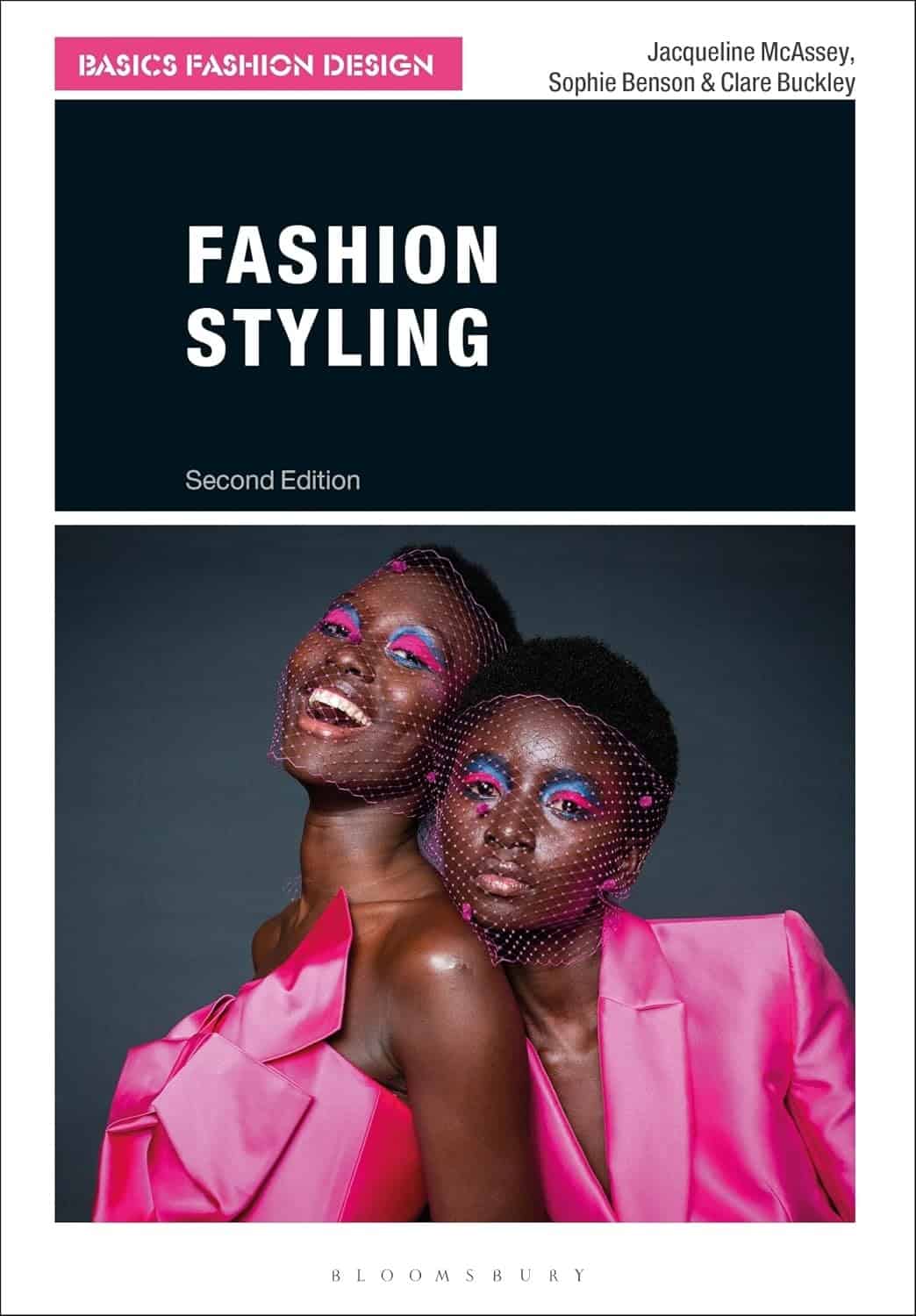
Alongside set days, a clear introduction to the craft gives a new stylist a framework to test against real jobs. Fashion Styling by Jacqueline McAssey is an illustrated introduction to styling practice and to building a career. It sits in the Basics Fashion Design series, so it reads as a foundation rather than a memoir. For example, it suits students weighing a course and career changers from retail.
Assistants also gain context for what they see on set. Read a chapter, then watch for the same ideas at your next test shoot. As a result, the theory and the practice reinforce each other. However, treat it as a starting point, because your book and contacts still do most of the hiring work.
Test shoots are the next step, and they work best as collaborations. You, a photographer, a model and a hair and makeup artist each build your books from the same day. Agree on the concept, the usage and the credit before anyone arrives. Then treat the test like a paid job, with call times, a look list, a kit and a clear return plan for anything borrowed.
Strong collaborators make the work better, so learn how their crafts operate too. For example, the makeup artist’s guide shows how a makeup artist approaches kit, rates and the business side. Meanwhile, keep your images organized by segment. A commercial client wants to see clean product work, while a magazine editor looks for point of view. Separate portfolios help each reader find what they need.

Choosing your first segment
You do not have to choose one segment forever, yet your first focus shapes your early years. Editorial builds visibility but rarely covers its costs on its own. Commercial work can pay more per day, although it usually asks for an established book and reliable logistics. Celebrity work needs relationships that take years to earn. Personal styling can start with one client and grow by referral. E-commerce offers steadier income and fast skills, with less creative control.
So ask yourself which trade-off you can sustain for three years. Next, build your book, contacts and systems for that segment first. In practice, many stylists blend two segments, such as studio days and personal clients, to balance income with creative work. That mix is a strategy rather than a compromise, and it can change as your book grows.
The business side every stylist carries
If you freelance, you likely work as an independent contractor, and that changes how you handle money. According to the IRS Self-Employed Individuals Tax Center, you have to file a return if your net earnings from self-employment reach $400 or more. Sole proprietors report income and expenses on Schedule C and pay self-employment tax through Schedule SE. The IRS also notes that self-employed people generally pay estimated tax quarterly with Form 1040-ES.
In practice, that means setting money aside from every invoice. Open a separate business account, log each purchase and reimbursement, and keep receipts for pulls you bought and returned. That record also helps when a client pays late, because you can show exactly what you spent. For your own situation, consult a qualified tax professional.
Clothing is the question stylists ask most often at tax time. Your own wardrobe, your kit and the pieces you buy for clients each sit in different categories, and the distinctions matter. Garments you buy for a client and bill back are a different matter from clothes you wear yourself. Our guide to which clothes a stylist can write off explains how the IRS rules apply to each case, with links to the relevant publications.
Meanwhile, consider the broader costs of the work. Steamers, tape, garment bags, couriers, parking, insurance and software all add up across a year. Track them by segment, because that view shows which kind of work actually earns money. Review the numbers each quarter. Those totals tell you more about your business than any single invoice.
Choosing the work that fits the life you want
So, what does a stylist do once you strip away the image? A stylist makes judgment calls under pressure, protects other people’s property, and turns a brief into something a camera or a client can believe. The craft is the same across segments. However, the life around it is not. Editorial asks for patience with money. Commercial asks for precision and paperwork. Celebrity work asks for availability.
Personal styling asks for listening. E-commerce asks for speed and consistency. None of those is better than the others, and each carries its own kind of fatigue. The stylists who last tend to choose deliberately, then build systems that protect their time and cash. You can change segments later. For now, choose the one that fits the life you want, and give it a clear plan.
Tools and library


Those tools exist for the business side of the work, the part no mood board shows. A day rate calculator turns your real costs and income goals into a number you can defend. Beyond the calculator, a written quote protects your prep days, kit and usage. A simple tracker keeps every pull, return and receipt in one place. Taken together, these habits shift your attention from survival to strategy, which is where a styling career starts to compound.
Meanwhile, the deeper guides in the Artist Library go further on each segment. They cover pricing, client terms, portfolio building and the financial habits that keep freelancers steady through slow months. If you are planning your next year, start with the segment you chose above. Then use the guide below to build the business around it, one decision at a time.
From the Artist Library
The career guide in the Artist Library was written for makeup artists, yet its chapters on pricing, contracts, agencies and the first five clients translate directly to styling work. Read it alongside your rate sheet and loan paperwork, and it will help you ask sharper questions before your next booking.
Questions worth asking
What does a stylist do on a typical shoot day?
On a shoot day, a stylist arrives early to unpack and steam the looks, then dresses the talent or product for each shot. Between frames, the stylist adjusts fit with pins, clamps and tape. At wrap, the stylist checks every piece against the pull list and packs it for return.
Do you need a degree to become a fashion stylist?
No single degree is required to work as a stylist. Many stylists learn by assisting, and some add a noncredit program such as FIT’s Fashion Styling Fundamentals Certificate. In-house listings tend to ask for years of experience and a portfolio, so on-set work and a strong book usually matter more than a diploma.
Is certification required to work as a personal stylist?
The in-house listings and programs cited in this guide ask for experience and a portfolio rather than a certificate. Image consulting associations such as AICI offer tiered credentials, starting with the Certified Image Consultant level. A certificate may reassure some private clients, so weigh its cost against the clients you want to serve.
How do stylists get clothes for shoots?
Stylists buy, rent or borrow clothing. Borrowed pieces usually come from showrooms or PR agencies after a pull request on the production’s letterhead. Brands may ask for a credit-card hold, a return date and proof of the shoot. The stylist then returns every piece in its original condition, or settles the cost of any damage.
What is the difference between a wardrobe stylist and a costume designer?
A wardrobe stylist dresses talent for shoots, campaigns, music videos and appearances, usually with existing garments. A costume designer creates the look for each character across a film, television or stage production, often with period research. In US film and television, many costume designers belong to the Costume Designers Guild, IATSE Local 892.
What is the difference between a personal stylist and a personal shopper?
A personal stylist works on a client’s whole wardrobe, from a closet edit to outfits they can repeat. A personal shopper focuses on selecting and buying pieces on a client’s behalf, sometimes inside a store. Many stylists offer both services, but each needs its own terms, because the hours and deliverables differ.